
 Save Pin
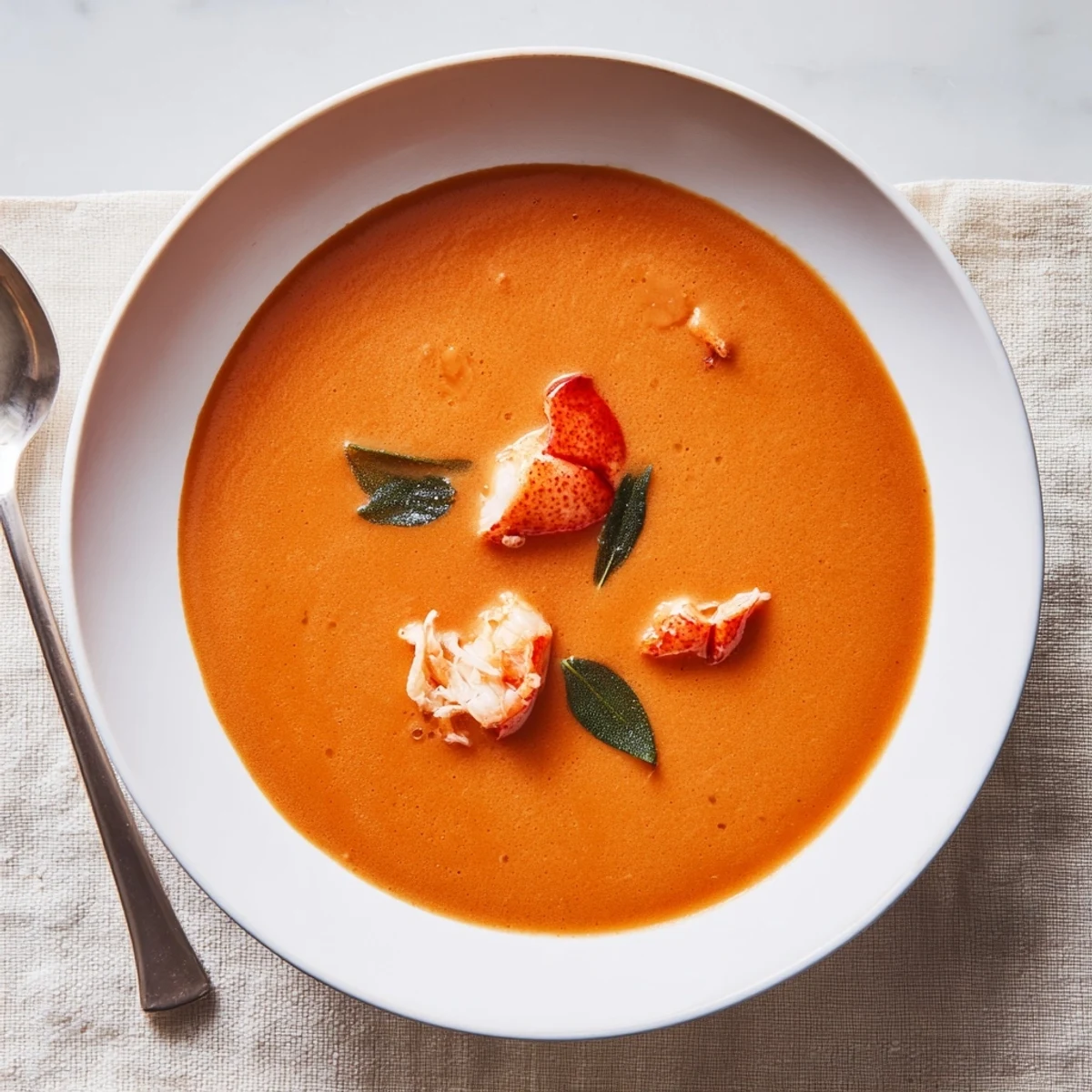
 This elegant French bisque transforms fresh lobster into a velvety, intensely flavored soup. The process begins with briefly poaching live lobsters, then extracting their meat while preserving the shells for a deeply flavorful stock base. Aromatics including onion, celery, carrots, leek, and fennel build the foundation, enhanced by tomato paste and fresh herbs like thyme and tarragon.
The bisque gains complexity through careful flambéing with brandy, followed by white wine and fish stock. After simmering to develop depth, the mixture is blended and strained until silky smooth. Heavy cream creates the luxurious texture, while reserved lobster meat adds satisfying bites. Finished with cayenne, lemon juice, and fresh tarragon, each bowl delivers restaurant-quality refinement.
The first time I attempted lobster bisque, I somehow managed to set off every smoke alarm in my apartment building while trying to flambé the brandy. My neighbor knocked on my door thinking something terrible had happened, only to find me grinning like an idiot over a pot of bubbling soup.
I served this at a small dinner party last winter, right when the first real snow of the season was falling against the windows. One friend actually went quiet for a full minute after taking the first bite, then looked up and said I could have charged her forty dollars for it.
Ingredients
- Live lobsters: Cooking them yourself creates that incredible base flavor you just cannot buy in a store
- Tomato paste: This gives the bisque its beautiful reddish hue and subtle sweetness
- Brandy or cognac: The flambé step might feel intimidating but the depth it adds is absolutely essential
- Heavy cream: Do not be tempted to use half and half, you need the real thing for that luxurious silky texture
- Fresh tarragon: Its delicate anise flavor pairs beautifully with shellfish in a way dried herbs never could
Instructions
- Cook the lobsters:
- Bring a large pot of salted water to boil with bay leaf and peppercorns, then add live lobsters and cook 6 to 8 minutes until bright red
- Remove the meat:
- Twist off tails and claws, crack shells carefully, and remove meat in chunks while saving all the shells
- Build the flavor base:
- Heat olive oil and cook onion, celery, carrots, leek, and fennel for 5 to 7 minutes until softened
- Add the aromatic layers:
- Stir in garlic and tomato paste for 2 minutes, then add lobster shells with thyme and tarragon
- Flambé like a pro:
- Pour in brandy carefully, ignite with a long lighter, let flames burn off naturally, then add wine and stock
- Simmer deeply:
- Bring to a boil then reduce heat and simmer uncovered for 30 to 40 minutes to develop rich flavor
- Strain thoroughly:
- Blend with an immersion blender, then strain through a fine sieve pressing firmly to extract every drop of liquid
- Finish with cream:
- Return bisque to pot, stir in heavy cream, season generously, and add lobster meat to warm through
 Save Pin
 This recipe taught me that some dishes are worth the extra effort and time. When my usually reserved father in law asked for seconds and then proceeded to practically lick the bowl, I knew this was a keeper forever.
Make It Restaurant Quality
Double strain through cheesecloth for that impossibly smooth texture you get at fine dining restaurants
Perfect Pairings
A crisp Chardonnay or Sauvignon Blanc cuts through the richness beautifully. Crusty bread for dipping is absolutely non negotiable in my house
Serving Like A Pro
Warm your bowls in the oven before ladling in the bisque, it stays hot longer and feels more special
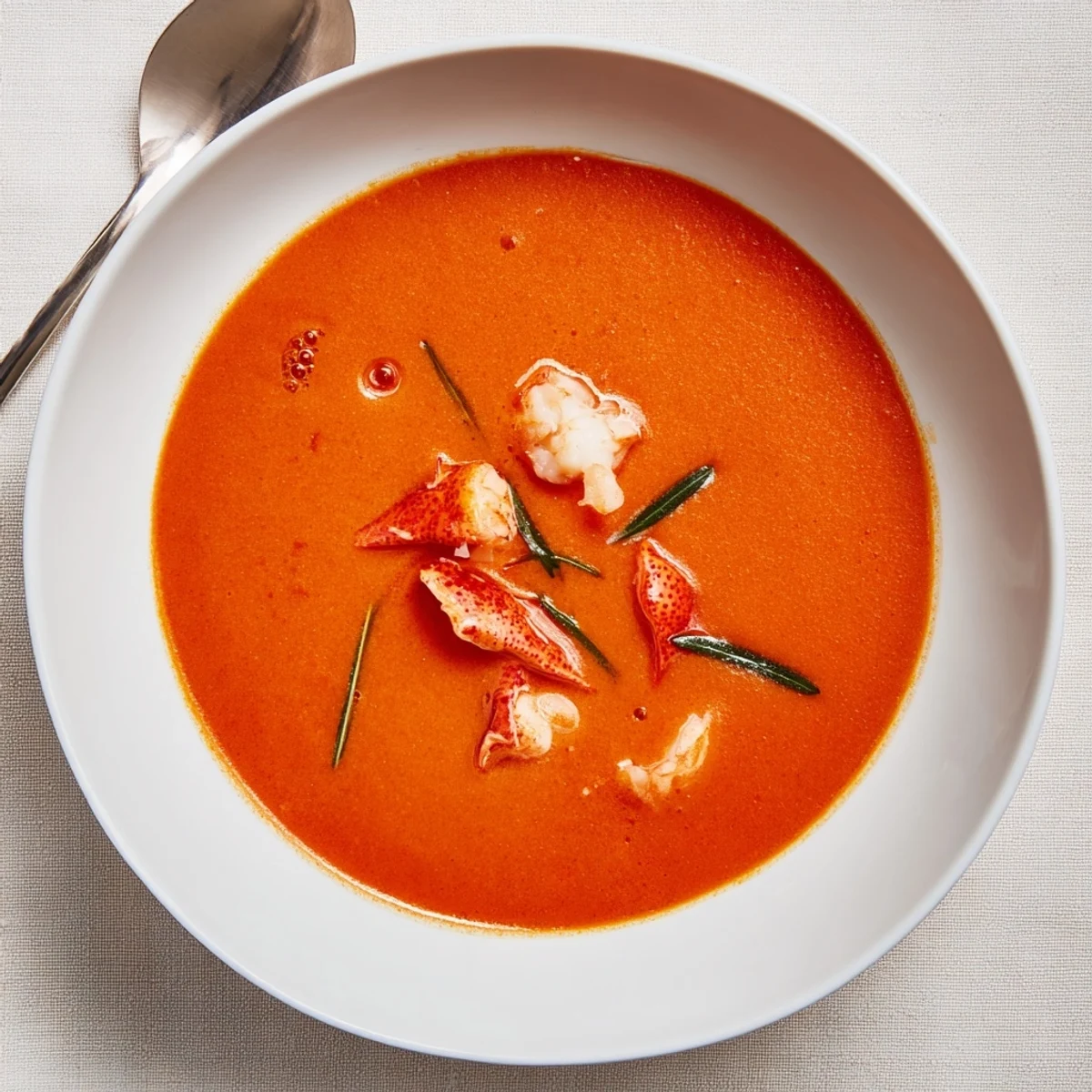
- Place a small piece of lobster meat on top as garnish
- Add a tiny pinch of cayenne for color and subtle heat
- Finish with a fresh tarragon leaf for an elegant touch
 Save Pin
 There is something profoundly satisfying about serving a dish that makes people feel cared for and celebrated. This bisque is my go to for those moments when food needs to say what words cannot.
Recipe Questions & Answers
- → What makes this bisque authentic?
-
Traditional French bisque features shellfish shells simmered with aromatics, flambéed with brandy, enriched with cream, and strained to velvety smoothness—exactly as Ramsay demonstrates.
- → Can I use frozen lobster?
-
Frozen lobster tails work adequately, though fresh live lobsters yield superior depth and sweetness in the finished bisque.
- → Why flambé the brandy?
-
Flambéing caramelizes the alcohol's sugars, adding subtle complexity while ensuring the raw alcohol flavor burns off completely.
- → How do I achieve silky texture?
-
Double-straining through a fine mesh sieve after blending removes any remaining shell fragments, creating that restaurant-smooth consistency.
- → What wine pairs best?
-
Crisp acidic whites like Chardonnay or Sauvignon Blanc cut through the rich cream while complementing sweet lobster notes.
- → Can I make this ahead?
-
Prepare the base through step 4 up to two days ahead, refrigerating separately. Reheat gently, stir in cream and lobster meat just before serving.