
 Save Pin
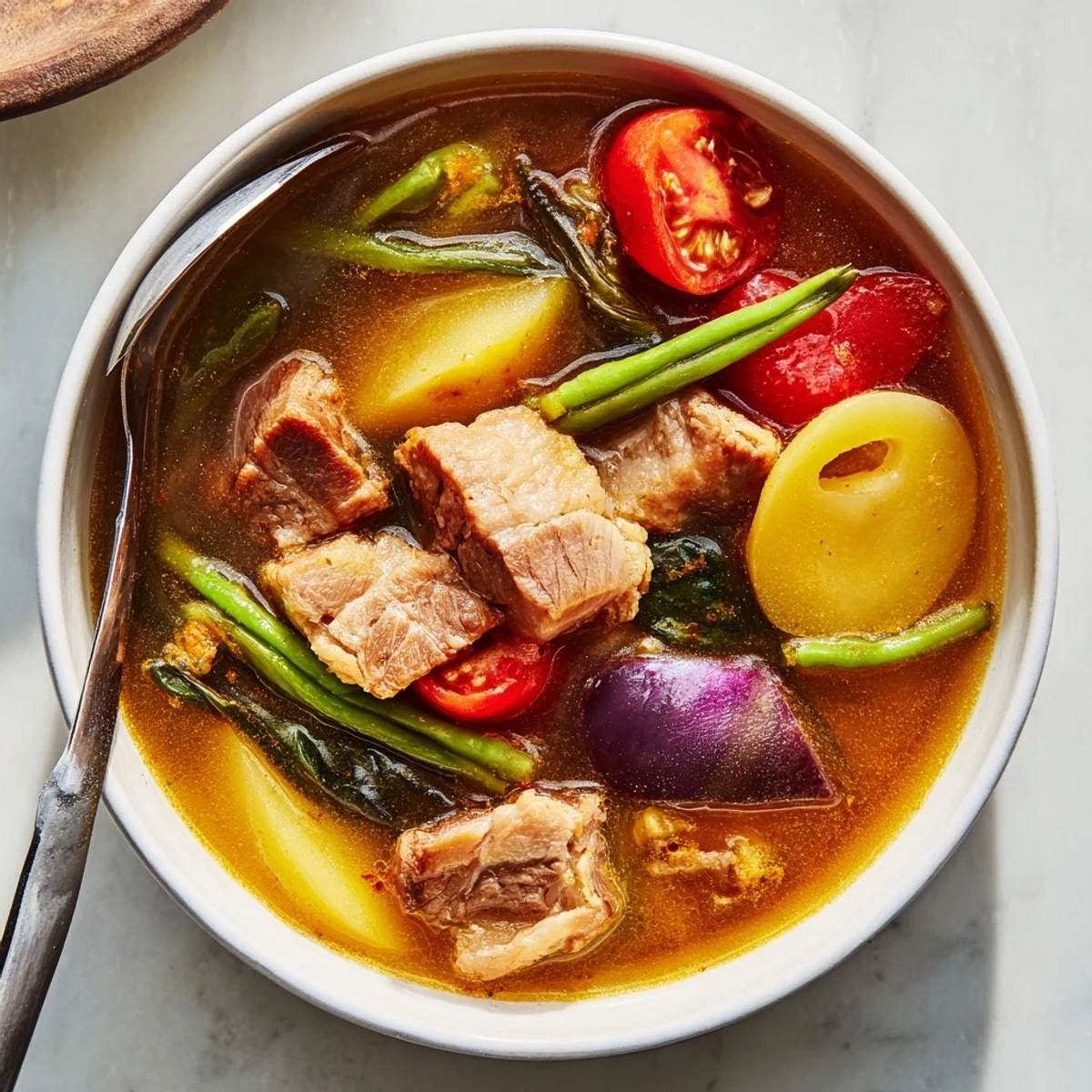
 Sinigang delivers that perfect balance of sour and savory flavors that Filipino cuisine is famous for. The broth gets its signature tanginess from tamarind, which complements the richness of pork belly or ribs perfectly. What makes this dish special is how the vegetables absorb all those wonderful flavors while maintaining their texture.
The preparation involves building layers of flavor starting with the protein, then adding harder vegetables like daikon and eggplant before finishing with delicate greens. The entire process takes just over an hour, making it ideal for weekend family dinners or meal prep sessions.
You can easily customize this soup by swapping proteins - shrimp and fish work beautifully and cook faster. The vegetables are also flexible: okra, taro, or even bok choy can join the mix. Just remember to add seafood towards the end to prevent overcooking.
My grandmother's tiny kitchen in Manila always smelled incredible when she made sinigang. The sour tang would waft out into the street, making neighbors stop by their windows. I learned that the real magic isn't just the tamarind—it's patience.
Last rainy season, my roommate came home exhausted from work. Within minutes of that sour broth hitting the air, she was sitting at the kitchen counter asking what smelled like home.
Ingredients
- 1 kg pork belly or ribs, cut into chunks: Pork belly brings rich flavor but ribs work beautifully too—just let them simmer slowly
- 2 medium tomatoes, quartered: They break down into the broth adding natural sweetness that balances the tang
- 1 large onion, peeled and quartered: Large chunks hold their shape while infusing the soup with depth
- 1 daikon radish, peeled and sliced: This soaks up all that sour broth like a sponge
- 10 string beans, trimmed and cut into 2-inch pieces: Add them midway so they stay snappy not mushy
- 1 eggplant, sliced: Filipino eggplants are thinner but regular ones work if you cut them generously
- 2 cups spinach or kangkong: Kangkong is traditional but spinach wilts perfectly into that hot broth
- 2 long green chili peppers: Optional unless you want that gentle heat building in the background
- 1 packet tamarind soup base or 1 cup fresh tamarind pulp: The packet is convenient but fresh tamarind makes the broth sing
- 2 tbsp fish sauce: Essential umami that rounds out all the flavors
- 1 tsp salt, or to taste: Let the fish sauce do most of the work first
- ½ tsp freshly ground black pepper: Just enough to wake everything up
- 6 cups water: Enough liquid to let everything simmer together without crowding
Instructions
- Start the pork broth:
- Bring water to a boil in a large pot then add pork chunks. Skim off any foam that rises—that's just impurities leaving the meat.
- Add aromatics:
- Toss in tomatoes and onion. Let them simmer for 20 minutes until pork begins to soften and vegetables start breaking down.
- Add heartier vegetables:
- Stir in daikon radish slices. Cook for 10 minutes until they start becoming translucent and tender.
- Add remaining vegetables:
- Add eggplant, string beans, and chili peppers if using. Simmer 5 minutes until vegetables soften but still hold their shape.
- Create the sour broth:
- Dissolve tamarind soup base into the pot or strain fresh tamarind pulp water into the soup. Watch the broth transform instantly.
- Season carefully:
- Add fish sauce, salt, and pepper. Taste after each addition—that balance is everything.
- Finish with greens:
- Stir in spinach or kangkong leaves. Simmer just 2-3 minutes until perfectly wilted but still vibrant.
- Serve immediately:
- Ladle hot over steamed white rice. The broth should be generously poured over everything.
 Save Pin
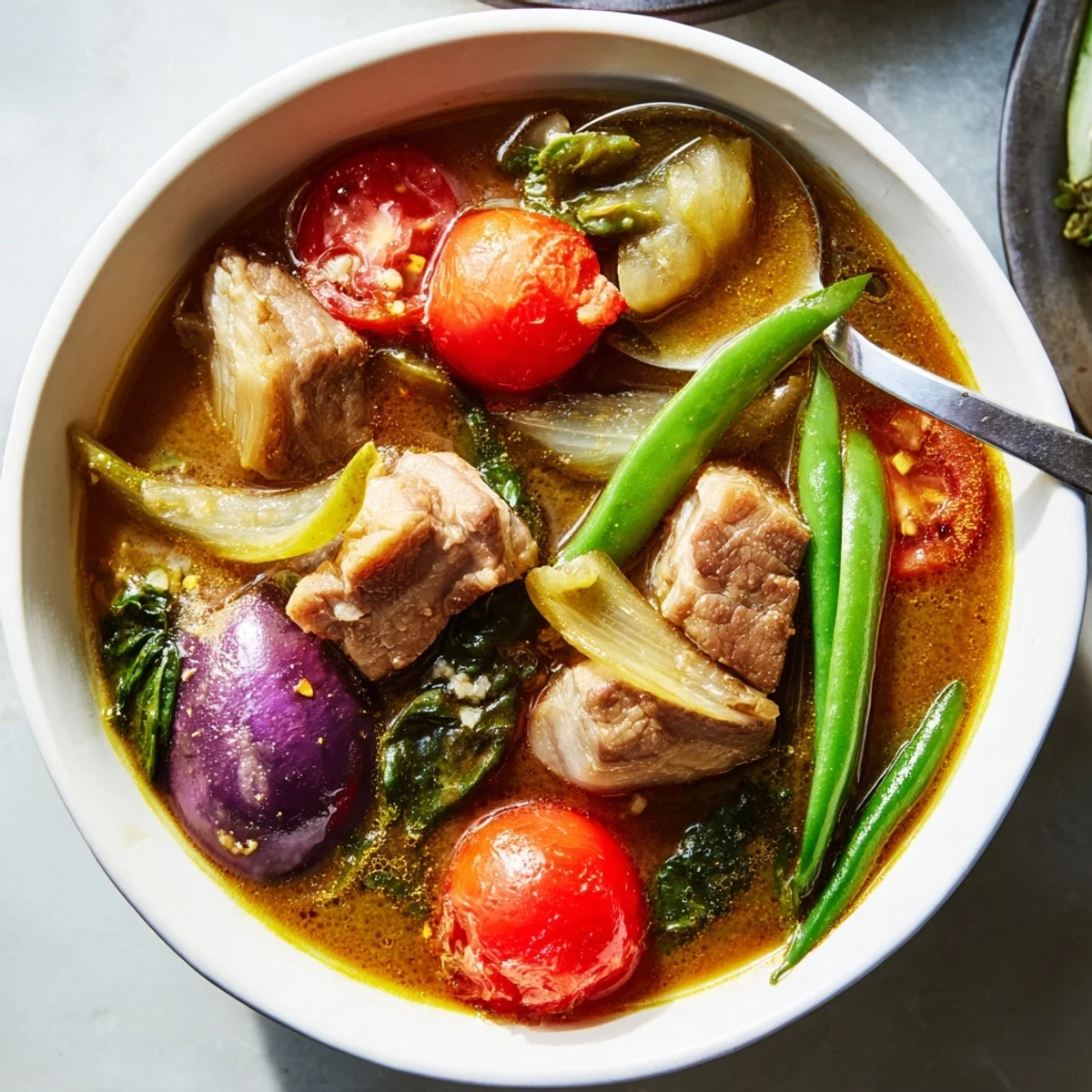
 Now whenever anyone asks what Filipino food tastes like, this is the first thing I make. That first spoonful always stops conversation.
Making It Your Own
Shrimp or fish transform sinigang into something lighter and more delicate—just add them during the last ten minutes. The shrimp turn pink and curl into the vegetables while fish flakes apart gently into that tangy broth.
The Vegetable Game
Okra, taro, even banana blossoms find their way into different versions across regions. Each vegetable carries that sour flavor differently—some absorb it completely while others let it sit on their surface.
Getting The Sour Balance Right
The perfect sinigang makes your mouth water slightly without puckering. Start with less tamarind than you think you need.
- Taste after the packet dissolves fully before adjusting
- Fish sauce adds salt so adjust accordingly
- The soup tastes more sour as it cools so account for that
 Save Pin
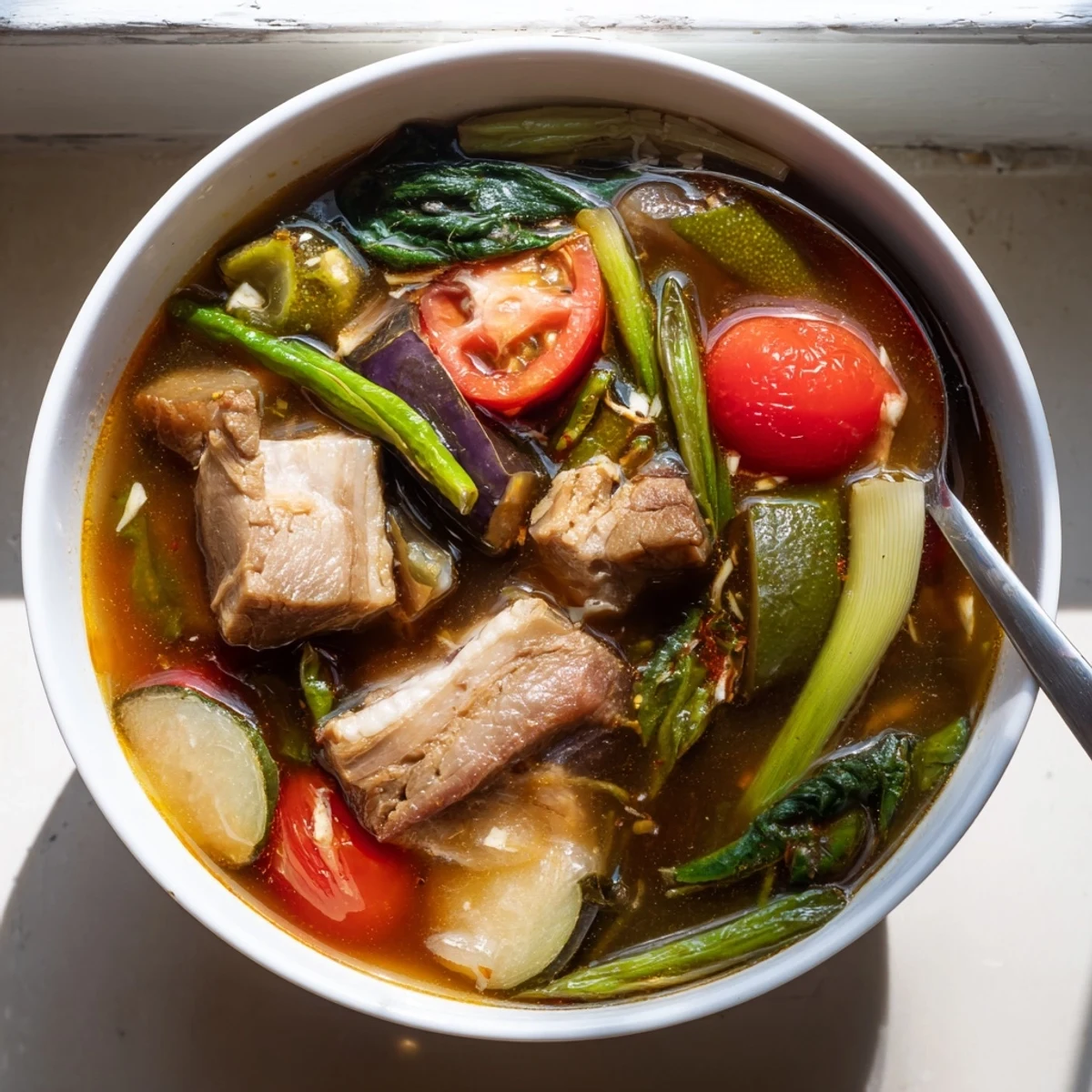
 This soup has traveled through generations of my family. Now it's part of yours too.
Recipe Questions & Answers
- → What makes Sinigang sour?
-
The signature sourness comes from tamarind, which can be used fresh from pods or as a convenient soup base mix. Some regional variations also use guava, calamansi, or other sour fruits to achieve that distinctive tangy flavor profile.
- → Can I make Sinigang with other proteins?
-
Absolutely. While pork belly and ribs are traditional choices, Sinigang works wonderfully with shrimp, fish, beef, or even chicken. Seafood versions are lighter and cook faster - add shrimp or fish during the last 10 minutes to maintain their texture.
- → What vegetables go best in Sinigang?
-
Classic vegetables include daikon radish, eggplant, string beans, tomatoes, onions, and leafy greens like spinach or water spinach (kangkong). You can also add okra, taro, or bok choy based on preference and seasonal availability.
- → How do I adjust the sourness level?
-
Start with the recommended amount of tamarind base, then taste your broth before adding the final vegetables. Add more tamarind paste gradually if you prefer it more sour, or balance with a pinch of sugar if it's too tart for your liking.
- → Can I make Sinigang ahead of time?
-
The flavors actually develop beautifully when made ahead. Prepare everything except the leafy greens, then refrigerate for up to 2 days. Reheat gently and add fresh spinach just before serving for the best texture and taste.
- → Is Sinigang spicy?
-
Traditional Sinigang isn't typically spicy, but long green chili peppers are often added during cooking for a subtle warmth. The peppers infuse flavor without making the dish overly hot. Adjust the amount or omit them entirely based on your spice preference.