
 Save Pin
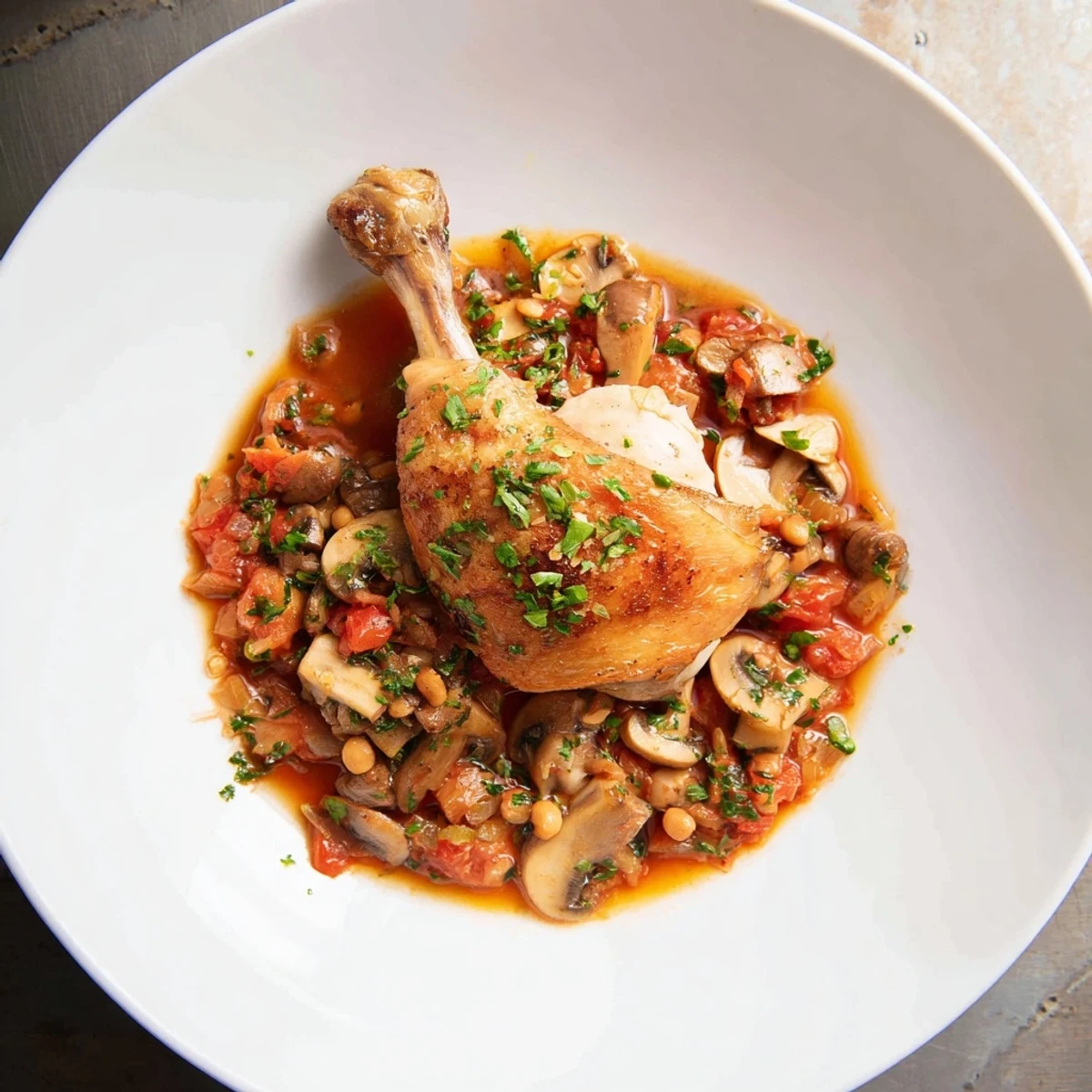
 Brown bone-in chicken, then sauté onion, garlic and mushrooms. Add tomato paste, deglaze with white wine, then stir in tomatoes and stock. Return chicken and simmer with tarragon until tender (35–40 minutes). Finish with butter and parsley if desired. Serves 4; total time about 1h10. Serve with noodles, rice or crusty bread for soaking up the sauce.
The kitchen always smells its best when something is braising on a Sunday afternoon, and chicken chasseur is one of those dishes that fills every corner of the house with a smell so warm it practically drags people to the table before you even call them. I learned this recipe from a weathered French cookbook I found at a yard sale, its pages splattered with sauces from someone elses adventures. The combination of wine, tomatoes, and tarragon creates something that feels far fancier than the effort it actually takes. It is honest, rustic French cooking at its most forgiving.
One rainy evening I made this for friends who arrived cold and grumpy, and by the second bowl the entire mood around the table had shifted to laughter and second helpings. There is something about a simmered chicken dish that makes people linger at the table longer than usual, tearing into bread and spooning up every last bit of sauce. Those are the evenings that remind me why cooking matters.
Ingredients
- Bone in, skin on chicken thighs and drumsticks (8 pieces total): The bones keep the meat juicy during the long simmer, and the skin adds flavor to the pan when you brown it first.
- Button mushrooms, sliced (200 g): They soak up the wine and tomato sauce like little sponges, so do not skip them.
- Onion and garlic: The quiet backbone of nearly every French sauce, softened slowly to build sweetness.
- Diced tomatoes (2 medium or 400 g canned): Canned tomatoes actually work beautifully here because their summer ripeness is preserved at peak flavor.
- Dry white wine (125 ml): Nothing fancy needed, just something you would happily drink alongside the meal.
- Chicken stock (200 ml): homemade is lovely, but a good quality shop bought stock works perfectly.
- Tomato paste (2 tbsp): This deepens the color and adds a concentrated umami kick that ties everything together.
- Fresh tarragon (2 tbsp, or 1 tbsp dried): The soul of this dish, with its faint anise flavor that you cannot replicate with anything else.
- Fresh parsley, olive oil, salt, and pepper: Finish and seasoning essentials that should not be overlooked.
- Unsalted butter, optional (1 tbsp): A small luxury stirred in at the end that makes the sauce silky.
Instructions
- Season and dry the chicken:
- Pat each piece thoroughly with paper towels and season generously with salt and pepper, because this is your only chance to season the meat directly.
- Brown the chicken pieces:
- Heat olive oil in a large heavy skillet or Dutch oven over medium high heat, then sear the chicken skin side down first until deeply golden on all sides, roughly 5 to 7 minutes. Move them to a plate and let them rest while you build the sauce.
- Soften the aromatics:
- In the same pan with all those flavorful drippings, cook the onion and garlic over medium heat until translucent and fragrant, about 3 minutes, stirring so nothing catches.
- Cook the mushrooms:
- Add the sliced mushrooms and let them sit undisturbed for a minute before stirring, so they actually brown instead of steaming, then cook until their juices have mostly evaporated.
- Build the sauce base:
- Stir in the tomato paste and let it cook for about a minute until it darkens slightly, then pour in the white wine and scrape up every browned bit from the bottom of the pan because that is where all the concentrated flavor lives.
- Simmer everything together:
- Add the diced tomatoes and chicken stock, nestle the chicken pieces back into the sauce, and bring it to a gentle simmer before adding the tarragon. Cover, reduce the heat to low, and let it braise for 35 to 40 minutes until the chicken is fall apart tender.
- Finish and serve:
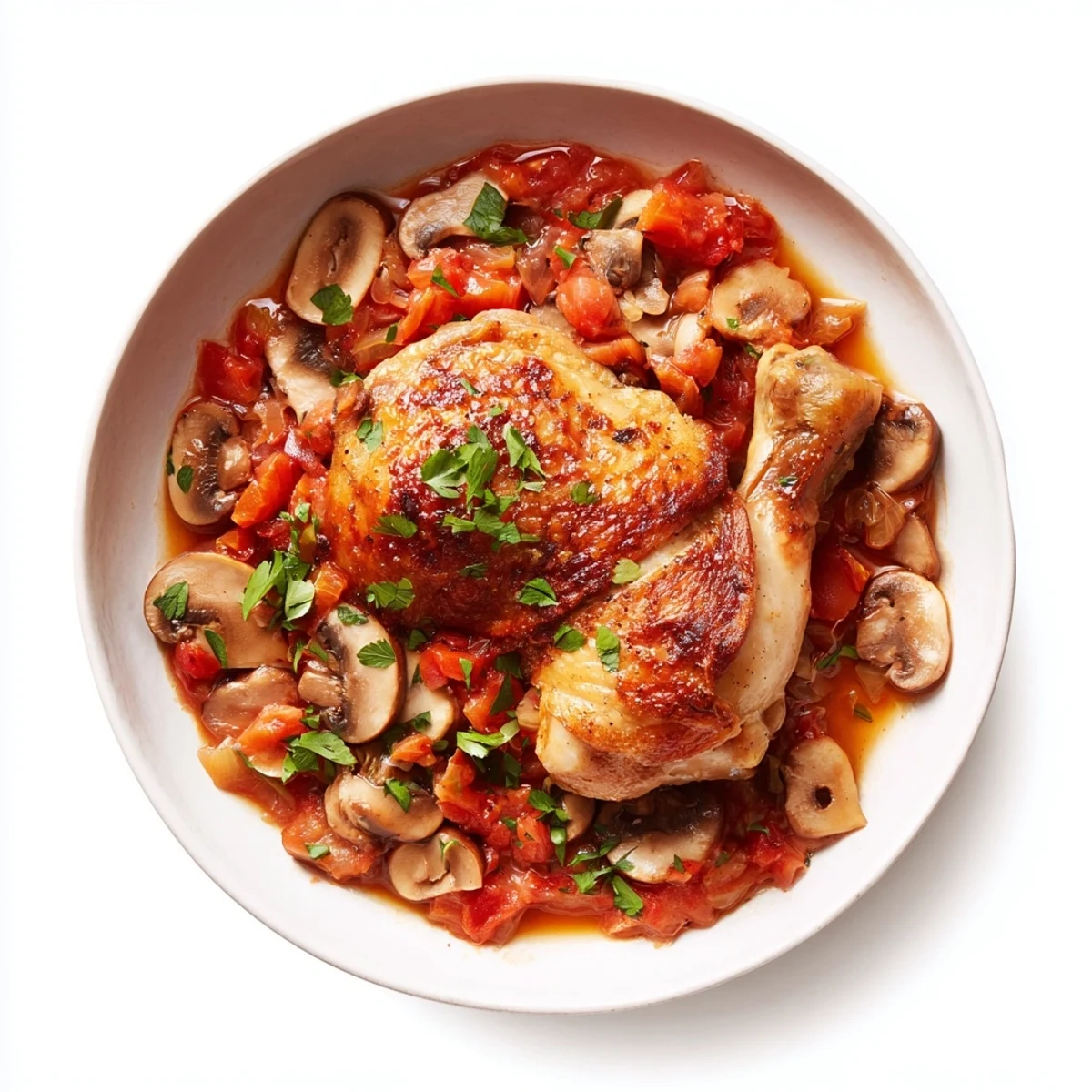
- Stir in the butter if using for a glossy finish, taste and adjust the seasoning, then scatter fresh parsley over the top and bring the whole skillet to the table so everyone can serve themselves.
 Save Pin
 I once served this at a small dinner party and caught my friend scraping the last of the sauce from the skillet with a piece of bread when she thought no one was looking. That is honestly the highest compliment any home cook can receive.
What to Serve Alongside
Buttered egg noodles are my go-to because they catch the sauce in their folds, but a mound of steamed rice or a thick slice of crusty bread torn from the loaf works just as beautifully. A simple green salad with a sharp vinaigrette cuts through the richness and balances the plate. In colder months, roasted root vegetables alongside make it feel like a proper feast.
Making It Your Own
A splash of brandy added right after the wine takes the sauce into slightly more elegant territory, something worth trying when you want to impress. Boneless thighs work fine if that is what you have, just reduce the simmering time to around 20 minutes so they do not dry out. You could also toss in a handful of olives or a strip of orange peel for a Mediterranean twist that feels surprisingly at home here.
A Few Last Thoughts
Chicken chasseur is the kind of recipe that teaches you to trust the process, because halfway through it may not look like much, but those final ten minutes of simmering pull everything together into something rich and cohesive. Let it rest for a few minutes off the heat before serving so the sauce has time to settle.
- Always taste the sauce for salt before serving, because the stock and wine vary wildly in how salty they are.
- A Dutch oven is ideal but a deep skillet with a tight lid works perfectly well.
- Leftovers taste even better the next day, so make the full amount even if you are cooking for two.
 Save Pin
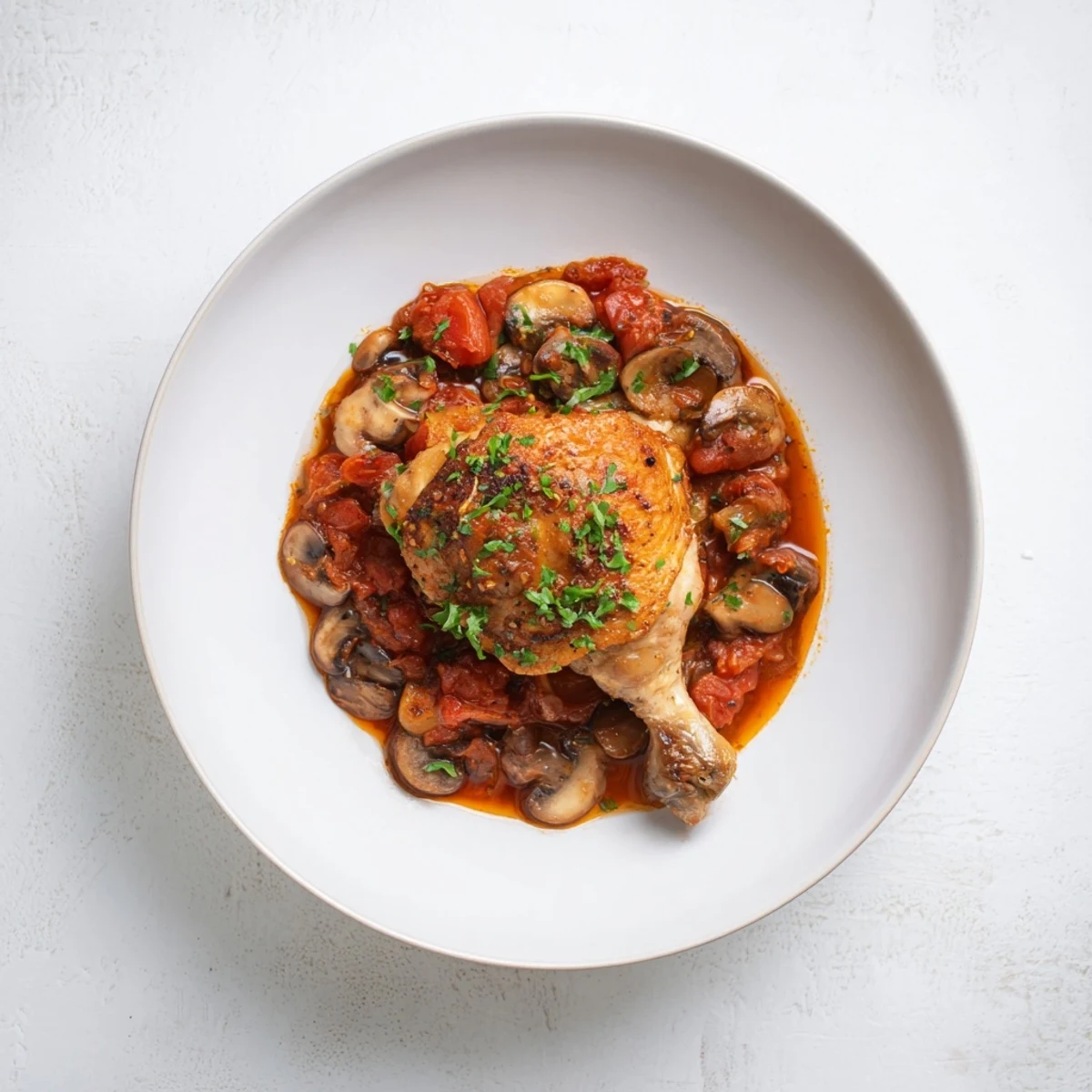
 Some dishes earn a permanent spot in your rotation not because they are flashy, but because they reliably turn an ordinary evening into something worth savoring. Chicken chasseur does exactly that, every single time.
Recipe Questions & Answers
- → Can I use boneless chicken?
-
Yes. Boneless thighs work well and cook faster; reduce the simmering time to about 20–25 minutes and check that juices run clear. Browning first still adds valuable flavor.
- → What kind of wine should I use?
-
Use a dry white like Sauvignon Blanc or an unoaked Chardonnay for bright acidity. If avoiding alcohol, substitute extra stock with a splash of white wine vinegar for balance.
- → How do I thicken the sauce?
-
Reduce the sauce uncovered to concentrate flavors, whisk in a knob of butter for sheen, or stir in a small cornstarch slurry (1 tsp cornstarch + 1 tbsp cold water) until glossy.
- → Can this be made ahead?
-
Yes. Flavors deepen after resting overnight. Reheat gently on the stovetop and add a splash of stock if the sauce has thickened or separated.
- → What are good herb substitutes for tarragon?
-
If tarragon isn’t available, use a mix of fennel fronds or a mild anise-scented herb, or simply increase parsley and add a squeeze of lemon for brightness.
- → What should I serve alongside?
-
Buttered egg noodles, steamed rice, mashed potatoes or crusty bread are all excellent for soaking up the tomato-mushroom sauce; finish with chopped parsley for freshness.