
 Save Pin
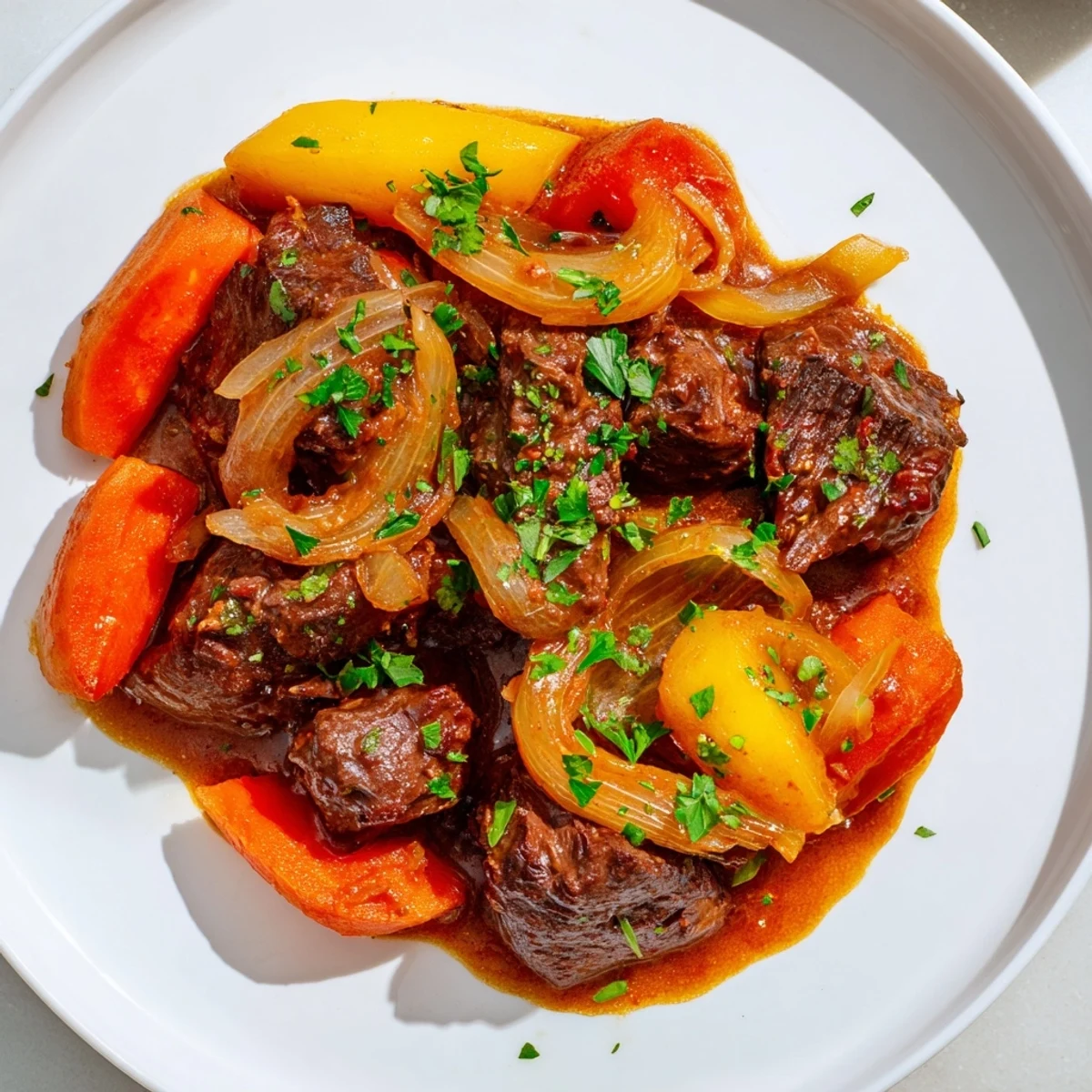
 This dish features beef chuck slow-cooked to tender perfection alongside caramelized onions and sliced carrots. The rich sauce develops from red wine, beef broth, and aromatic herbs like thyme and bay leaves. Cooking low and slow ensures a deep, savory flavor and fork-tender meat. Finish with fresh parsley for a touch of brightness. Ideal to serve with mashed potatoes or crusty bread to soak up the flavorful sauce.
This comforting dish blends simple ingredients with patient cooking, delivering a satisfying meal rich in taste and texture. The slow braising method softens the vegetables, melds the sauce components, and enhances the natural flavors of the beef.
I still remember the first time I made braised beef with onions on a cold Sunday afternoon. My grandmother had mentioned that the secret to comfort food was patience and a heavy pot, so I decided to finally understand what she meant. As the beef slowly surrendered to heat and time, filling the kitchen with the most incredible aroma of caramelized onions and red wine, I realized she wasn't just talking about cooking—she was talking about love made edible. That day, I became a believer in the transformative power of low and slow.
I'll never forget the first dinner party where I served this dish. My friend Sarah took one bite and her eyes closed like she was transported somewhere. Later, she told me it reminded her of her mother's kitchen in Lyon, even though she'd never had this exact recipe before. That's when I understood—good braised beef speaks a universal language of warmth and belonging.
Ingredients
- Beef chuck roast (1.2 kg/2.6 lbs), cut into large chunks: Chuck is the workhorse of braises—it has enough fat and connective tissue to become silky and rich as it cooks. Cutting it into large chunks means fewer pieces to brown and less surface area losing moisture.
- Yellow onions (3 large), thinly sliced: These are your flavor foundation. When onions braise low and slow, they transform into something almost sweet and jammy. Don't rush this step—it's where the magic begins.
- Carrots (2 medium), sliced: They add natural sweetness and body to the braising liquid. I slice them on a slight bias so they cook evenly and look intentional on the plate.
- Garlic cloves (3), minced: Fresh garlic adds a bright note that keeps the dish from feeling one-dimensional. Mince it fine so it distributes throughout the sauce.
- Beef broth (500 ml/2 cups), gluten-free: This is your braising liquid foundation. Good quality matters here—it's the soul of your sauce. If you have homemade stock, even better.
- Dry red wine (250 ml/1 cup): The wine adds acidity and complexity. Don't use anything you wouldn't drink yourself. It mellows beautifully during the long braise.
- Tomato paste (2 tbsp): A concentrated umami bomb that deepens the sauce without adding sweetness. Stir it in with the garlic and let it caramelize slightly for maximum flavor.
- Olive oil (2 tbsp): For browning the meat and softening the vegetables. Use a good quality oil if you can.
- Salt (2 tsp) and freshly ground black pepper (1 tsp): Season generously at the beginning. You can always adjust at the end, but it's harder to go back.
- Bay leaves (2) and dried thyme (1 tsp): These herbs add an old-world, Provençal feel. They infuse the braising liquid with subtle earthiness.
- Fresh parsley, chopped, for garnish: Don't skip this. That bright green garnish is the final note that says “I care about how this looks.”
Instructions
- Prepare your mise en place and preheat:
- Set your oven to 160°C (325°F). Arrange all your ingredients on the counter before you start. Braising is a journey, and you'll want everything ready. Pat your beef dry with paper towels—this matters more than you'd think. Moisture on the surface prevents proper browning, and browning is where the flavor happens.
- Season and sear the beef:
- Season the beef generously with salt and pepper. Heat your olive oil in a large Dutch oven over medium-high heat until it shimmers. You want it hot enough that the meat makes a confident sizzle when it hits the pan. Working in batches so you don't overcrowd the pot, brown the beef on all sides until it's a deep golden color. This takes about 2-3 minutes per side. Don't rush this—the fond (those browned bits) will become part of your sauce. Transfer each batch to a clean plate.
- Build the flavor base with vegetables:
- Lower the heat to medium. Add your sliced onions and carrots directly to the pot. Stir occasionally and let them soften and caramelize, about 10-12 minutes. This is where patience rewards you. The onions will go from raw to translucent to golden and sweet. You're building layers of flavor that will make people ask what your secret is.
- Add aromatics and deglaze:
- Stir in your minced garlic and tomato paste. Let them cook together for about a minute until the kitchen smells incredible. Pour in the red wine, using a wooden spoon to scrape up all those browned bits from the bottom of the pot. This is called deglazing, and those bits are pure flavor. Let the wine simmer for 2-3 minutes so some of the alcohol cooks off and the flavors meld.
- Return the beef and add braising liquid:
- Nestle the beef back into the pot along with any juices that accumulated on the plate. Pour in your beef broth. Add the bay leaves and dried thyme. Bring everything to a gentle simmer on the stovetop—you want small, lazy bubbles, not a rolling boil.
- Braise low and slow:
- Cover the pot with its lid and transfer it to the preheated oven. This is the moment you can step away. For the next 2 to 2½ hours, the gentle, even heat of the oven will transform tough beef into tender, succulent pieces. You'll know it's done when a fork slides through the meat effortlessly. Around the 1½ hour mark, give it a gentle stir if you think of it, but mostly, just trust the process.
- Finish and serve:
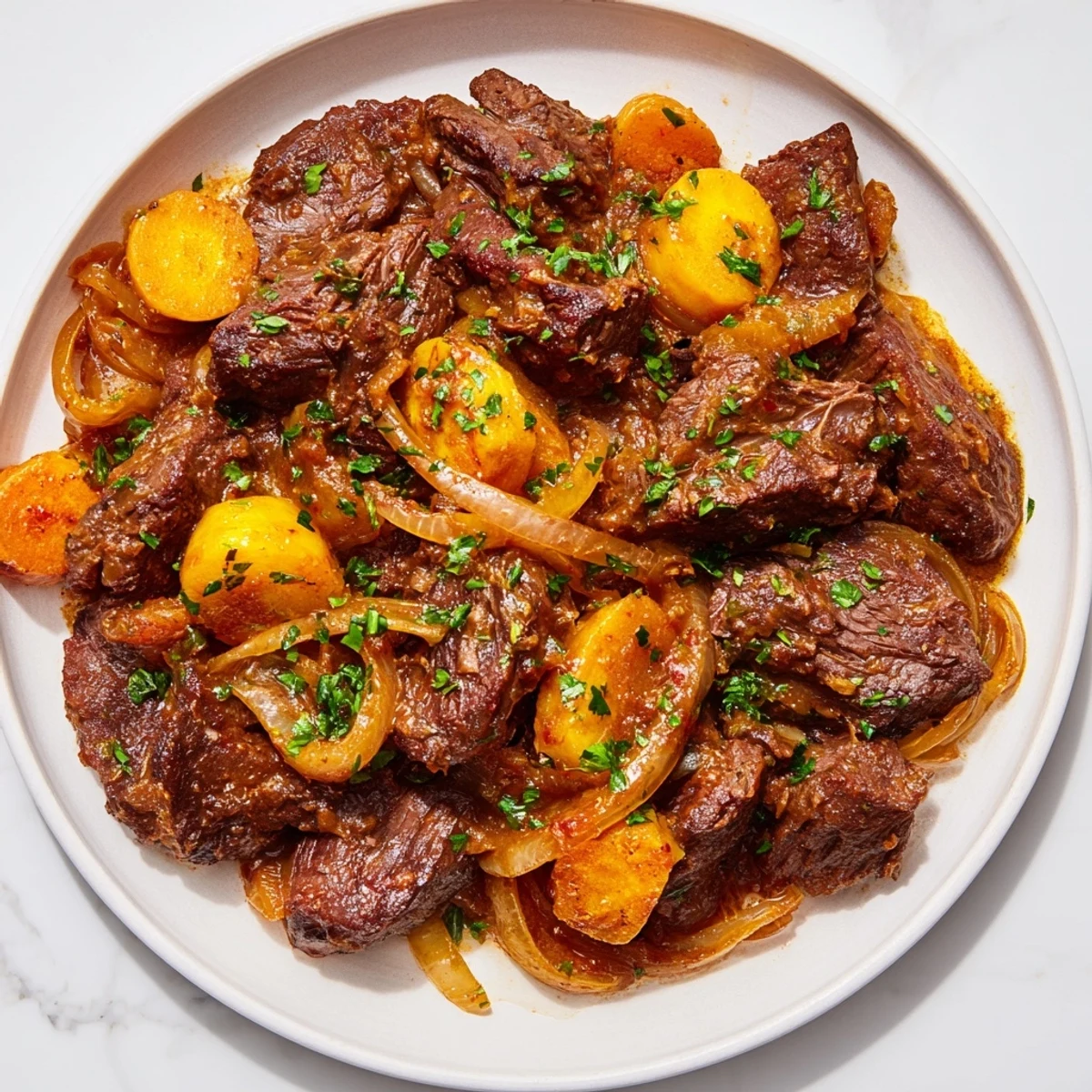
- Remove the pot from the oven and take out those bay leaves. Taste the sauce and adjust the seasoning. Sometimes I add a pinch more salt or pepper here. Garnish generously with fresh parsley. The green brings the dish alive and adds a fresh contrast to the deep, rich sauce.
 Save Pin
 Years later, this became the dish I made whenever someone in my life needed comfort. A friend going through a breakup, a colleague celebrating a promotion, a family gathering on a rain-soaked evening—something about braised beef with onions says “I'm here for you” in a way that words sometimes can't. It's become my edible love letter.
What Makes This Braised Beef So Special
The beauty of braising is the transformation that happens through time and gentle heat. The collagen in the chuck roast breaks down into gelatin, creating a naturally silky sauce without any thickeners or fancy techniques. The onions practically dissolve into the braising liquid, sweetening it and adding body. It's peasant food elevated by patience, and there's something deeply honest about that.
Pairing and Serving Suggestions
I've served this with creamy mashed potatoes, which catch the sauce like a sponge. I've also spooned it over soft polenta, and it disappears into the pillowy center beautifully. Crusty bread is always welcome for soaking up every last drop. For wine, a medium-bodied red with good acidity complements the richness without overwhelming it—perhaps a Pinot Noir or Côtes du Rhône, which brings you back to where this dish comes from.
Kitchen Wisdom and Variations
Braising is endlessly forgiving. If red wine isn't your thing, use all beef broth instead—the dish will be slightly less acidic but equally delicious. Some cooks add a splash of balsamic vinegar at the end for extra depth. Others add mushrooms alongside the onions and carrots. The wonderful thing about this recipe is that it's a foundation, not a rulebook. Use it as a starting point and trust your instincts.
- If you have access to them, substitute some of the broth with a good red wine reduction for even richer flavor.
- Rendered beef fat or duck fat can replace olive oil for browning if you want to go really decadent.
- This freezes beautifully for up to three months, which means you're always just a gentle reheat away from a perfect dinner.
 Save Pin
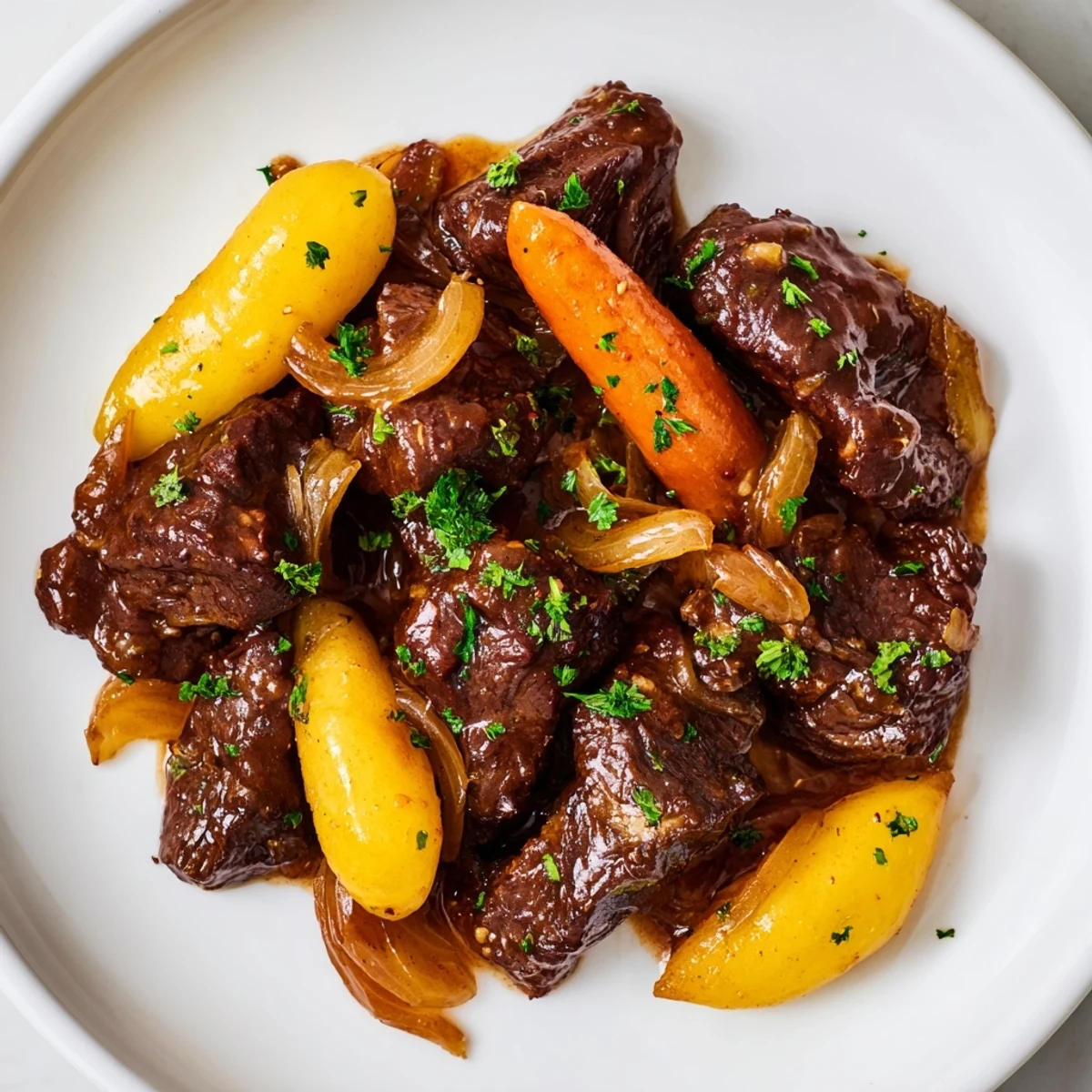
 This is the kind of recipe that becomes part of your cooking identity. Once you master it, you'll find yourself reaching for it again and again, each time understanding it a little better. That's the gift of braising—it teaches you to cook with your heart.
Recipe Questions & Answers
- → What cut of beef is ideal for this dish?
-
Beef chuck roast is recommended for its marbling and toughness that breaks down beautifully during slow cooking, resulting in tender meat.
- → Can red wine be substituted in the cooking process?
-
Yes, you can replace red wine with extra beef broth to maintain moisture and depth without altering the flavor drastically.
- → How do I achieve caramelized onions for this dish?
-
Cook the sliced onions slowly over medium heat with occasional stirring until they turn golden brown and soft, usually about 10-12 minutes.
- → What side dishes complement this meal best?
-
Mashed potatoes, polenta, or crusty bread work well to soak up the rich sauce and add comforting textures.
- → Is this dish suitable for gluten-free diets?
-
Yes, as long as the beef broth used is certified gluten-free, the dish aligns with gluten-free dietary needs.