
 Save Pin
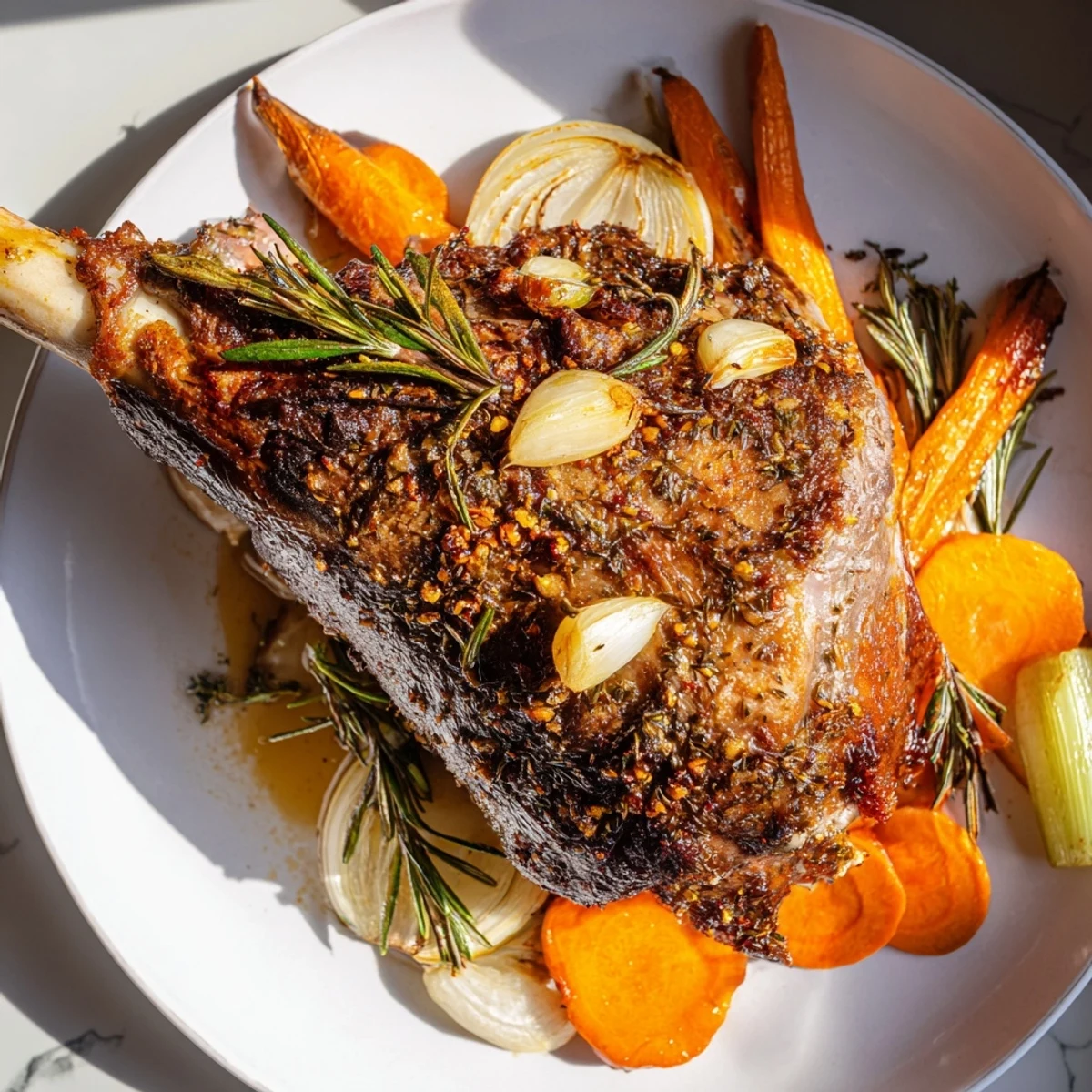
 This dish features a bone-in leg of lamb infused with fresh rosemary, garlic, and thyme, rubbed with olive oil and seasoning. The lamb rests on a bed of onions, carrots, and celery, then slow-roasted to succulent perfection. Basted with pan juices and served with a fragrant jus, it offers a hearty and aromatic meal ideal for special dinners or gatherings. Resting after roasting helps retain juiciness while infusing deep herb flavors.
The first time I smelled rosemary and garlic hitting hot lamb fat, I was standing in my neighbor's cramped kitchen in Marseille, supposedly just dropping off borrowed Tupperware. Three hours later I was still there, wine glass in hand, watching her baste a leg of lamb while arguing about football. That roast taught me that some meals simply refuse to be rushed.
I made this for my sister's thirtieth birthday when her restaurant reservation fell through at the last minute. She still talks about the carrots more than the lamb itself, how they soaked up every drop of wine and lamb fat until they collapsed into something almost like confit.
Ingredients
- Bone-in leg of lamb (2–2.5 kg): The bone insulates the meat and gives you a built-in handle for carving later
- Fresh rosemary: Dried will work but lacks the resinous punch that makes this memorable
- Garlic cloves: Halve them lengthwise so they slide cleanly into your incisions without tearing the meat
- Olive oil: Use something fruity rather than neutral, it carries the herbs further
- Fresh thyme: Strip the leaves backward against the stem, it is faster and you avoid the woody bits
- Coarse sea salt: The crunch disappears but the mineral depth stays in the crust
- Black pepper: Freshly ground, always, the pre-ground stuff has already given up
- Onions, carrots, celery: These are not garnish, they are your flavor base and your side dish in one
- Dry white wine or lamb stock: Wine gives acidity that cuts the richness, stock gives deeper savor
Instructions
- Heat the oven and prepare the lamb:
- Set your oven to 200°C and lay out your lamb on a cutting board. Pat it aggressively dry with paper towels, moisture is the enemy of browning.
- Make your pockets:
- Use a paring knife to stab shallow slits all over the lamb, twist slightly to open them. Tuck garlic halves and rosemary leaves deep inside so they do not burn on the surface.
- Rub it down:
- Mix olive oil with thyme, salt, and pepper until it looks like wet sand. Massage this into every crevice, including the underside you will be tempted to skip.
- Build your bed:
- Scatter onions, carrots, and celery across your roasting pan. They should form a raft that keeps the lamb from boiling in its own juices.
- Add liquid carefully:
- Pour wine or stock around the lamb, not over it. You want the top to roast, not steam.
- Blast then slow:
- Twenty minutes at high heat sets the crust, then drop to 180°C for the long haul. Baste when you remember, which will be less often than you think.
- Rest without rushing:
- Tent with foil and walk away for at least fifteen minutes. The temperature will climb another few degrees and the juices will settle instead of running.
- Make your jus:
- Strain the pan contents through a fine sieve, pressing the vegetables to extract every last drop of flavor.
 Save Pin
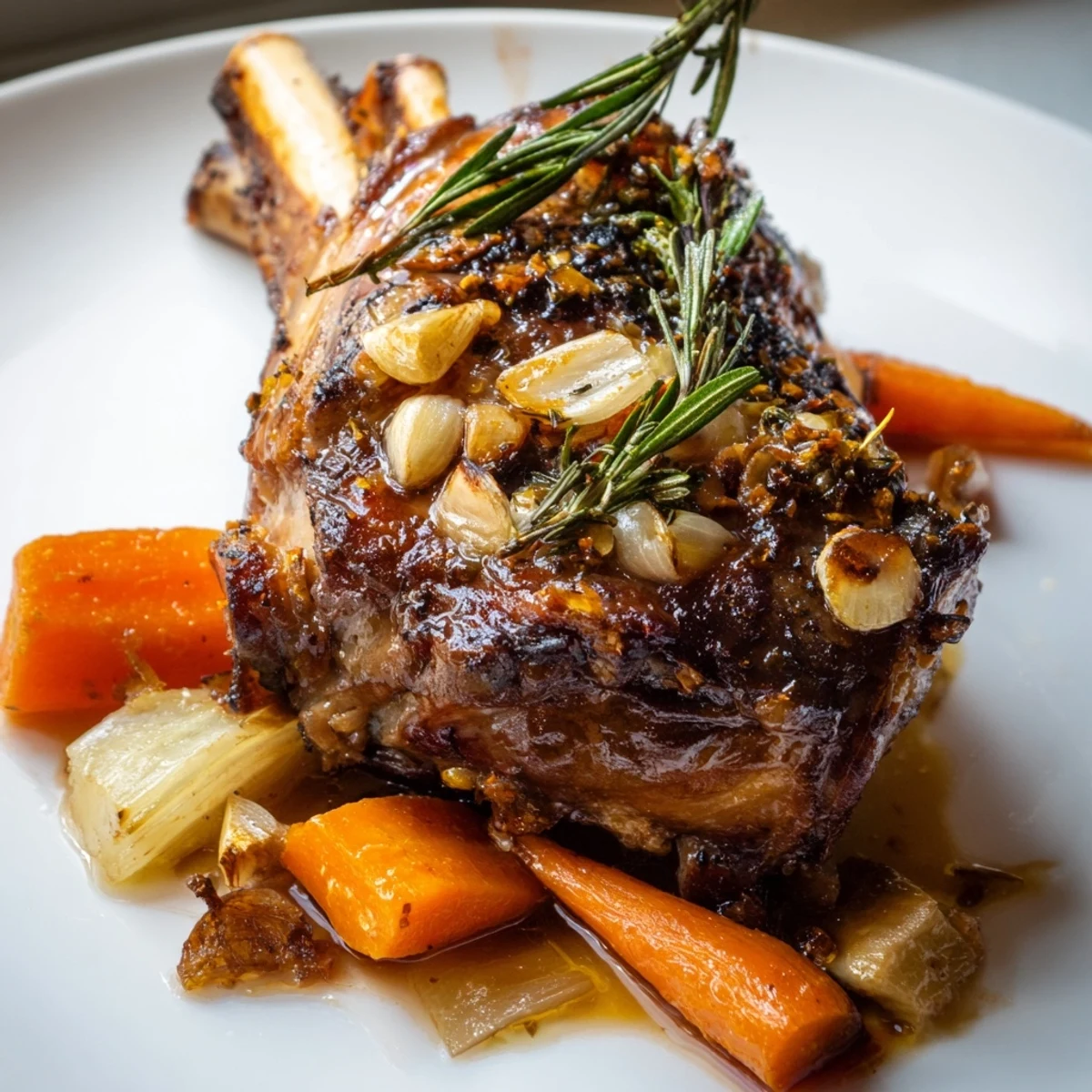
 Last Easter I carved this lamb badly, rushed and hungry, and the presentation was a disaster. Nobody cared. They were too busy dragging bread through the jus and arguing over who got the last carrot.
Choosing Your Lamb
Ask your butcher for a leg with the shank bone still attached if possible, it makes a natural handle and looks dramatic on the table. If they offer to french the bone, say yes, it is worth the small extra cost for the drama alone.
The Case for Overnight Marinating
If you have the foresight, rub the lamb with oil, garlic, and herbs the night before and leave it uncovered in the fridge. The surface dries further, the salt penetrates deeper, and you buy yourself an hour of calm the next day.
What to Do With Leftovers
Cold lamb sandwiches with mustard and pickles are their own religion, but do not overlook slicing the remainder thin and warming it quickly in the leftover jus for next-day tacos. The meat goes further than you expect.
- Save the bone for stock, it has given everything to the roast but still has more to give
- Freeze the jus in ice cube trays for instant gravy base
- Chop leftover meat into rough chunks and fold through warm lentils with more rosemary
 Save Pin
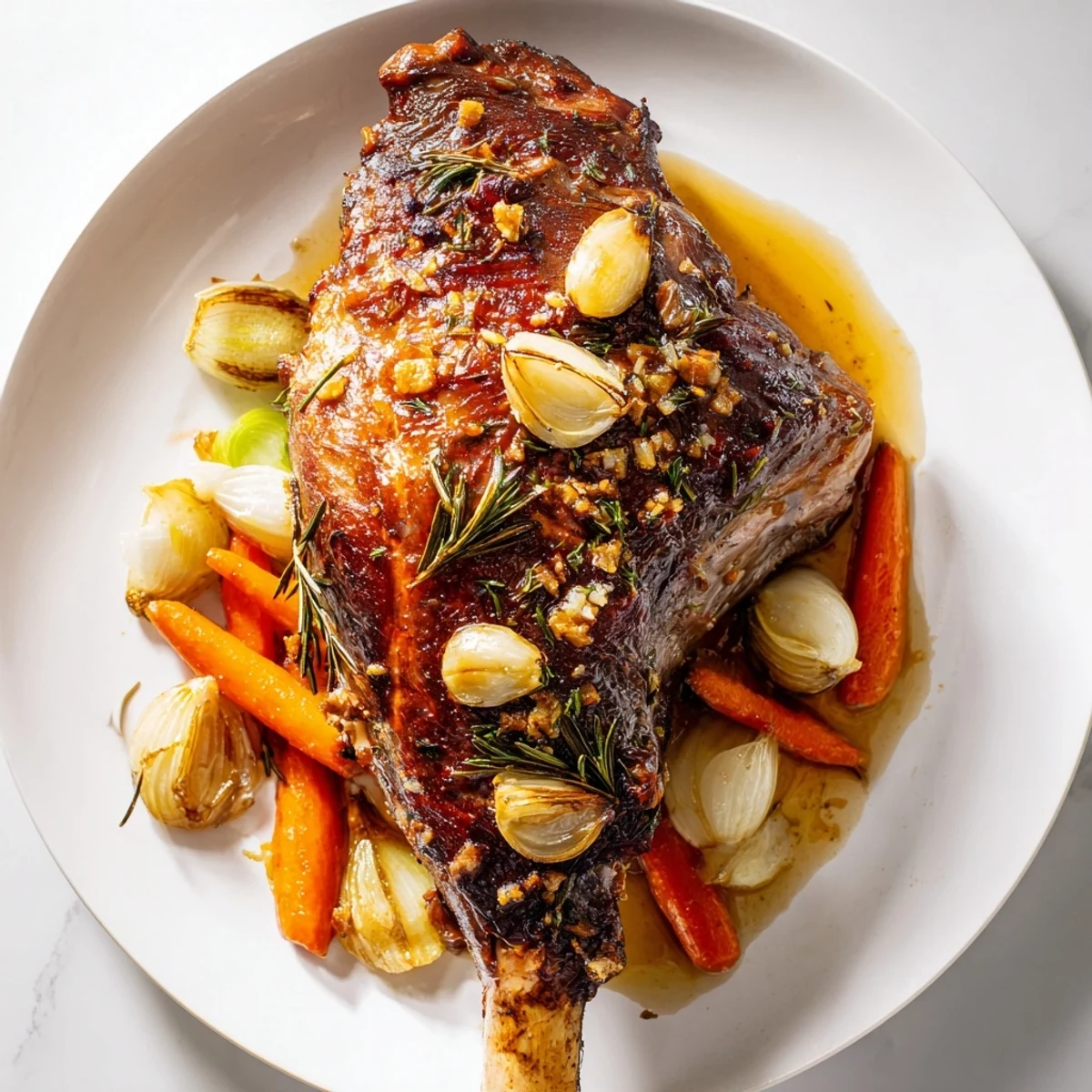
 However you serve it, stand back when you first slice through that crust and the smell escapes. Some things are worth the wait.
Recipe Questions & Answers
- → How do I ensure the lamb stays juicy?
-
Allow the lamb to rest loosely covered with foil after roasting. This redistributes the juices and keeps the meat tender and moist.
- → Can I prepare the lamb in advance?
-
Yes, marinating the lamb overnight with olive oil, garlic, rosemary, and thyme enhances flavor and tenderness.
- → What is the best way to check for doneness?
-
Use a meat thermometer aiming for 60–65°C (140–150°F) internal temperature for medium-rare. Adjust cooking time accordingly.
- → What vegetables are best for roasting with lamb?
-
Onions, carrots, and celery create a flavorful bed that adds aroma and moisture during roasting.
- → Can I substitute the white wine in the cooking liquids?
-
Dry white wine can be replaced with lamb stock or broth for similar depth without alcohol content.