
 Save Pin
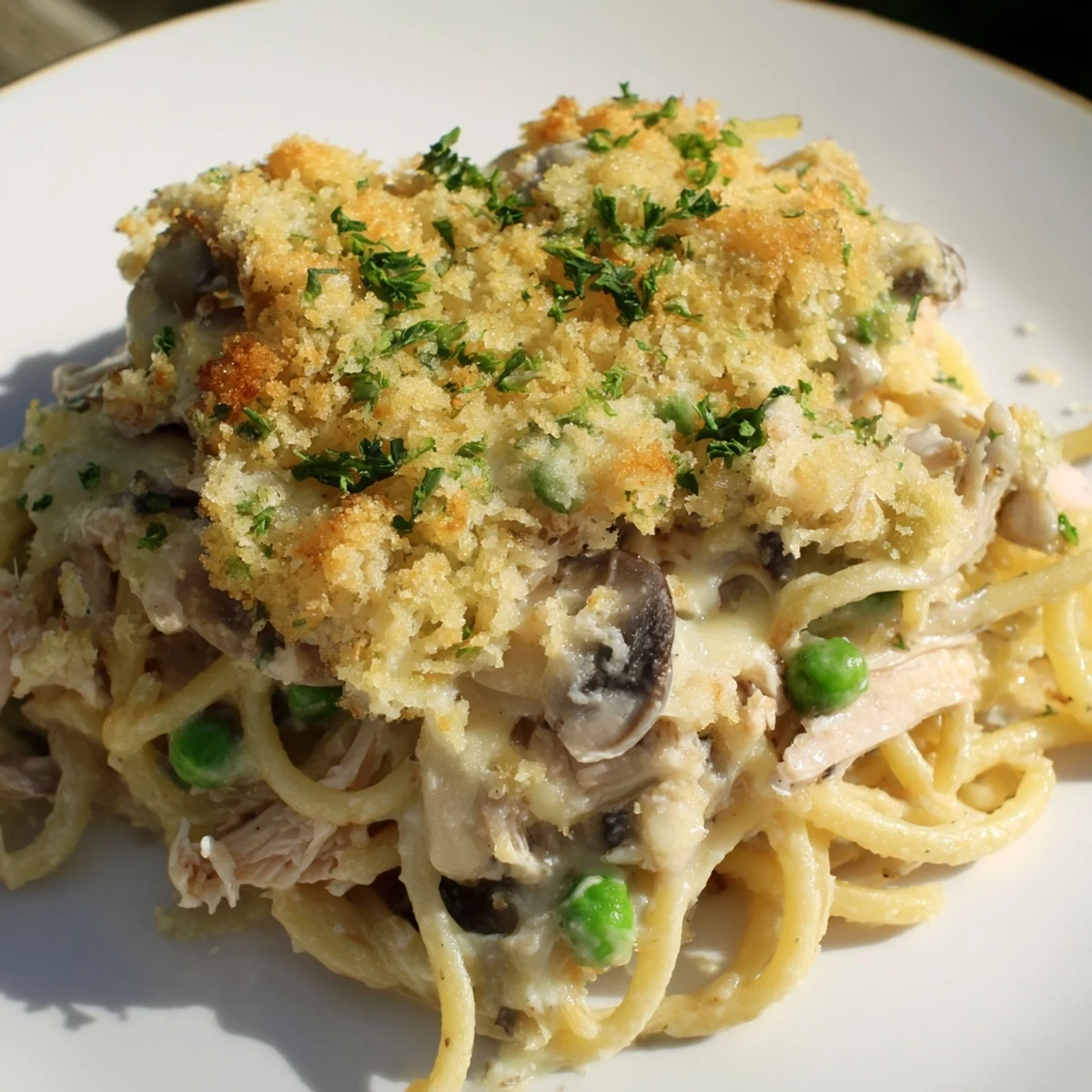
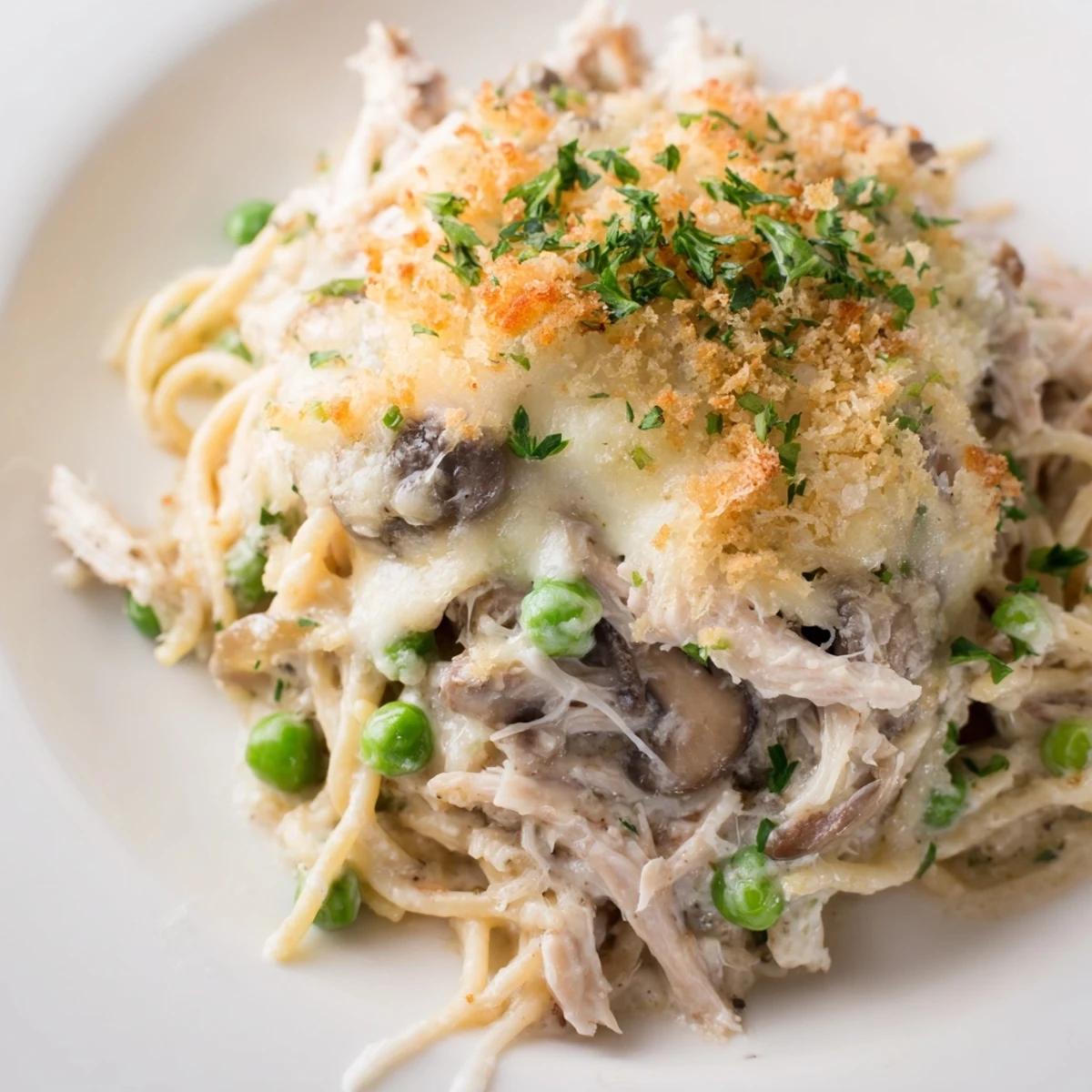
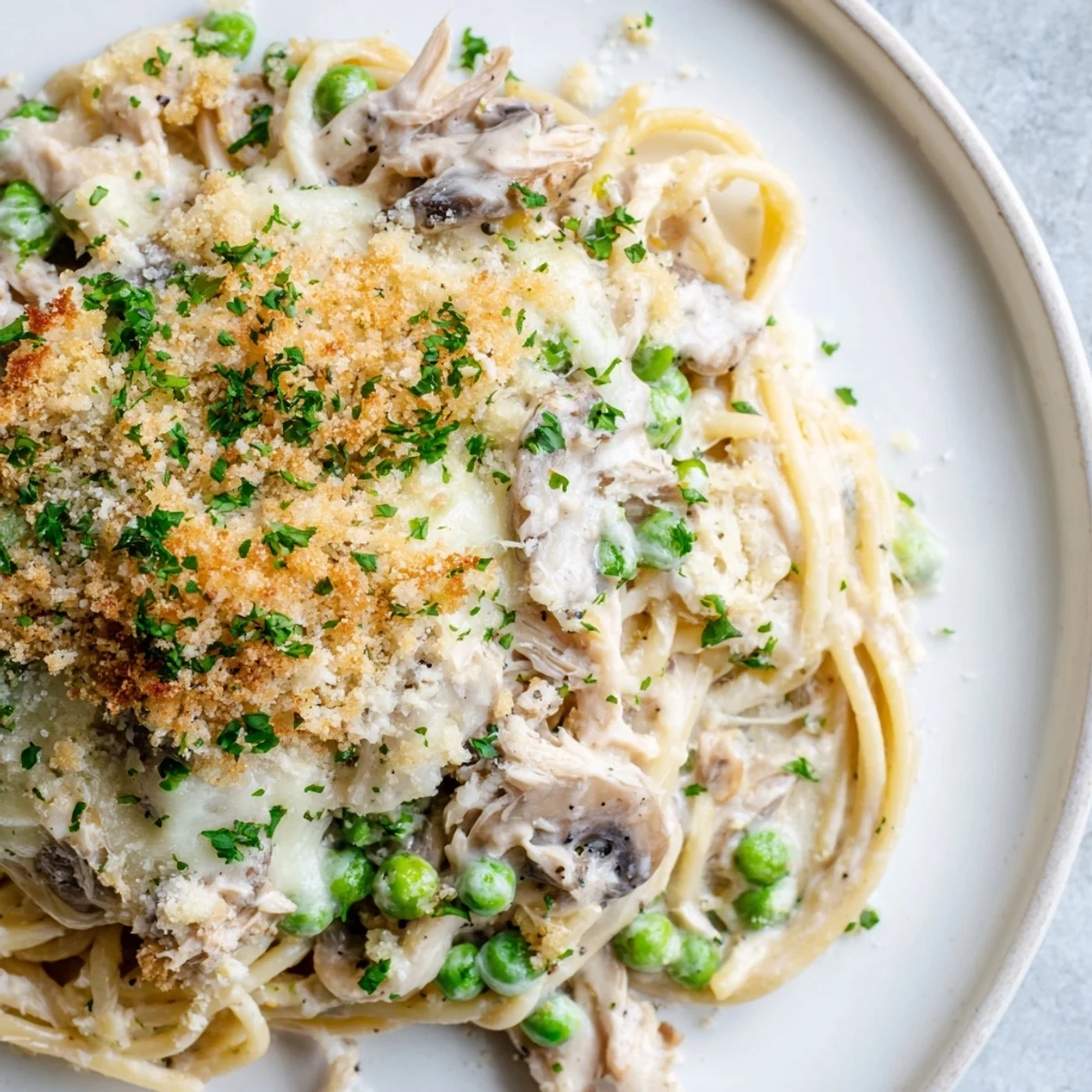
 This comforting baked pasta combines tender turkey with sautéed mushrooms and sweet peas in a rich, creamy sauce. Tossed with pasta and topped with melted mozzarella, Parmesan, and buttery breadcrumbs, it bakes until golden and bubbly. Perfect for a hearty dinner using leftover poultry.
There's something about a casserole dish that makes a kitchen feel instantly like home. I discovered Turkey Tetrazzini by accident one November when I had leftover turkey from a smaller-than-expected gathering and a fridge full of cream, cheese, and mushrooms that needed rescuing. What started as improvisation became the dish I now make whenever I want comfort without fuss. It's the kind of meal that fills the house with a buttery, savory smell and somehow makes everyone feel taken care of.
I remember cooking this for my sister's first dinner party in her new apartment, and watching her face when she pulled it from the oven—not because it looked showstopping, but because it smelled exactly like the kind of meal that says someone cared enough to spend time. She's not a confident cook, but that one casserole became her go-to dish for inviting people over. That's when I realized this recipe isn't really about the turkey or even the technique. It's about having something warm to share.
Ingredients
- Spaghetti or fettuccine, 350 g (12 oz): Thinner pasta absorbs the sauce better than thick shapes, and it cooks quickly, which means less starch in the pot to make the sauce gluey.
- Cooked turkey breast, 2 cups shredded or cubed: Use whatever you have—leftover roasted turkey, rotisserie chicken, or even homemade poached turkey if you're starting from scratch.
- Cremini or white mushrooms, 250 g (9 oz) sliced: These varieties have deeper flavor than button mushrooms, and the slicing matters because it helps them release their moisture and brown properly.
- Frozen peas, 1 cup thawed: Fresh ones are lovely too, but frozen are picked at peak ripeness and cook perfectly in this dish without turning mushy.
- Small onion and 2 garlic cloves, finely chopped and minced: Size matters here because you want them to disappear into the sauce, not announce themselves as chunks.
- Unsalted butter, 4 tbsp (plus 2 tbsp melted for topping): Using unsalted gives you control over the salt level in the final dish—important since you're adding cheese and broth.
- All-purpose flour, 4 tbsp: This is your thickener for the béchamel base. It needs to cook in the butter for a full minute to lose its raw taste.
- Whole milk, 2 cups: Full-fat milk makes a richer sauce, but even 2 percent works if that's what you have.
- Chicken or turkey broth, 1 cup: Don't skip this—it adds savory depth that plain milk alone can't reach.
- Heavy cream, 120 ml (½ cup): This is the luxury that makes the sauce feel like silk rather than school cafeteria gravy.
- Freshly ground black pepper, salt, and ground nutmeg: The nutmeg is the quiet secret everyone overlooks but immediately notices when it's missing—just a whisper of it.
- Parmesan cheese, 1 cup grated and divided: Divide it so you can stir half into the sauce and scatter the other half on top for a golden finish.
- Shredded mozzarella, 1 cup: It melts smoothly and stretches beautifully when baked, creating those little pools of richness throughout.
- Panko breadcrumbs, ½ cup and 2 tbsp melted butter: Panko gets crispier than regular breadcrumbs, and the melted butter ensures they brown rather than just absorb sauce.
Instructions
- Get your oven ready and prep your dish:
- Preheat to 190°C (375°F) and grease your 23x33 cm casserole so nothing sticks when you're pulling it out. This temperature is the sweet spot—hot enough to bubble the filling and toast the topping, but not so ferocious that the top browns before the inside heats through.
- Cook the pasta until just barely done:
- Boil it in salted water until it's al dente, meaning it still has a tiny bit of resistance when you bite it. It will continue cooking in the oven, so err on the side of less done rather than more—nobody wants mushy pasta in their casserole. Drain it well and set it aside.
- Sauté the aromatics and mushrooms:
- Melt 2 tablespoons of butter in a large skillet over medium heat, then soften the onions for about 2 minutes until they start to turn translucent. Add the mushrooms and let them cook undisturbed for a few minutes so they can brown properly—this is where the flavor happens. Stir them occasionally and cook until they've released their liquid and the pan looks almost dry, roughly 6 minutes. Add the garlic at the end and cook just 1 minute more so it doesn't burn.
- Make a silky cream sauce:
- In a separate saucepan, melt the remaining 2 tablespoons of butter over medium heat. Whisk in the flour and cook it for a full minute, stirring constantly—this cooks out the raw flour taste and creates a roux. Slowly pour in the milk and broth while whisking constantly to avoid lumps, then let it simmer for 3 to 4 minutes until it thickens enough to coat the back of a spoon. Stir in the cream, salt, pepper, nutmeg, and half the Parmesan, stirring until the cheese melts completely and the sauce tastes balanced and savory.
- Combine everything in one bowl:
- In a large bowl, gently toss together the cooked pasta, shredded turkey, the mushroom mixture, the peas, the mozzarella, and the sauce. Use a gentle hand so you don't break the pasta, and make sure everything is evenly coated—this is the moment where you're building the casserole's final texture.
- Transfer to the dish and layer the toppings:
- Pour the whole mixture into your greased casserole dish and spread it evenly. Sprinkle the remaining half cup of Parmesan over the top. In a small bowl, mix the panko breadcrumbs with the 2 tablespoons of melted butter until the crumbs are all moistened, then scatter this mixture evenly over the cheese.
- Bake until bubbly and golden:
- Bake for 25 to 30 minutes—you'll know it's ready when the edges are bubbling actively, the top is golden brown, and the sauce is just starting to peek out around the sides. Let it rest for 10 minutes out of the oven before serving; this helps it hold its shape when you spoon it onto plates. Finish with fresh parsley if you have it, though it's just as delicious without the garnish.
 Save Pin
 I learned the true magic of this dish when my nephew, who usually eats pizza and cereal, actually asked for seconds and wanted to know what made it taste like 'fancy home cooking.' That's when I understood that this isn't just a way to use leftovers—it's comfort in its purest form, the kind that makes people feel like they matter. A casserole has a way of doing that.
Why This Dish Still Surprises Me
The simple truth is that Turkey Tetrazzini works because it respects the ingredients without overthinking them. The sauce is just milk, broth, and cream brought together with butter and flour—no exotic techniques needed. Yet somehow when it bakes, all those ordinary elements become something that tastes like you've been cooking it for hours. I think that's why this recipe has survived so long in American home cooking. It delivers sophistication without demanding genius in the kitchen.
Making It Your Own
The beauty of this recipe is that it's forgiving enough for experimentation but structured enough that variations don't derail you. I've made it with half the Parmesan for people watching their fat intake, added roasted red peppers, tried it with fresh tarragon instead of nutmeg, and every version turned out well. The bones of the dish are strong enough to support your own instincts. Listen to what your kitchen smells like and trust that.
Serving and Storage Wisdom
This casserole actually improves after a day in the refrigerator—the flavors marry together overnight and the texture becomes even creamier. It reheats beautifully covered in foil at 160°C (325°F) for about 20 minutes, and it freezes well for up to three months if you haven't added the breadcrumb topping yet; add that fresh before reheating from frozen. Pair it with something bright and acidic—a simple green salad with lemon vinaigrette or steamed green beans tossed with a little garlic does wonders to cut through the richness and make the whole meal feel balanced.
- Leftover casserole makes an unexpectedly good lunch when eaten cold straight from the container, though it's infinitely better heated.
- If you're doubling the recipe for a crowd, increase the baking time to 40 to 45 minutes and check the center to make sure it's heated through.
- Store covered in the refrigerator for up to four days, and always let it cool slightly before covering so condensation doesn't make the topping soggy.
 Save Pin
 This casserole has earned its place in my regular rotation because it asks for so little and gives back so much. Make it for yourself on a quiet Tuesday night, or make it for people who matter to you—either way, you'll understand why comfort food endures.
Recipe Questions & Answers
- → Can I use chicken instead of turkey?
-
Yes, shredded rotisserie chicken is an excellent substitute for the cooked turkey in this dish.
- → Can I make this gluten-free?
-
Simply use your favorite gluten-free pasta and substitute the all-purpose flour with a 1:1 gluten-free flour blend.
- → Can I freeze this casserole?
-
You can assemble the casserole, wrap it tightly, and freeze it before baking. Thaw overnight in the refrigerator before baking as directed.
- → What type of pasta works best?
-
Spaghetti or fettuccine are traditional choices, but any long-cut pasta works well to hold the creamy sauce.
- → What can I serve with this?
-
A fresh green salad or steamed green beans pair perfectly to balance the rich and creamy pasta.