
 Save Pin
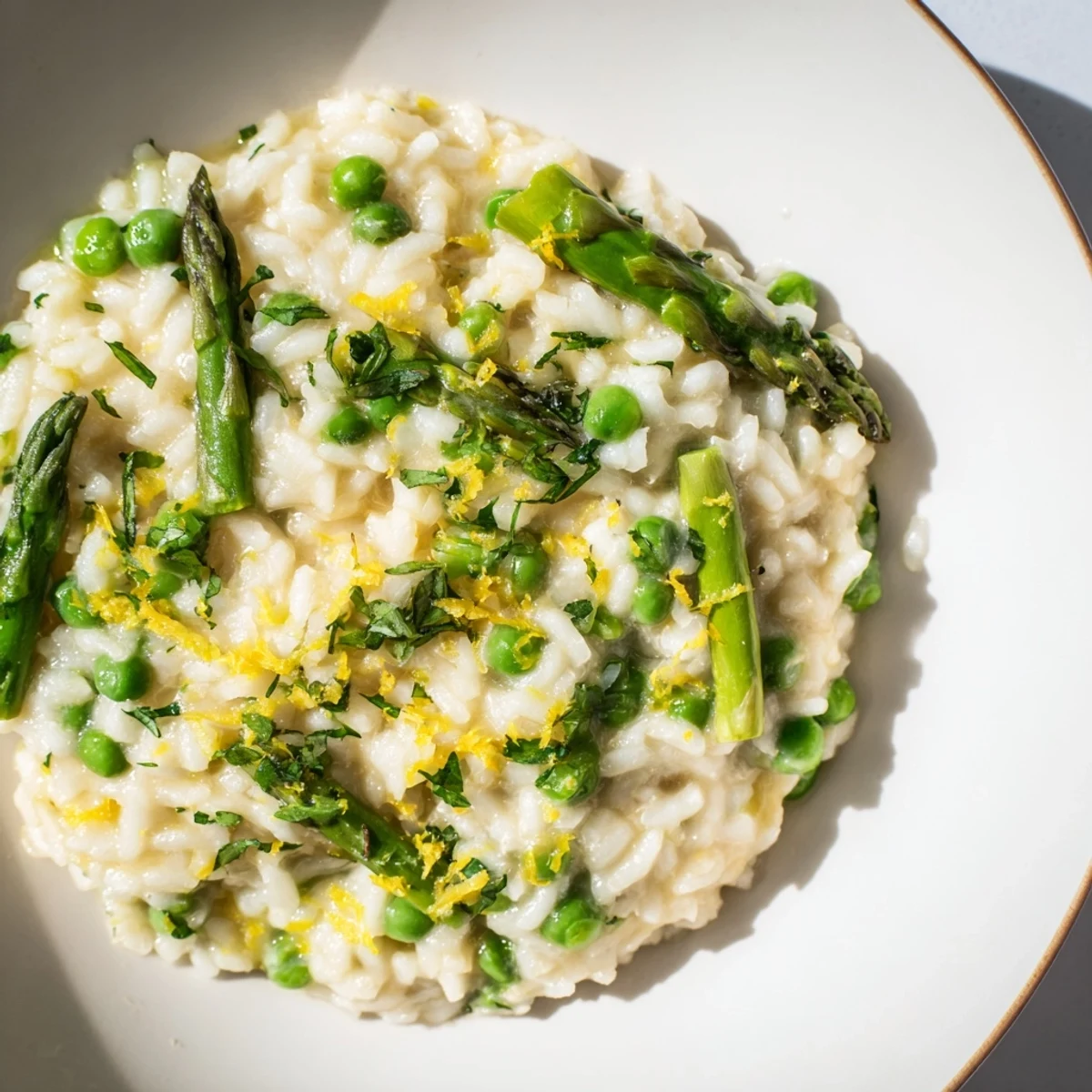
 This risotto offers a rich, creamy texture combined with fresh spring peas and tender asparagus. Arborio rice is cooked slowly in warm vegetable broth and white wine, absorbing flavors for a tender yet al dente bite. Bright lemon zest and chopped parsley add freshness, while Parmesan and butter enrich the dish to a luxurious finish. Perfect for a vegetarian main or side, it balances freshness and comfort in every spoonful. Cooking involves careful stirring and gradual broth addition to achieve the ideal creamy consistency.
The first time I made risotto, I stood at the stove for forty-five minutes straight, convinced I had ruined it. The rice seemed to take forever to soften, and I kept adding broth like I was solving a puzzle without the picture on the box. But then suddenly it transformed, this creamy, comforting bowl of spring that made the constant stirring worth every second. Now it is my go-to when I want something that feels like a hug but still looks impressive.
I made this for my sister last April when she came over for an impromptu dinner. She kept asking what smelled so good while the lemon zest hit the warm rice, and I honestly did not want to share. We ended up eating standing at the counter because neither of us could wait another second to sit down properly.
Ingredients
- Arborio rice: This short-grain rice releases starch as it cooks, creating that signature creamy texture without needing heavy cream
- Asparagus: Choose spears with tight tips and trim the woody ends before cutting into pieces
- Spring peas: Fresh peas are sweetest, but frozen work perfectly and save time shucking
- Vegetable broth: Keep it warm in a separate pan so adding it does not slow down the cooking process
- White wine: Dry varieties like Pinot Grigio add acidity and depth, but you can substitute more broth
- Lemon zest: This bright trick cuts through the richness and makes everything taste alive
- Parmesan: Freshly grated melts better and gives you that umami finish that ties it together
Instructions
- Get your broth warm:
- Heat the vegetable broth in a saucepan over low heat while you prep everything else
- Build your base:
- Cook the onion in olive oil until it turns translucent, then add garlic for just a minute so it does not burn
- Toast the rice:
- Add the Arborio rice and stir for two minutes until the grains look slightly translucent around the edges
- Add the wine:
- Pour in the white wine and stir until it almost disappears into the rice
- The gradual broth game:
- Add one ladle of warm broth at a time, stirring often and letting the rice absorb it before adding more
- Prep the vegetables:
- While the rice cooks, blanch the asparagus for a few minutes and add peas for the last minute
- Combine everything:
- When the rice is creamy but still has a slight bite, fold in the vegetables, lemon zest, and parsley
- The finish:
- Remove from heat and stir in the butter and Parmesan until you have that luxurious consistency
 Save Pin
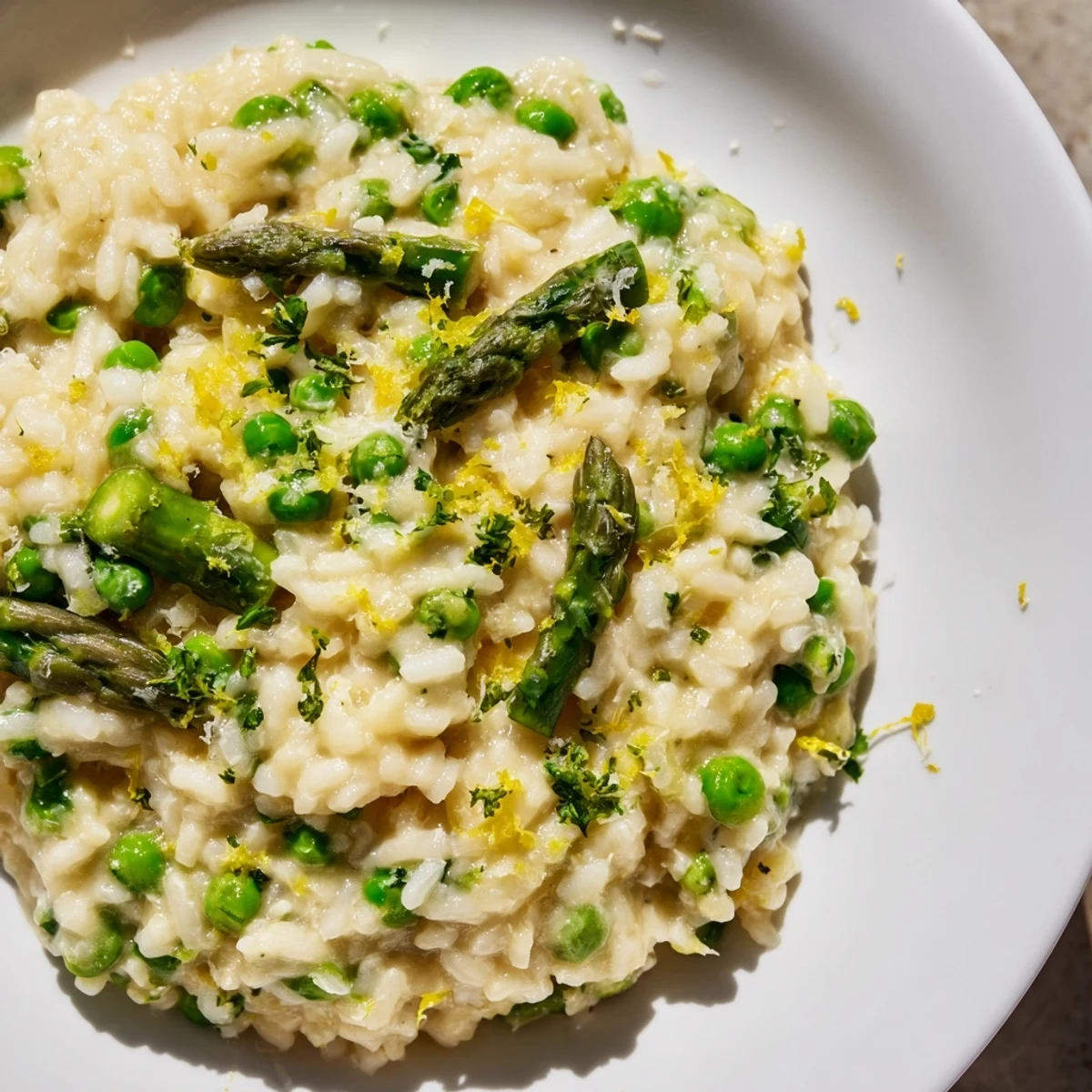
 My friend Sarah swears she cannot cook rice, but she nailed this on her first try. She called me midway through convinced it was too soupy, but I told her to trust the process and keep stirring. When she sent me a photo later, she had plated it beautifully with extra Parmesan on top like a restaurant dish.
Making It Your Own
Sometimes I add mascarpone at the end for extra richness, especially when I am serving this to people I really want to impress. Other times I swap the asparagus for whatever looks good at the market, like zucchini in summer or butternut squash in fall. The technique stays the same, and that is the real beauty of it.
Pairing Suggestions
A crisp white wine like Sauvignon Blanc cuts through the creaminess perfectly. If you want something light on the side, a simple green salad with lemon vinaigrette keeps the meal feeling fresh. For a heartier dinner, roasted chicken or seared scallops turn this into something truly special.
Storage and Reheating
Risotto is best eaten immediately, but leftovers keep in the fridge for up to three days if stored airtight. The rice will absorb more liquid as it sits, so add a splash of broth or water when reheating. I actually love making risotto cakes the next day by forming cold leftovers into patties and panfrying them until golden.
- Reheat gently over low heat, adding liquid a little at a time
- Never microwave it on high or the texture becomes gummy
- Make extra rice intentionally for those crispy risotto cakes
 Save Pin
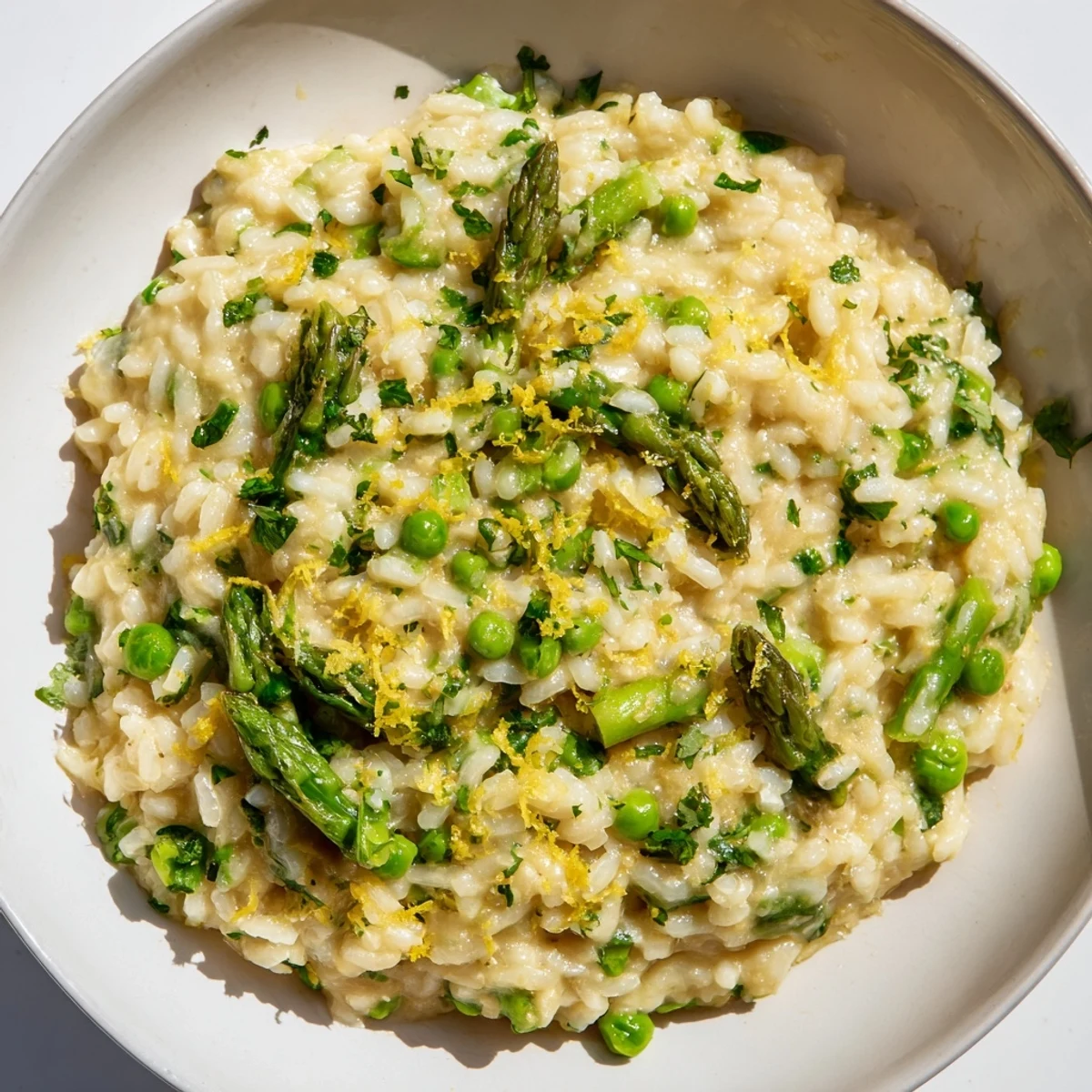
 There is something meditative about standing at the stove, ladling broth and watching the rice transform. It reminds me that good food really does just take a little patience and attention.
Recipe Questions & Answers
- → How do I achieve a creamy texture in risotto?
-
Gradually adding warm broth and stirring frequently helps release starch from Arborio rice, creating a rich and creamy texture without overcooking.
- → Can I use frozen peas instead of fresh spring peas?
-
Yes, frozen peas work well and can be added towards the end of cooking to retain their vibrant color and sweetness.
- → What’s the best method to cook asparagus for this dish?
-
Lightly steaming or blanching asparagus for 2–3 minutes preserves its bright color and tender-crisp texture, ideal for folding into the risotto.
- → Is it necessary to use white wine while cooking?
-
White wine adds acidity and depth but can be substituted with extra broth if preferred, though the flavor profile will be slightly different.
- → How can I make this dish vegan-friendly?
-
Use plant-based butter and a dairy-free cheese alternative or omit cheese completely for a rich, vegan variation.
- → What type of rice is best for this dish?
-
Arborio rice is ideal due to its high starch content that yields the creamy texture essential to traditional risotto.