
 Save Pin
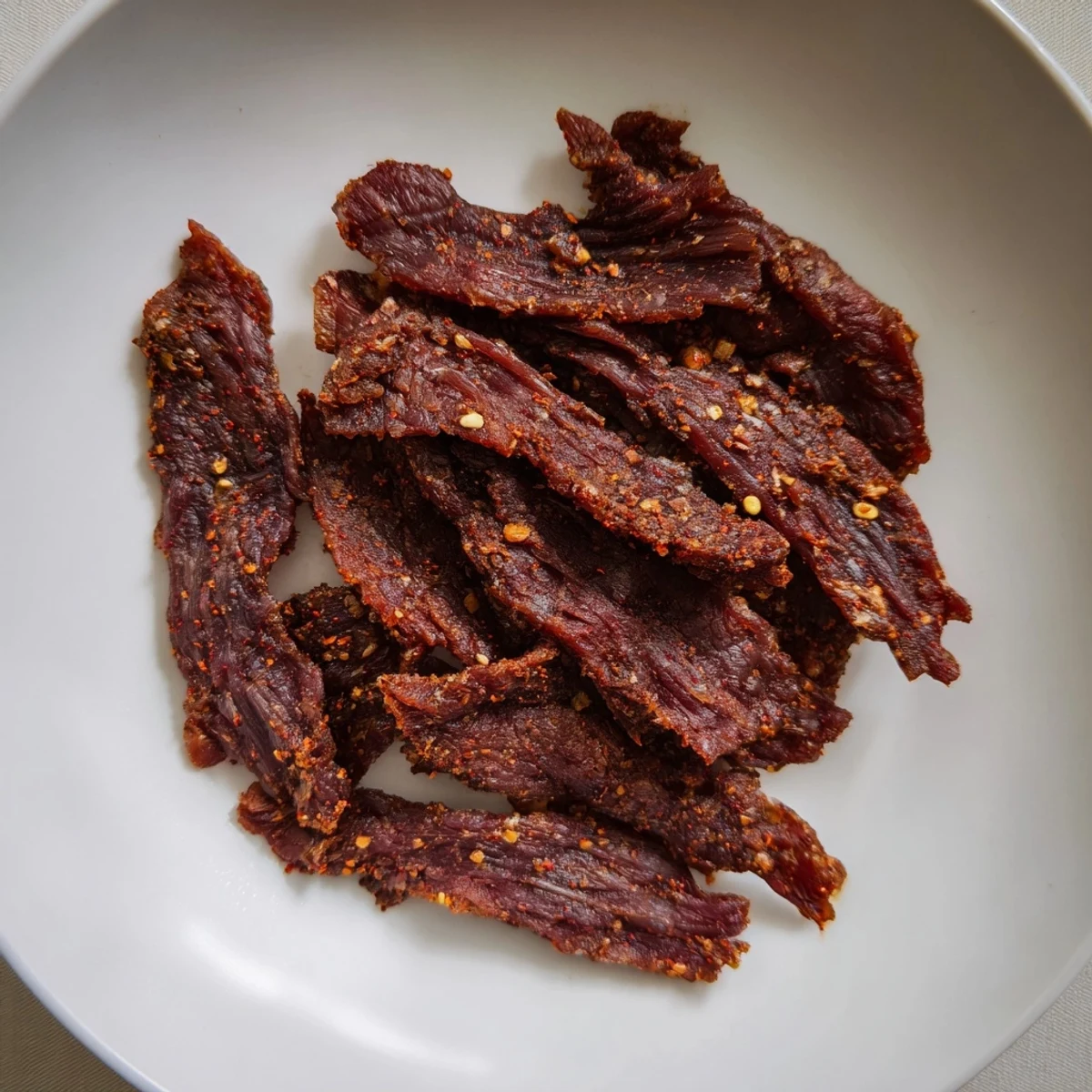
 This savory beef snack is made from lean cuts sliced thin and marinated in a blend of soy sauce, Worcestershire sauce, brown sugar, and spices. After marinating overnight, the strips are dried slowly at low temperature until tender and chewy. The process locks in rich flavors, creating a high-protein, satisfying snack that’s perfect for on-the-go energy or a flavorful treat anytime. Adjust spices to your liking and store in a sealed container for freshness.
I discovered the magic of homemade jerky by accident, honestly. A friend brought over a batch she'd made in her new dehydrator, and I couldn't stop eating it—the flavor was so much deeper than anything store-bought, almost sweet underneath all that savory depth. That afternoon, I raided my freezer for beef and decided to try it myself, not really knowing what I was doing but determined to chase that same taste. Eight hours later, standing in my kitchen with the oven cracked open and the smell of marinating spices filling every corner, I realized I'd stumbled onto something I'd be making again and again.
The first time I made jerky for my coworkers, I brought in a small container thinking maybe they'd try a piece or two. By lunch, the container was empty and three people had asked for the recipe. There's something about jerky that makes people feel like they're getting away with something delicious and slightly rebellious during a regular workday.
Ingredients
- Lean beef (top round, sirloin, or flank steak): Use 1 kg trimmed of all visible fat—this is crucial because any fat left behind can go rancid during storage and ruin your whole batch, something I learned the messy way.
- Low-sodium soy sauce: 120 ml gives the base savory note without making the jerky unbearably salty before it even dries.
- Worcestershire sauce: 60 ml adds complexity and umami depth that makes people wonder what the secret ingredient is.
- Brown sugar: Just 1 tbsp balances the salt and spice with a subtle sweetness that doesn't announce itself.
- Smoked paprika: 1 tsp brings warmth and a hint of that campfire feeling without overpowering.
- Black pepper: 1 tsp freshly ground tastes alive compared to the pre-ground stuff sitting in a tin for months.
- Onion powder: 1 tsp rounds out the savory profile with a gentle sharpness.
- Garlic powder: 1 tsp because raw garlic would be too aggressive, but you still want that allium presence.
- Chili flakes: 1/2 tsp optional, but add them if you like a slow burn that builds rather than hits all at once.
- Ground cumin: 1/2 tsp gives an earthy undertone that ties everything together.
Instructions
- Chill the beef to firm it up:
- Pop your beef into the freezer for 1 hour—it sounds like a small step, but cold beef slices so much cleaner than room-temperature beef, giving you those uniform pieces that dry evenly. Think of it as a quick nap before the work begins.
- Slice against the grain:
- This is where patience matters: position each slice so you're cutting perpendicular to the muscle fibers, aiming for strips about 3–5 mm thick. Thicker slices take forever to dry; thinner ones become too fragile and break apart in your hands.
- Build the marinade:
- Combine all the marinade ingredients in a large bowl, whisking just enough to blend them together smoothly. The mixture should smell like you're about to eat something really good—if it doesn't, you'll know something's off.
- Coat the beef and let it sit:
- Add beef strips to the marinade and use your hands to make sure every surface gets coated, which takes maybe 2 minutes of actual work. Cover the bowl, refrigerate for at least 8 hours or overnight, stirring every few hours if you think of it—this helps the flavors soak all the way through instead of just clinging to the outside.
- Prep your drying setup:
- Preheat your oven to 70°C or set your dehydrator to the same temperature—consistency matters here because higher heat cooks the outside too fast while the inside stays moist and spoils. Line your baking sheets with wire racks so air can circulate underneath each piece.
- Pat the beef dry:
- Remove strips from the marinade one by one and blot them thoroughly with paper towels to remove excess liquid—this cuts drying time by hours and prevents your jerky from becoming tough and leathery instead of beautifully chewy. Don't rush this step.
- Arrange for drying:
- Lay strips in a single layer on the racks, making sure they never touch each other, otherwise the places where they meet won't dry properly and you'll end up with sticky spots. Space matters as much as time here.
- Dry slowly and steadily:
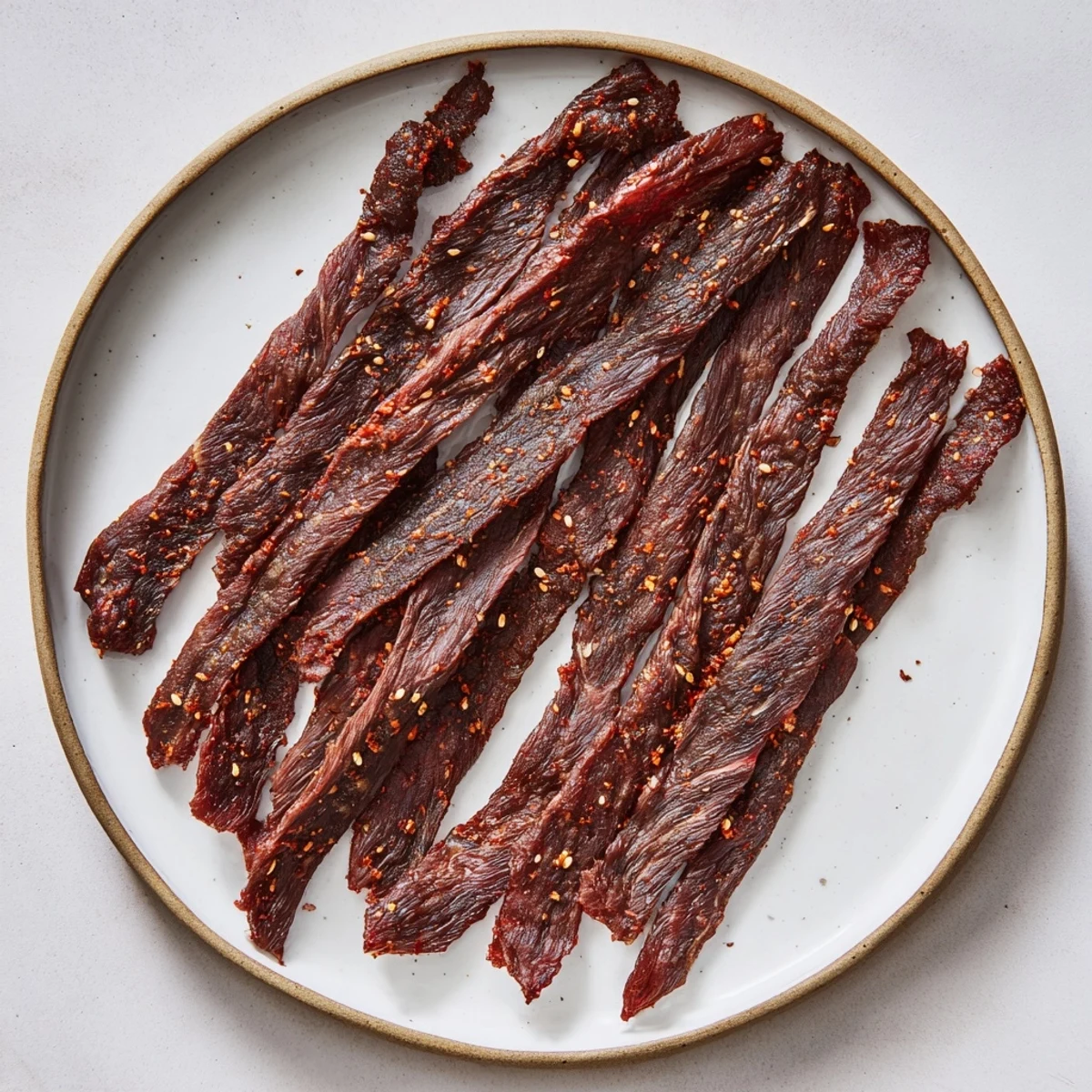
- Crack the oven door just slightly—use a wooden spoon wedged in there to keep it from closing—and let the beef dry for 4–5 hours, or until pieces are firm and bend without snapping clean. You should be able to squeeze one and feel it resist; if it turns to powder, you've gone too far.
- Cool completely before storing:
- Let the jerky sit on the racks until it reaches room temperature, which also helps it finish its final moisture adjustment in a gentler way. Warm jerky stored away traps steam inside and can develop mold.
 Save Pin
 I remember my partner walking into the kitchen halfway through the drying process and just standing there, breathing in, saying nothing. Sometimes the best food moments aren't about eating—they're about that moment when someone smells something you made and you know, immediately, that it's going to be good.
Why This Recipe Works
The balance here is intentional: soy sauce and Worcestershire give you salt and depth without making you thirsty, while brown sugar sneaks in just enough sweetness to make the savory parts taste even better by contrast. The spice blend leans toward warmth rather than heat, which means your jerky stays approachable even if you're not chasing fire in every bite. Low-temperature drying preserves the meat's texture and prevents it from becoming that hard, almost brittle stuff that tastes more like shoe leather than food.
Storage and Longevity
Jerky made this way keeps in an airtight container at room temperature for up to a week, though honestly, it usually disappears faster than that. For longer storage, the fridge extends things to about a month—just check occasionally that no mold has crept in, which can happen if any moisture got trapped inside during storage. The key is truly dry, fully cooled jerky going into a truly airtight container.
Ways to Customize
This recipe is a foundation, not a rulebook, so feel free to play around once you've made it once and understand how the pieces fit together. Some people add liquid smoke to the marinade for a deeper, campfire-like flavor that builds as you chew. Others double the chili flakes or mix in a pinch of cayenne if they want real heat, and a splash of balsamic vinegar creates an unexpected sweetness that some people become obsessed with.
- For a gluten-free version, swap regular soy sauce for tamari or coconut aminos, which give almost the same depth without the wheat.
- If you're sensitive to Worcestershire sauce (which may contain anchovies), use a vegetarian alternative or simply add a tiny pinch of fish sauce or extra soy sauce to keep the umami balance intact.
- Try different beef cuts once you're comfortable with the process: eye of round dries more evenly, while brisket adds more flavor but requires longer drying time due to its marbling.
 Save Pin
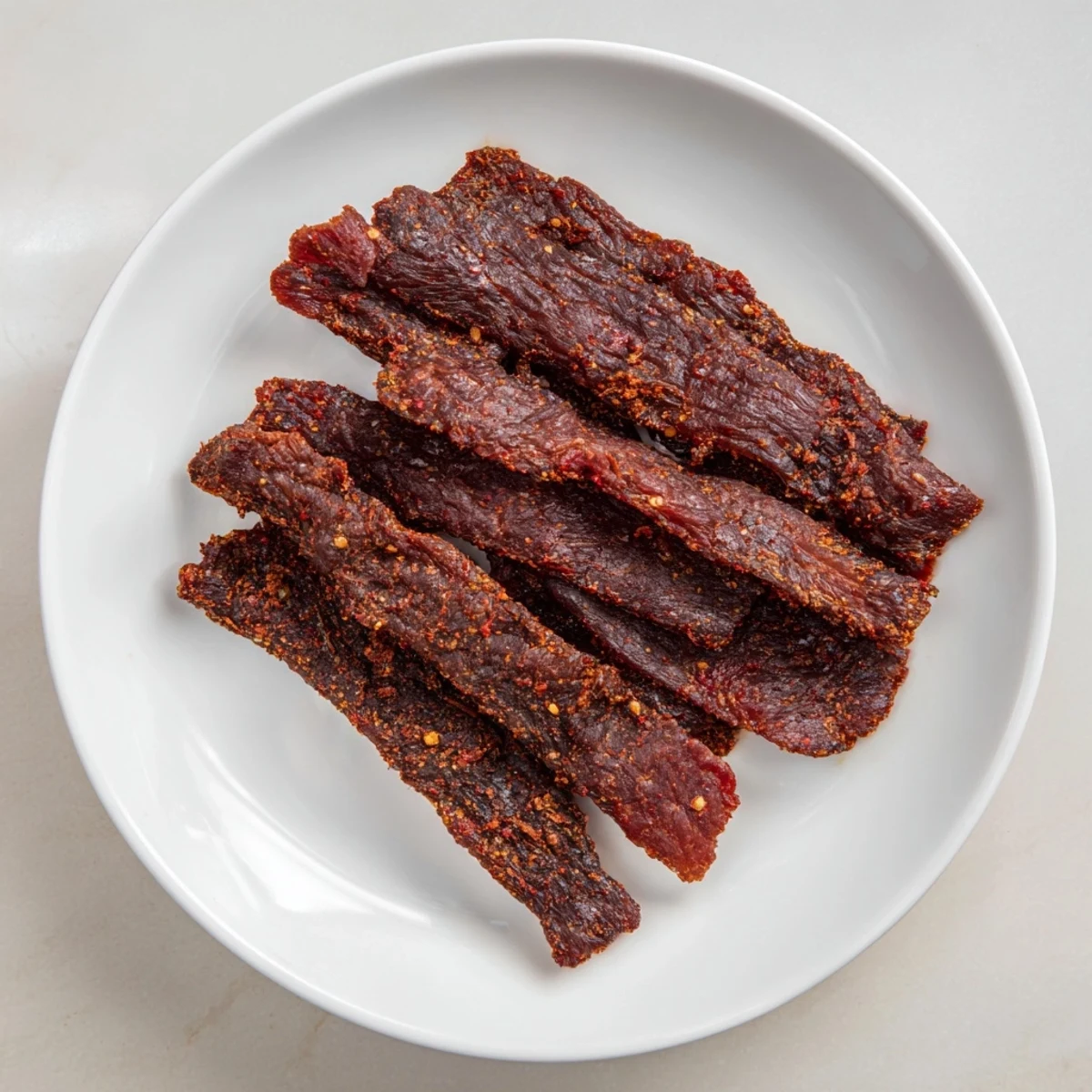
 Making jerky is one of those kitchen projects that feels like you're getting away with something—spending hours on something that takes five minutes to eat, but somehow that's exactly the point. Once you nail it, you'll have a snack that tastes nothing like the commercial stuff and costs a fraction of what you'd pay for the fancy brands.
Recipe Questions & Answers
- → What cut of beef works best for this snack?
-
Lean cuts like top round, sirloin, or flank steak are ideal to ensure tenderness and ease of slicing.
- → How long should the beef marinate?
-
Marinate the beef strips for at least 8 hours or overnight to allow the flavors to deeply penetrate.
- → Can I adjust the spice level?
-
Yes, chili flakes are optional and can be increased or reduced based on your preferred heat level.
- → What’s the best drying method?
-
Drying at 70°C (160°F) in an oven with the door slightly ajar or using a food dehydrator yields tender, chewy results.
- → How should I store the finished snack?
-
Store in an airtight container at room temperature for up to a week, or refrigerate for longer freshness up to a month.