
 Save Pin
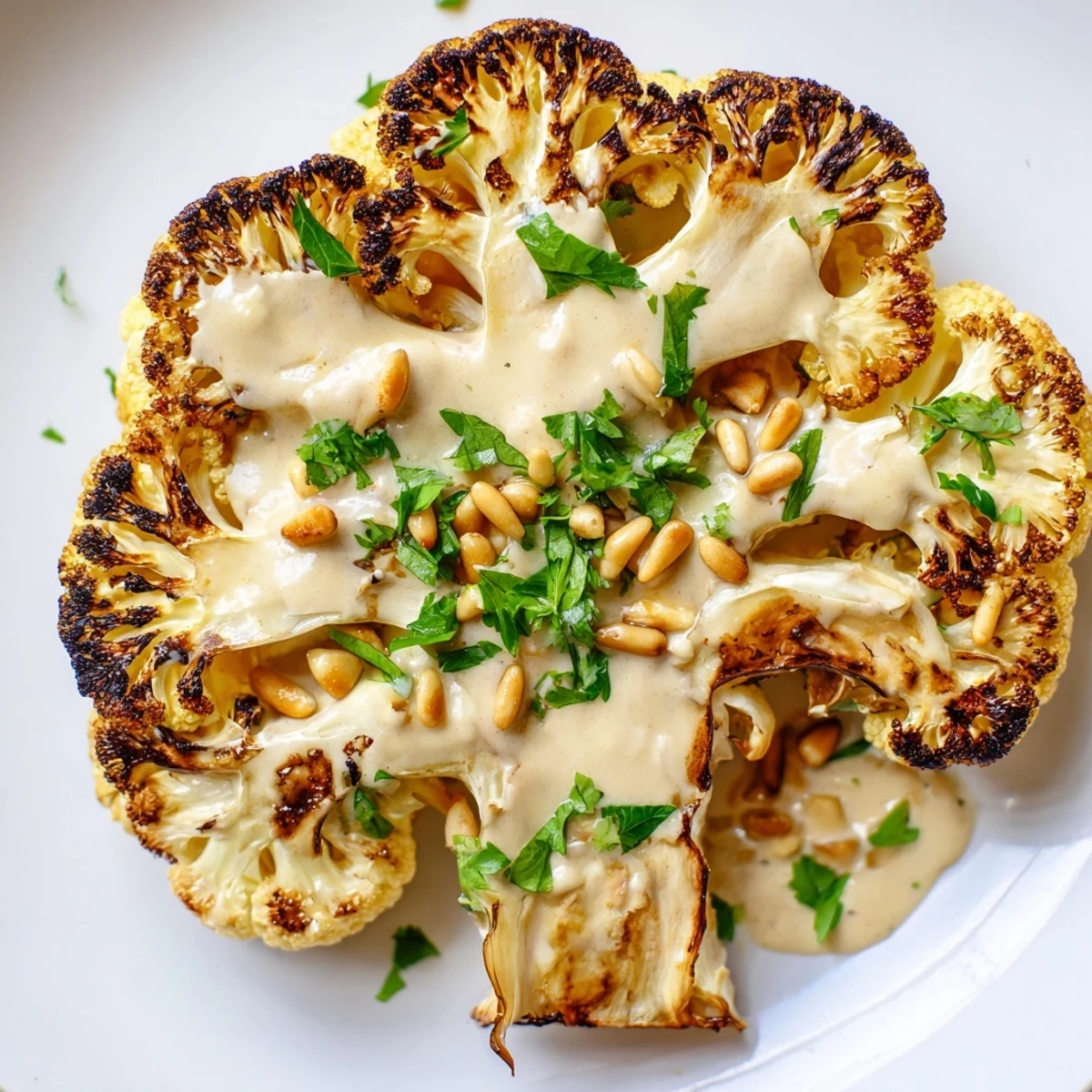
 Thick slices of cauliflower are roasted at high heat until the edges turn golden brown and the interior becomes tender and fork-friendly. The contrast comes from a silky tahini dressing made with fresh lemon juice, garlic, and a touch of maple syrup for balance. Simply whisk the dressing ingredients together while the cauliflower roasts, then assemble on a platter and drizzle generously. Garnish with fresh parsley and toasted nuts for added crunch and flavor.
The first time I made cauliflower steaks, I nearly gave up when my perfectly planned slices crumbled into florets before my eyes. Three heads of cauliflower later, I discovered the secret was keeping the core intact while cutting firmly with a sharp knife. That kitchen disaster turned triumph now makes regular appearances at our table, especially when the tahini sauce pools into those perfectly roasted crevices.
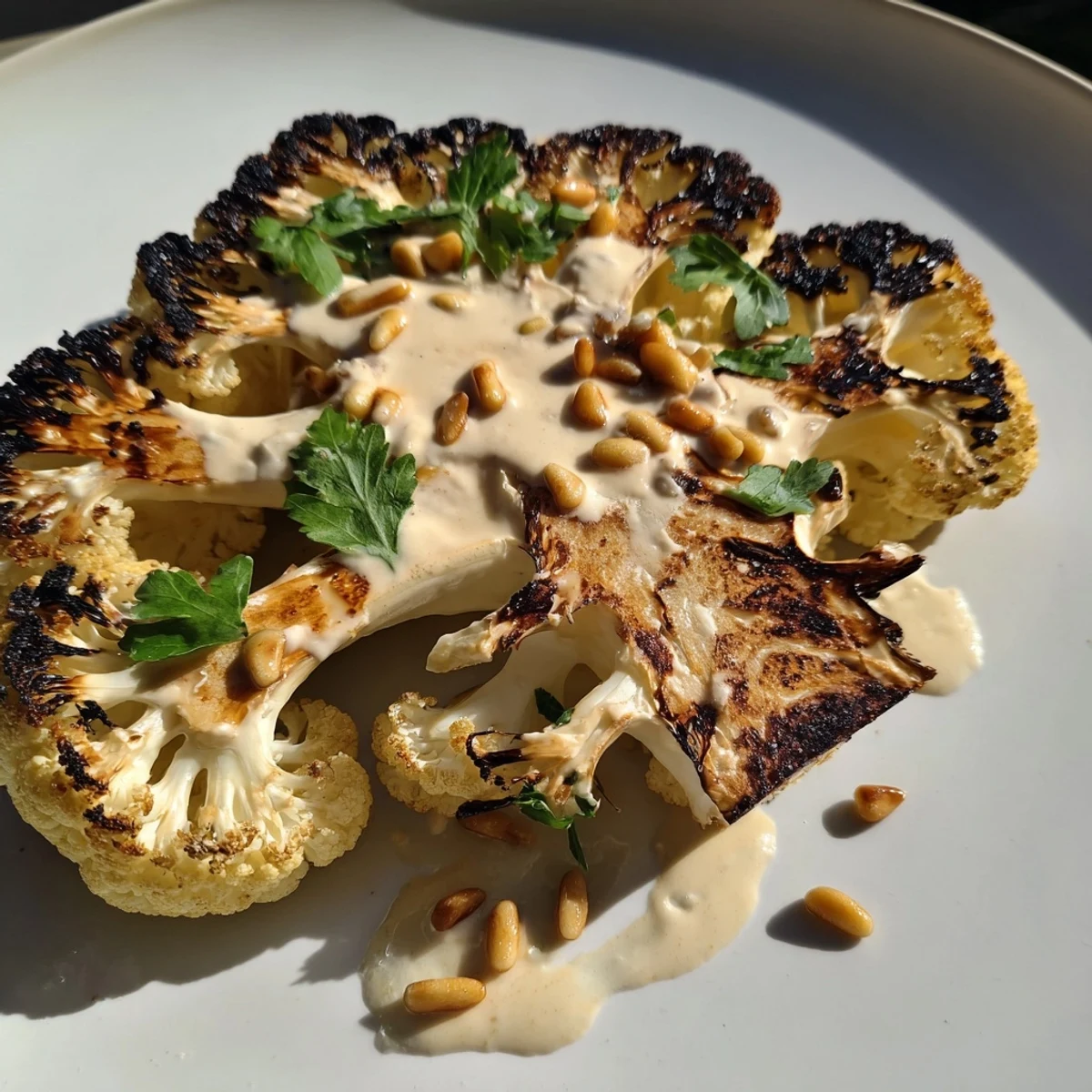
Last autumn, my neighbor Sarah dropped by unexpectedly just as these golden slabs emerged from the oven. The kitchen smelled of toasted cumin and caramelizing cauliflower, and I watched her expression change from polite interest to genuine curiosity. She confessed shed never thought of cauliflower as anything but a bland side dish before seeing those gorgeous charred edges.
Ingredients
- Cauliflower heads: Look for heavy, compact heads with tight florets and no browning, as Ive found the denser ones hold together better when sliced into steaks.
- Smoked paprika: This magical spice brings a subtle smokiness that transforms the entire dish, something I discovered after accidentally grabbing it instead of regular paprika one distracted evening.
- Tahini: The good stuff should be creamy and pour easily, not bitter or separated, a lesson I learned after wondering why my dressing tasted off for months.
- Fresh lemon juice: Please dont substitute bottled here, as the bright acidity cuts through the rich tahini and makes all the flavors pop in a way that still surprises me.
Instructions
- Prep your cauliflower carefully:
- Stand the cauliflower on its stem and slice downward through the core to get those perfect steaks. I find a gentle rocking motion with a sharp chefs knife works better than trying to force it straight down.
- Season generously:
- Dont be shy with the spice blend, making sure to get it into all the nooks and crannies. The first time I made this, I under-seasoned and missed out on those intense flavor pockets that make each bite exciting.
- Watch for the golden moment:
- Youll know the cauliflower is perfectly done when the edges develop a deep golden brown color and the center yields easily to a fork. I once undercooked them and missed that magical texture contrast.
- Nail the dressing consistency:
- The tahini sauce should be pourable but not watery, coating the back of a spoon. Add water a teaspoon at a time until it lazily drips rather than plops, something I learned through much trial and error.
 Save Pin
 My favorite memory with this dish was serving it at a dinner where my brother-in-law, a devoted carnivore, kept eyeing it skeptically. When he finally took a reluctant bite, his eyebrows shot up in surprise and he quietly went back for seconds without a word. Later that night, I caught him in the kitchen scraping the last bits of tahini sauce from the serving platter with his finger.
Getting The Perfect Slice
I spent months frustrated by crumbling cauliflower before learning to work with rather than against its natural structure. Now I trim just enough of the stem to create a flat base, stand the head upright, and slice downward with confidence, starting from the center. Those middle slices with the intact core make the most impressive steaks, while the outer portions can be roasted alongside as delicious florets, ensuring nothing goes to waste.
Making It A Complete Meal
These cauliflower steaks bridge that tricky gap between side dish and main course. When I serve them as the star of the show, I often pair them with a quick chickpea salad tossed with cucumber, red onion, and the same tahini dressing. The protein from the legumes and the satisfying bulk of the cauliflower create a meal that keeps everyone at the table feeling surprisingly full, a revelation that changed my approach to plant-based cooking.
Storage And Reheating
After learning the hard way that microwaving turns these beautiful steaks into mushy disappointments, I now store leftovers separately from the sauce and reheat them in a hot oven for about 10 minutes to revive those crispy edges. The tahini sauce keeps beautifully in a jar for up to a week, though it rarely lasts that long in my refrigerator.
- Store roasted cauliflower and tahini sauce separately in airtight containers in the refrigerator for up to 3 days.
- Reheat cauliflower in a 350°F oven for 10 minutes until warmed through and edges crisp up again.
- Thin the tahini sauce with a splash of warm water if it thickens in the refrigerator before drizzling over reheated cauliflower.
 Save Pin
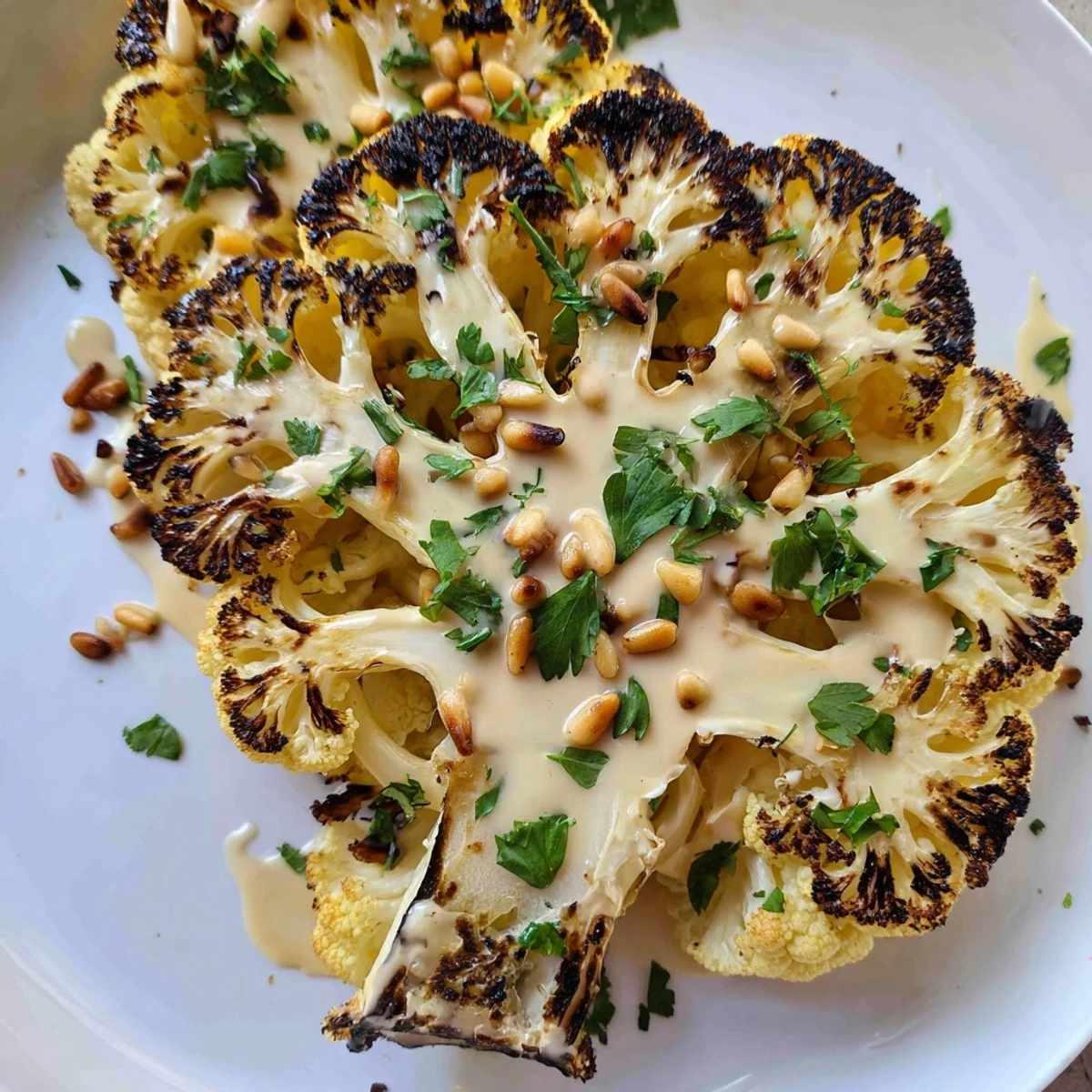
 Whenever I serve these golden cauliflower steaks drizzled with creamy tahini, they remind me that the most memorable dishes often come from simple ingredients transformed by heat and thoughtful seasoning. May they bring the same delighted surprise to your table that they continue to bring to mine.
Recipe Questions & Answers
- → How thick should the cauliflower slices be?
-
Cut the cauliflower into 1-inch-thick steaks, keeping the core intact. This thickness allows the edges to caramelize while the center stays tender.
- → Can I make the tahini dressing ahead of time?
-
Yes, prepare the dressing up to 2 days in advance and store it in an airtight container in the refrigerator. Whisk again before serving, adding a splash of water if it has thickened.
- → What's the best way to achieve golden, crispy edges?
-
Ensure the oven is fully preheated to 425°F, arrange steaks in a single layer without overcrowding, and flip halfway through roasting. Don't skip brushing with olive oil.
- → Can I substitute the tahini dressing?
-
You can use other plant-based sauces like hummus-lemon drizzle, cashew cream, or a simple olive oil and herb mixture. Tahini's earthy flavor complements the roasted cauliflower beautifully though.
- → How do I know when the cauliflower is done roasting?
-
The steaks are ready when they're golden brown on the edges and tender when pierced with a fork, typically 25-30 minutes. Don't be afraid of dark caramelization—it adds flavor.
- → What can I serve alongside this dish?
-
Pair with cooked quinoa, brown rice, chickpea salad, roasted vegetables, or a fresh green salad to create a more substantial meal.