
 Save Pin
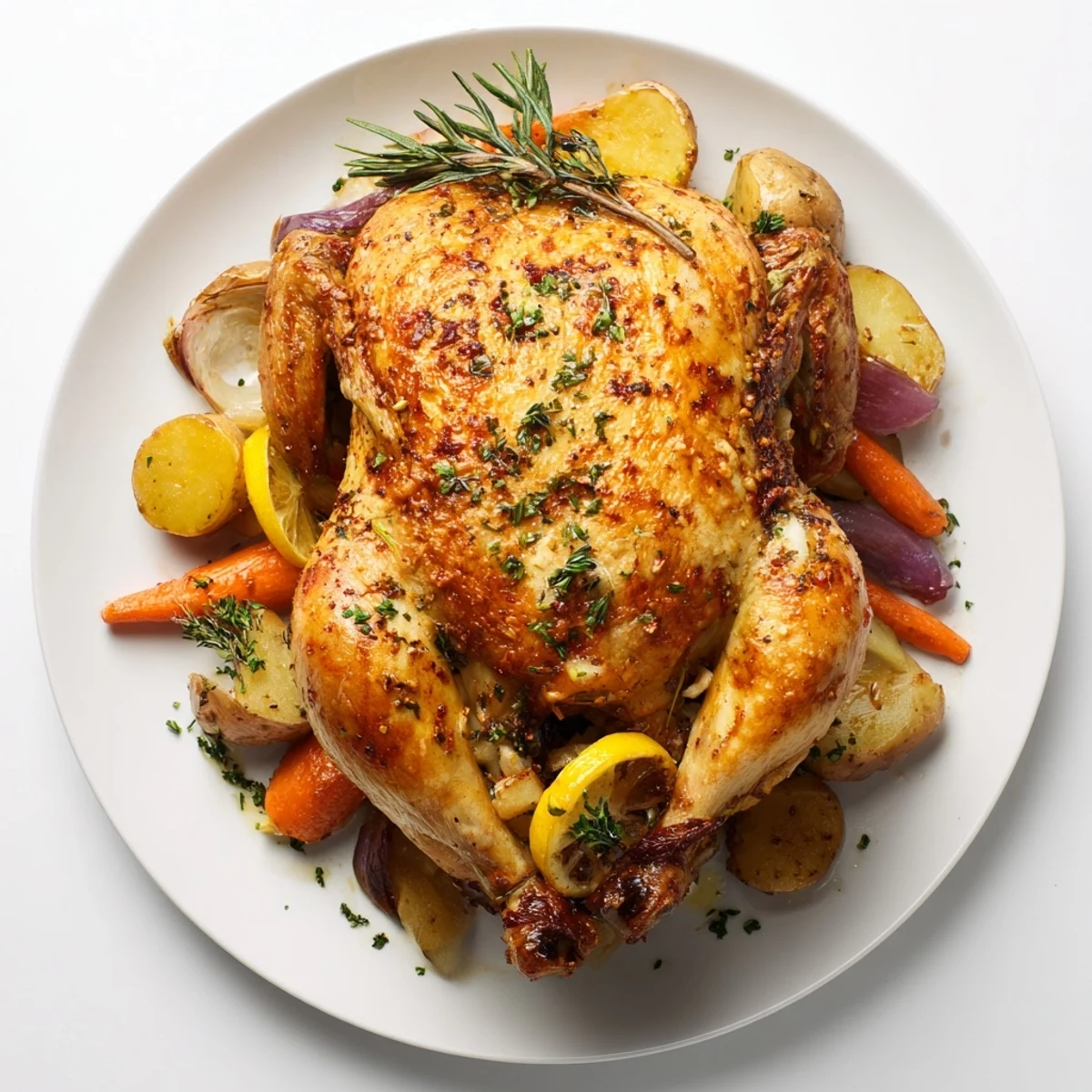
 This dish features a whole chicken rubbed with olive oil, sea salt, pepper, and paprika, stuffed with fresh thyme, rosemary, and lemon for fragrant notes. Root vegetables like carrots, parsnips, onions, garlic, and baby potatoes are tossed in olive oil and seasoning, creating a flavorful bed during roasting. The chicken is placed on top and cooked until golden brown and juicy, with pan juices basted twice. Resting before carving ensures moistness. Garnishing with parsley adds freshness, making this European-inspired dish ideal for a satisfying family dinner.
There's something almost meditative about roasting a whole chicken—the way the kitchen fills with that warm, herbaceous perfume as it turns golden in the oven. I stumbled into making this dish properly years ago when a friend mentioned she never bothered with a thermometer, just trusted her nose and the color of the skin. That single tip changed everything for me, and now I find myself reaching for this recipe whenever I want something that feels both effortless and impressive.
I made this for my partner's parents the first time they visited our place, and I was genuinely nervous about the timing. But something about the simplicity of it—just a bird, some vegetables, a hot oven, and patience—made me relax. When we carved it at the table and the steam rose up, there was this collective sigh of contentment that made me realize roasted chicken isn't just dinner, it's a small ceremony.
Ingredients
- 1 whole chicken (about 1.5 kg / 3.3 lbs): Choose one with good color and firm skin; it makes a difference in how it roasts and tastes.
- Carrots, parsnips, onions, and potatoes: The combination of sweet, earthy, and mild flavors creates balance; don't skip the parsnips, their sweetness is key.
- Fresh thyme and rosemary: Dried herbs won't give you that same fragrant punch, so use fresh if you can find it.
- Lemon: Both seasons the bird from inside and releases oils that perfume everything during roasting.
- Olive oil and sea salt: Quality matters here since they're doing the heavy lifting; don't use iodized table salt if you can help it.
- Garlic, paprika, and black pepper: These create a gentle spice layer that doesn't overpower but makes people ask what your secret is.
- Dry white wine or chicken stock (optional): Adds moisture and deepens the pan juices; worth the extra step if you have it on hand.
Instructions
- Dry your bird:
- Pat the chicken completely dry with paper towels, inside and out. Moisture is the enemy of crispy skin, so don't rush this part; I sometimes let it sit uncovered in the fridge for a few hours beforehand.
- Season generously:
- Rub the skin and cavity with olive oil, salt, pepper, and paprika, getting into every crevice. This is where flavor begins, so be thorough and don't be shy with the seasoning.
- Stuff the cavity:
- Tuck lemon halves and a couple sprigs each of thyme and rosemary into the bird. This creates an aromatic steam bath inside as it roasts.
- Prepare your vegetables:
- Arrange carrots, parsnips, onions, garlic, and potatoes in the roasting pan, toss with oil, salt, and pepper. They'll catch the drippings and caramelize beautifully.
- Position the chicken:
- Set the bird breast-side up on top of the vegetables and tuck the remaining herb sprigs around it. Tuck the wing tips underneath to help it cook evenly.
- Add liquid:
- Pour white wine or stock into the pan (not over the chicken). This prevents the pan bottom from burning and gives you liquid gold for gravy.
- Roast with intention:
- Roast at 200°C (400°F) for 1 hour 15 minutes, basting twice with the pan juices using a spoon. The skin should turn mahogany brown and the internal temperature should reach 75°C (165°F) when checked in the thickest part of the thigh.
- Rest before carving:
- Let the chicken rest for 10 minutes on a cutting board before touching it. This keeps the meat juicy and gives you time to catch your breath.
 Save Pin
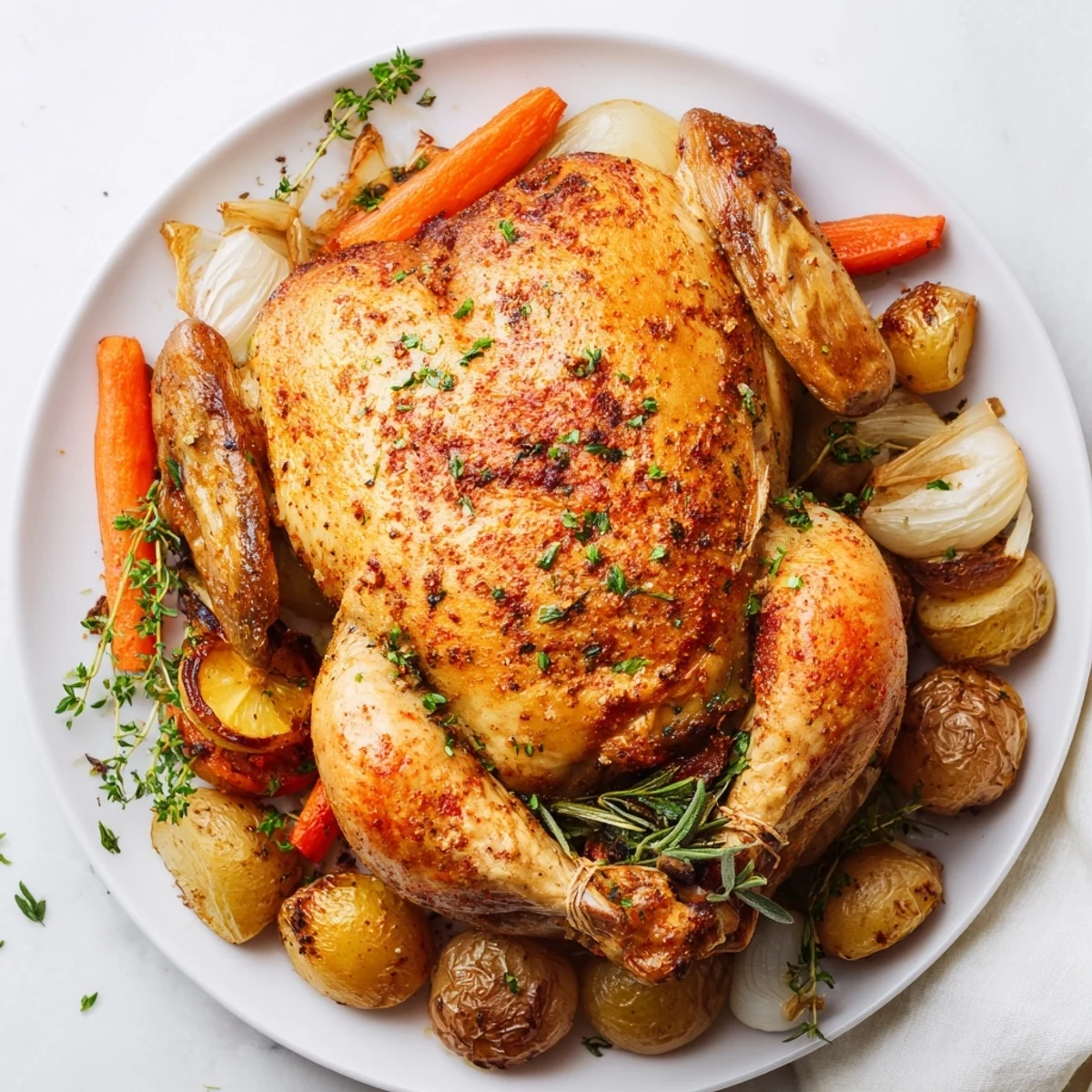
 There's a moment right when you pull the chicken from the oven, when the aroma hits you and your guests perk up—that's when you know this meal is going to be remembered. It's one of those dishes that transforms an ordinary evening into something that feels both nourishing and celebratory.
The Vegetable Alchemy
What makes these roasted vegetables sing is the way they spend an hour-plus swimming in chicken fat and their own caramelized sugars. The carrots go tender but hold their shape, the potatoes become creamy inside with crispy edges, and the parsnips almost dissolve into sweetness. I used to think roasted vegetables were boring until I understood that timing and heat do the real work here.
Herbs as Architecture
Fresh herbs do something that dried herbs simply cannot—they release volatile oils that build layers of flavor throughout the roasting process. Thyme and rosemary are traditional for a reason; they're woody enough to survive the heat and fragrant enough to actually matter. The lemon inside the cavity creates an acidic contrast that prevents the whole dish from feeling heavy.
Making It Your Own
Once you understand the basic technique, this recipe becomes endlessly adaptable to what's in your pantry or garden. I've roasted this chicken in winter with root vegetables, in spring with baby vegetables and fresh tarragon, and in summer with a touch of lavender. The bones make spectacular stock, so save them for a slow simmer the next day.
- Substitute root vegetables freely—sweet potatoes, turnips, celeriac, or Brussels sprouts all work beautifully.
- Swap herbs based on the season or what you have growing; try tarragon, sage, or even dried lavender for a different character.
- Don't pour out those pan juices—skim the fat and simmer with a splash of wine or stock to make an instant sauce.
 Save Pin
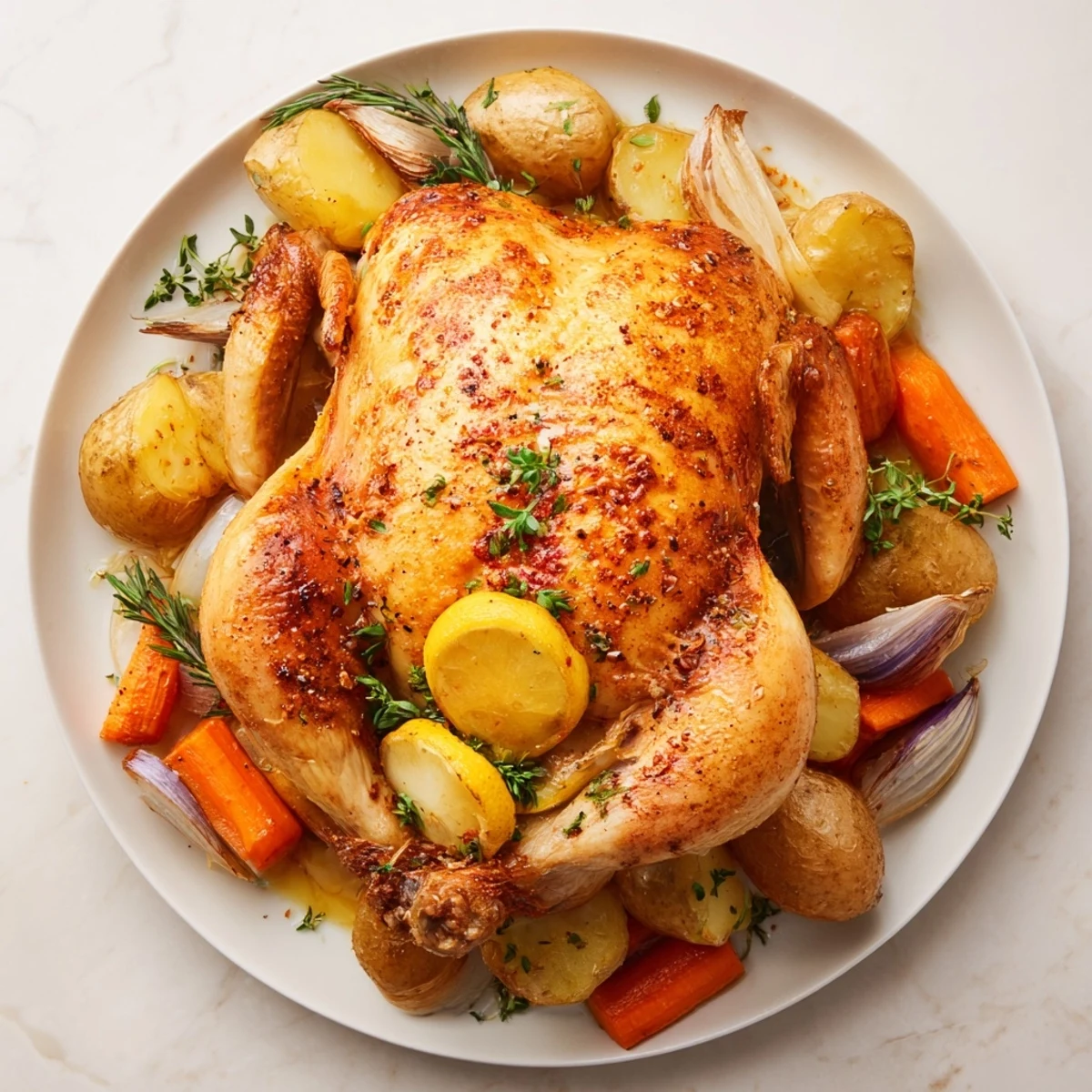
 Roasted chicken with herbs and vegetables is the kind of meal that satisfies without exhausting you—it's honest cooking at its best. Once you've made it a few times, you'll trust yourself enough to improvise, and that's when it becomes truly yours.
Recipe Questions & Answers
- → What herbs enhance the flavor of the roast chicken?
-
Fresh thyme, rosemary, and parsley are used to infuse aromatic, savory notes throughout the cooking process.
- → Can I substitute the root vegetables used in this dish?
-
Yes, root vegetables like sweet potatoes or turnips can replace carrots and parsnips for variation.
- → How can I ensure crispy skin on the roast chicken?
-
Patting the chicken dry before seasoning and roasting uncovered encourages a crisp, golden skin.
- → Is it necessary to baste the chicken during roasting?
-
Basting with pan juices twice helps keep the chicken moist and enhances flavor without drying it out.
- → What cooking temperature is ideal for roasting the chicken?
-
Roast at 200°C (400°F) until the skin is golden and the internal temperature reaches 75°C (165°F).
- → Can white wine or stock be used in the roasting pan?
-
Yes, adding dry white wine or stock adds moisture and deepens the flavor of the vegetables and pan juices.