
 Save Pin
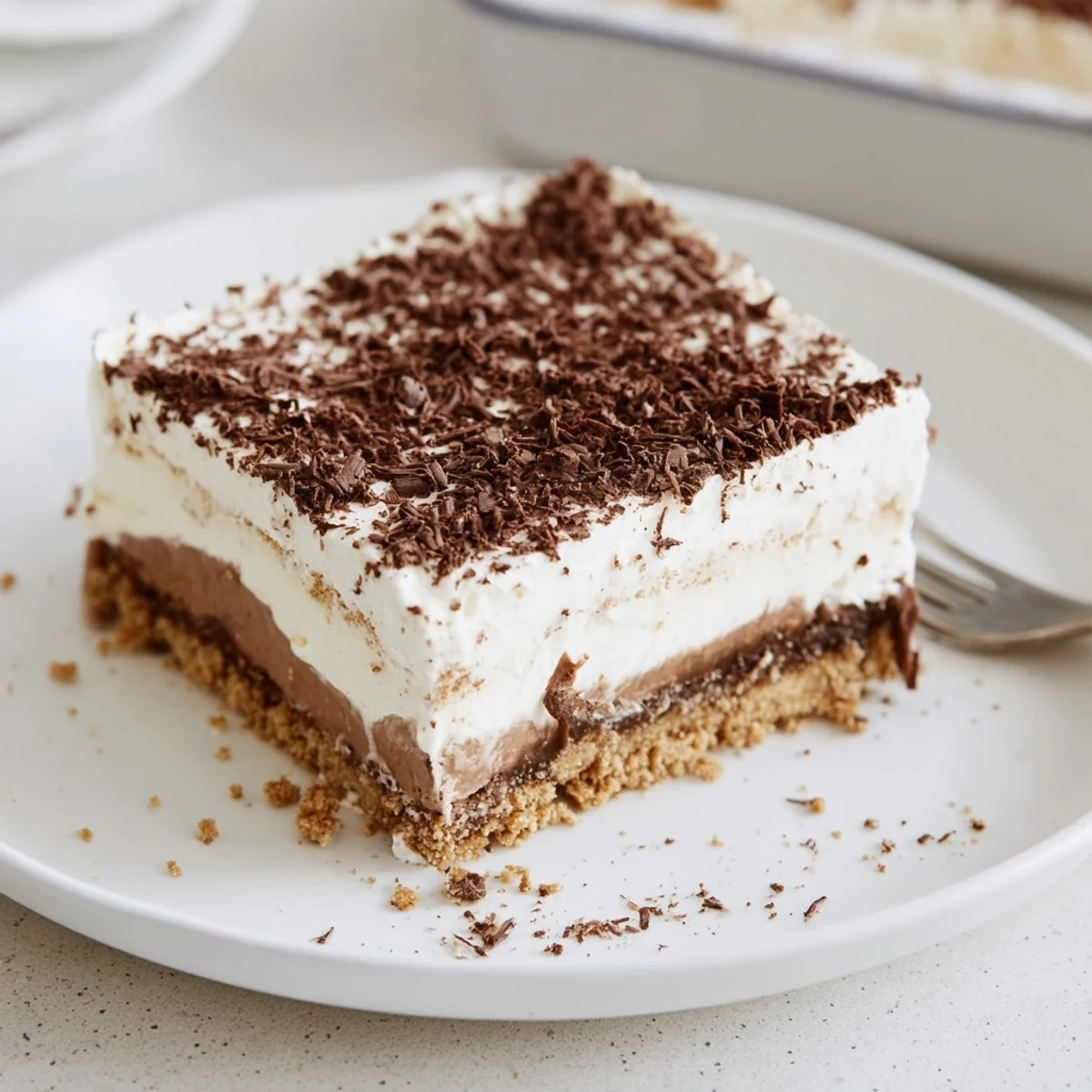
 A layered no‑bake dessert with a buttery crushed-cookie base, a cloudlike whipped cream layer and silky instant vanilla pudding. Press the cookie base firmly, whip cold cream to stiff peaks, whisk pudding mix into cold milk, then assemble: half the cream, pudding, the rest of the cream. Chill at least two hours until set and finish with chocolate shavings or fresh berries. Serves eight.
The first time I made this no bake layered dessert, I was rushing to create a treat for a last-minute gathering. There was no time for a complicated bake—so I turned to what was in my pantry and fridge. As I crushed cookies and whipped cream, the kitchen filled with a sweet, comforting aroma that made the whole process feel surprisingly effortless. By the time the first forkful was tasted, I knew this dessert would be a permanent fixture for future get-togethers.
Once, I whipped this up during a quiet Sunday afternoon when my friend stopped by unexpectedly. We swapped stories while I built the layers, and the dessert had chilled just enough to serve with coffee by the time we’d finished catching up. Sharing those first creamy, chocolate-topped bites made the moment feel celebratory, even if it was just another weekend.
Ingredients
- Graham crackers or digestive biscuits (200 g, crushed): The foundation for the base—choose a brand you love, and crush them finely for the best texture.
- Unsalted butter (75 g, melted): Melt your butter gently; if it’s too hot it can make the base greasy instead of just holding together.
- Heavy whipping cream (400 ml, cold): Start with cream straight from the fridge and use a glass or metal bowl to help it whip up even fluffier.
- Powdered sugar (40 g): This melts seamlessly into the cream and adds a gentle sweetness—sift it first to avoid any lumps.
- Vanilla extract (1 tsp): Adds warmth and floral notes—don’t skip it, even if you’re tempted.
- Instant vanilla pudding mix (100 g): The thick, silky layer you’ll crave—pick your favorite brand, and don’t be afraid to experiment with flavors.
- Cold whole milk (400 ml): Essential for activating the pudding mix—using it cold helps the mixture set up faster.
- Chocolate shavings or cocoa powder (50 g, optional): A finishing flourish to add just a bit of drama and an echo of chocolate with each bite.
Instructions
- Make the Base:
- Crumble your biscuits until fine and blend with the melted butter, then press it firmly and evenly into the bottom of your dish—listen for that satisfying crunch as you pack it down.
- Whip the Cream:
- Whip the cold cream, powdered sugar, and vanilla extract until it’s cloudlike and holds peaks; you’ll see faint ribbons in the bowl when it’s ready.
- Mix the Pudding:
- Whisk together pudding mix and cold milk for about two minutes—it will thicken as you mix, so watch for those swoops and swirls.
- Layer and Spread:
- Spoon half the whipped cream onto the cookie base, gently smoothing with a spatula to the edges.
- Pudding Passage:
- Spread all the thickened pudding over the cream layer, letting it settle into soft waves.
- Final Flourish:
- Top with the rest of the whipped cream, smoothing the surface, then scatter chocolate shavings or a dusting of cocoa right before chilling.
- Chill to Set:
- Cover and refrigerate for at least two hours (overnight if you can wait)—the wait makes the layers magic.
- Serve and Savor:
- Slice into generous squares and serve cold, letting each piece hold together in perfect, creamy harmony.
 Save Pin
 The night I brought this dessert to a block party, I watched a neighbor sneak a second helping with a sheepish grin. Suddenly, everyone was requesting the recipe, and a simple dish had started a new wave of dessert potluck traditions for our street.
Choosing Cookies: What Actually Works
Through trial and error, I found that both graham crackers and digestive biscuits deliver that ideal contrast of crumble and chew. Don’t be afraid to combine types if you have a few leftover sleeves—just keep the total weight on track for balance.
Layer Order Lessons
I once swapped the pudding and cream layers and ended up with a collapsed dessert. Stick to cream first, then pudding, then cream again—the right order keeps it tidy and visually striking.
Topping Tactics and Last Tweaks
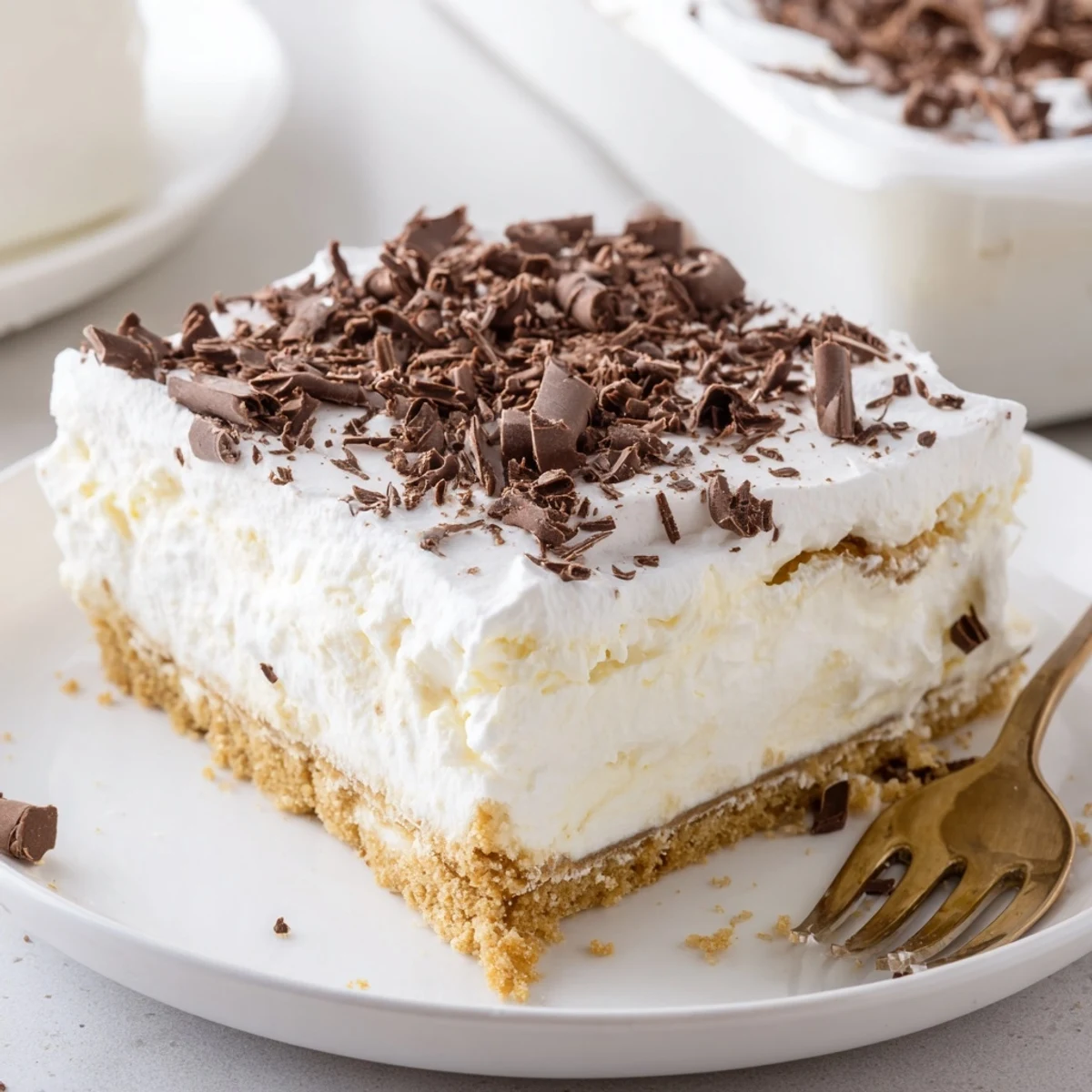
If you want an extra flourish, use a microplane for feather-light chocolate curls just before serving—guests can’t resist them. Even dusting with simple cocoa makes each piece look bakery-worthy.
- If the whipped cream starts to wilt, pop it back into the fridge for 20 minutes before layering.
- Use a wet knife to slice clean squares straight from the fridge.
- If you’re feeling fancy, a few fresh berries scattered on top are always welcome.
 Save Pin
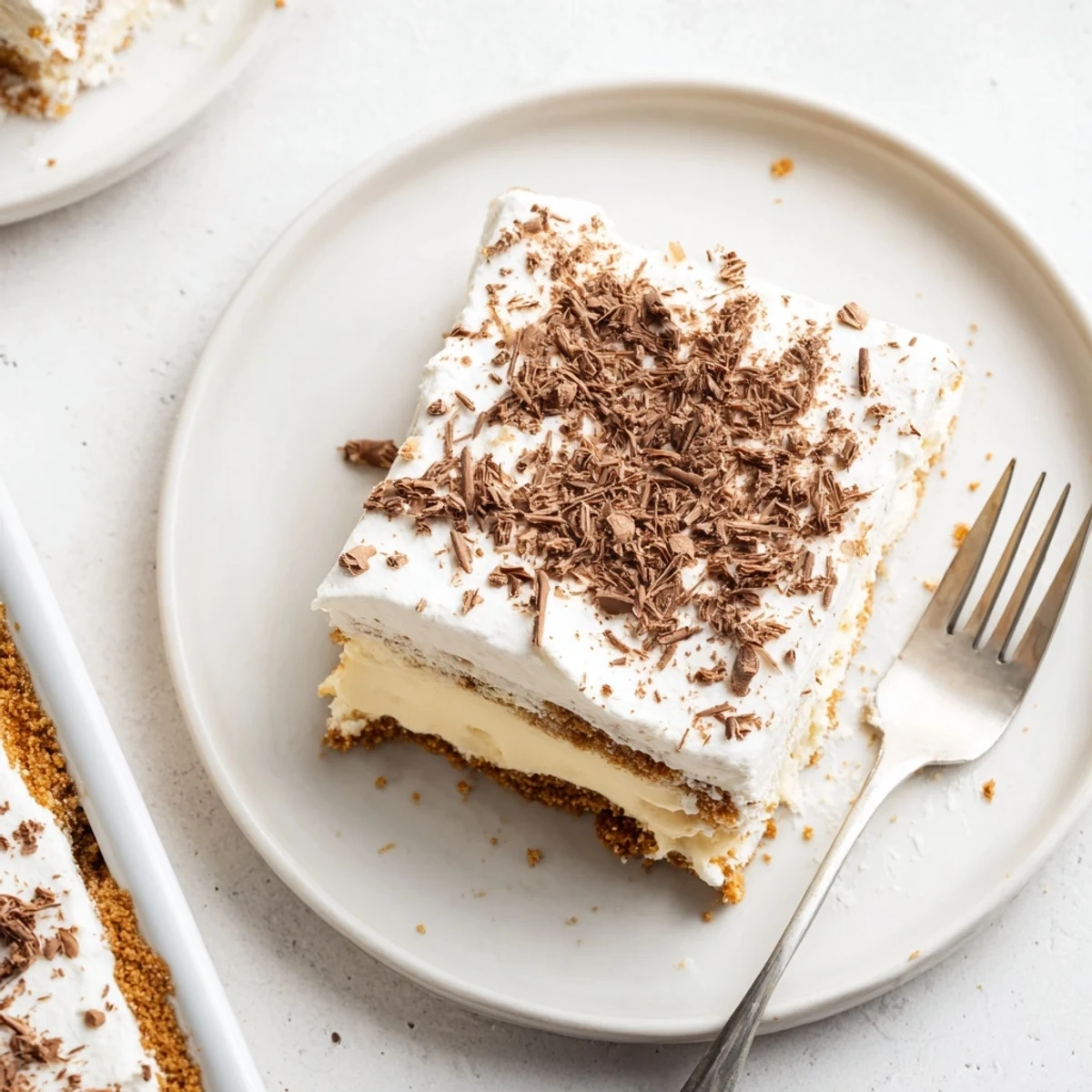
 This dessert thrives on its simplicity but delivers pure joy in every bite. It’s the kind of recipe you’ll find yourself making ‘just because’—and always with a little crowd clustered by the fridge, waiting for seconds.
Recipe Questions & Answers
- → Can I use different cookies for the base?
-
Yes. Swap graham crackers for chocolate cookies or digestive biscuits to change flavor; press crumbs with melted butter until compact for a stable base.
- → How do I keep whipped cream from weeping?
-
Chill the bowl and whisk beforehand, use cold heavy cream, and beat to stiff peaks. Stabilize with a small amount of powdered sugar or a teaspoon of gelatin if needed for longer holding.
- → What if I don't have instant pudding mix?
-
Make a thickened custard from scratch using egg yolks, sugar, milk and cornstarch, or use ready-made pastry cream—cool completely before layering to avoid melting the whipped cream.
- → How long should it chill before serving?
-
Chill at least two hours to allow layers to set; overnight chilling gives the best texture and cleaner slices when serving.
- → Can I add fruit between layers?
-
Yes. Fresh berries or sliced bananas add brightness—place them between the pudding and whipped cream layers, but use low-moisture fruit or pat dry to prevent sogginess.
- → How should leftovers be stored?
-
Cover tightly and refrigerate for up to 3 days. For best texture, avoid freezing, as the cream and pudding will change consistency when thawed.