
 Save Pin
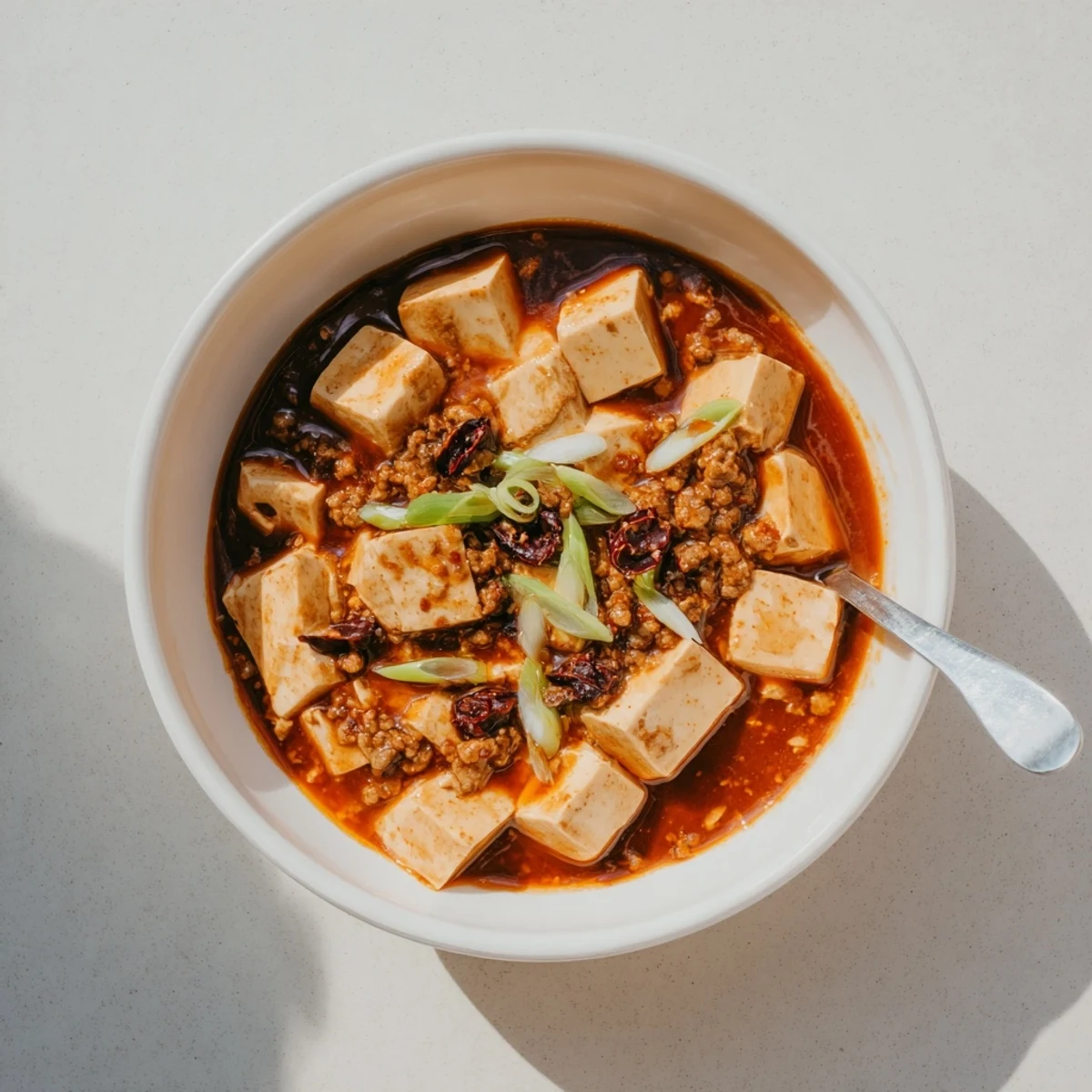
 This classic Sichuan dish combines soft tofu cubes with savory ground pork in a rich, spicy sauce. The bold flavors come from fermented broad bean paste, aromatic ginger and garlic, and the signature numbing heat of toasted Sichuan peppercorns. Perfect served over steamed rice for a satisfying meal that brings restaurant-quality Chinese cuisine to your kitchen.
The first time I encountered mapo tofu, I was at a tiny Sichuan restaurant where the waiter warned me about the heat. I ordered it anyway, and that first bite sent a tingling wave across my tongue that I had never experienced before. Now, recreating that numbing, spicy magic in my own kitchen has become a weekend ritual I look forward to sharing with friends who think they can handle the heat.
Last winter, my friend Mike came over complaining about the cold weather. I made a double batch of this mapo tofu, and we spent the evening hunched over our bowls, noses running, grinning between bites. He left with the recipe written on a napkin and texted me the next day that he had already made it for his family.
Ingredients
- 400 g soft or medium-firm tofu: The texture matters here, soft tofu absorbs the sauce beautifully while medium-firm holds its shape better during stirring
- 200 g ground pork: Adds richness and depth, though I have used ground chicken in a pinch and it still delivers
- 2 tablespoons vegetable oil: A neutral oil lets the spicy aromatics shine without competing flavors
- 3 cloves garlic, minced: Fresh garlic is non-negotiable, jarred minced garlic lacks the punch this dish needs
- 1 tablespoon fresh ginger, minced: Peel it with a spoon to avoid wasting any of the aromatic flesh
- 3 scallions: Keep the white parts for cooking and save the green tops for that fresh finish
- 2 tablespoons doubanjiang: This fermented bean paste is the soul of the dish, worth seeking out at an Asian market
- 1 tablespoon fermented black beans: Rinse them well to remove excess salt, then chop roughly to distribute their umami
- 1 tablespoon soy sauce: Use low-sodium if you are sensitive to salt, as the other ingredients pack plenty of savory punch
- 1 tablespoon Shaoxing wine: Dry sherry works if you cannot find it, though the authentic flavor is worth hunting down
- 1 teaspoon sugar: Just enough to balance the heat and round out the sauce
- 250 ml low-sodium chicken or vegetable broth: Homemade broth adds layers of flavor, but a quality store-bought version does the job
- 1 teaspoon Sichuan peppercorns: Toast them in a dry pan until fragrant, then grind fresh for maximum numbing effect
- 1 teaspoon chili oil: Start with less if you are heat-sensitive, you can always add more at the end
- 1 tablespoon cornstarch mixed with 2 tablespoons water: Mix this right before adding, as cornstarch settles quickly
- 1 tablespoon scallion greens, sliced: These add a fresh pop that cuts through the rich sauce
Instructions
- Prep the tofu:
- Cut the tofu into 2 cm cubes and let it soak in hot, lightly salted water for 5 minutes to firm up the texture
- Brown the pork:
- Heat oil in a large skillet or wok over medium-high heat, add the ground pork and cook until no longer pink, breaking up clumps as it browns
- Add the aromatics:
- Stir in the garlic, ginger, and white scallion parts, sautéing for just 1 minute until fragrant but not browned
- Build the base:
- Mix in the doubanjiang and fermented black beans, frying until the oil turns a deep red and the kitchen fills with an incredible spicy aroma
- Create the sauce:
- Pour in the soy sauce, Shaoxing wine, sugar, and broth, then bring everything to a gentle simmer
- Simmer the tofu:
- Gently add the drained tofu cubes and let them simmer for 5 to 7 minutes, absorbing all those bold flavors
- Add the heat:
- Stir in the chili oil and ground Sichuan peppercorns, adjusting amounts based on your spice tolerance
- Thicken it up:
- Pour in the cornstarch slurry while stirring gently, and let the sauce thicken for 1 to 2 minutes until it coats the back of a spoon
 Save Pin
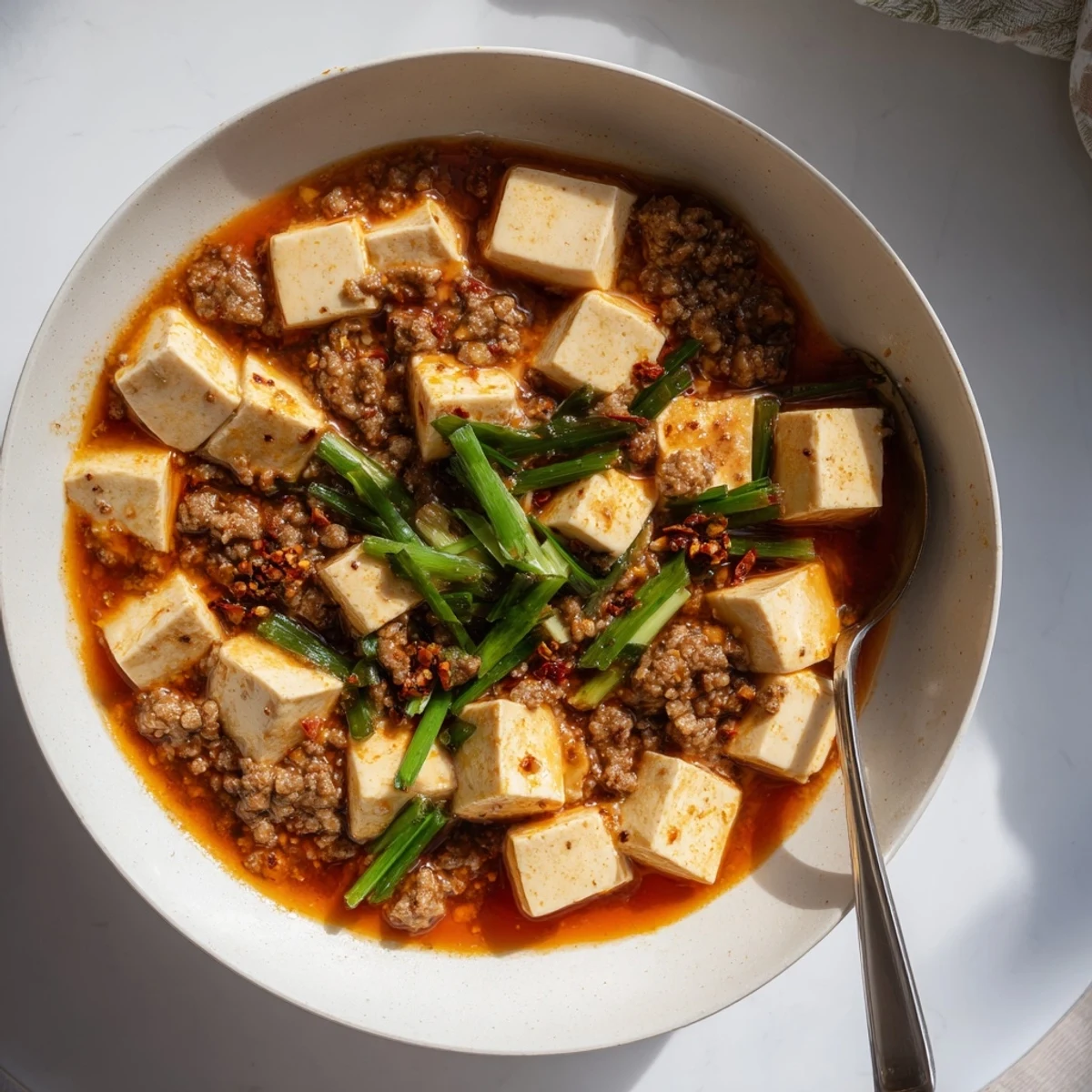
 My sister claimed she hated spicy food until she tried this dish at my place last spring. She took one tentative bite, eyes went wide, and proceeded to finish half the serving bowl. Now she requests it every time she visits, and I have learned to always make extra rice.
Finding Your Heat Level
Everyone has a different tolerance for Sichuan peppercorns and their signature numbing sensation. I suggest starting with half the called-for amount, tasting, and adding more gradually. The numbing effect builds slowly, so give it a minute before deciding to add more heat.
The Tofu Texture Secret
That hot salt water bath does more than just season the tofu, it actually firms the protein structure slightly so the cubes survive the simmering process. I learned this the hard way after turning a beautiful batch into spicy tofu scramble because I skipped this step and got impatient with my stirring.
Serving It Right
Steamed jasmine rice is the perfect canvas for this dish, its mild sweetness balancing the bold sauce. A side of blanched bok choy or Chinese broccoli helps cool the palate between bites.
- Set out extra chili oil at the table so heat lovers can customize their bowls
- Have cold beer or milk ready for anyone who underestimated the spice level
- This dish reheats beautifully, but the tofu will soften further, so handle gently when warming leftovers
 Save Pin
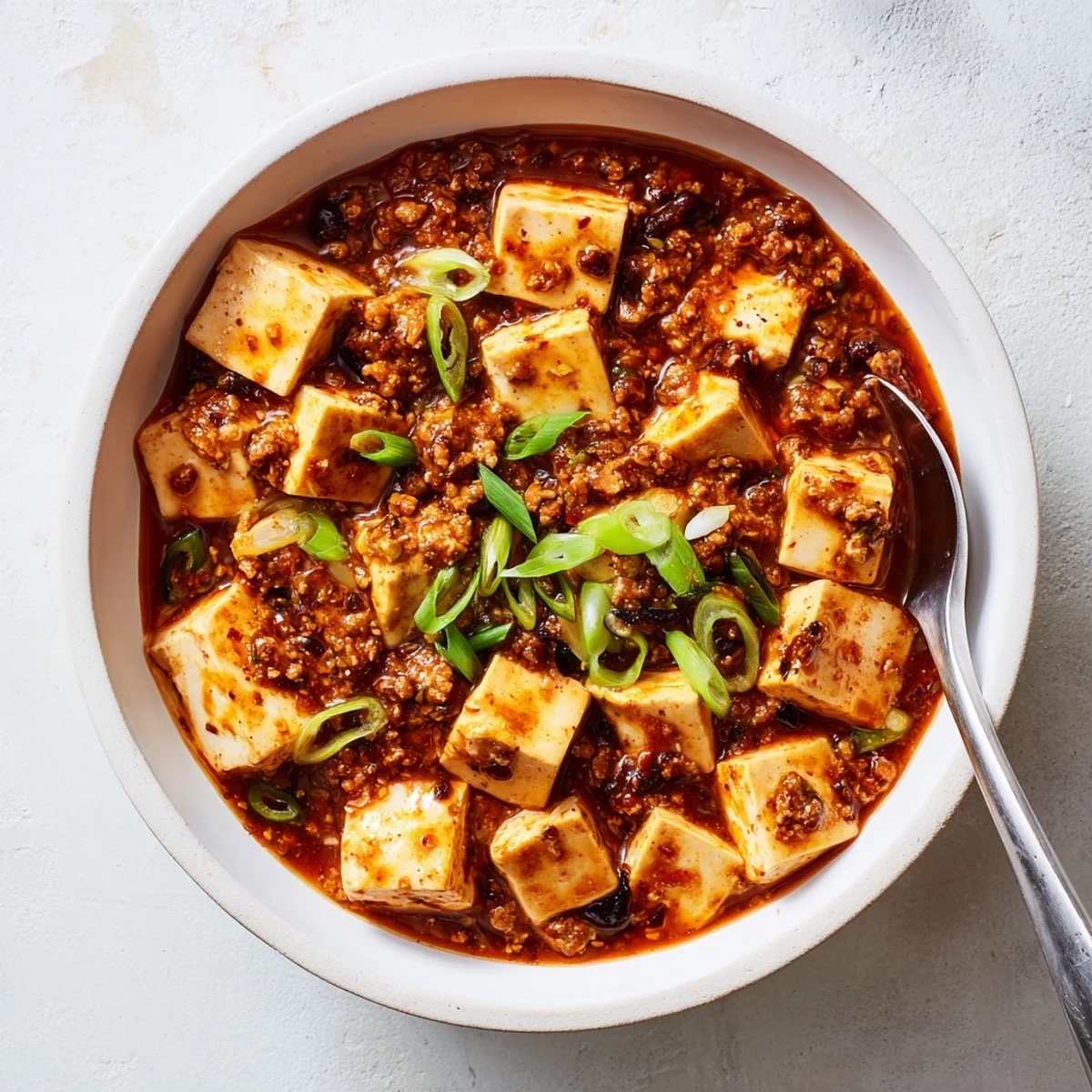
 There is something deeply satisfying about a dish that wakes up every part of your palate. This mapo tofu has earned its permanent place in my regular rotation, and I bet it will find one in yours too.
Recipe Questions & Answers
- → What makes Mapo Tofu authentic?
-
Authentic Mapo Tofu relies on doubanjiang (fermented broad bean chili paste) and fermented black beans for its distinctive flavor profile, along with properly toasted and ground Sichuan peppercorns for the characteristic numbing sensation known as ma.
- → Can I make this vegetarian?
-
Yes, simply omit the ground pork and substitute with plant-based mince or finely chopped shiitake mushrooms. The rest of the dish remains naturally vegetarian and dairy-free.
- → How do I prevent tofu from breaking apart?
-
Use soft or medium-firm tofu and briefly soak the cubes in hot, lightly salted water before cooking. This helps firm up the texture. When stirring, use a gentle folding motion rather than vigorous mixing.
- → What can I substitute for Shaoxing wine?
-
Dry sherry makes an excellent substitute for Shaoxing wine. For an alcohol-free option, use additional broth or omit entirely and adjust seasoning with a pinch more salt.
- → How spicy is this dish?
-
The spice level is adjustable through the amount of doubanjiang and chili oil used. As written, it delivers medium heat with noticeable numbing from Sichuan peppercorns. Reduce these ingredients for a milder version.
- → What should I serve with Mapo Tofu?
-
Steamed jasmine rice is the traditional accompaniment, perfect for soaking up the flavorful sauce. Blanched greens like bok choy or Chinese broccoli make excellent side dishes to balance the richness.