
 Save Pin
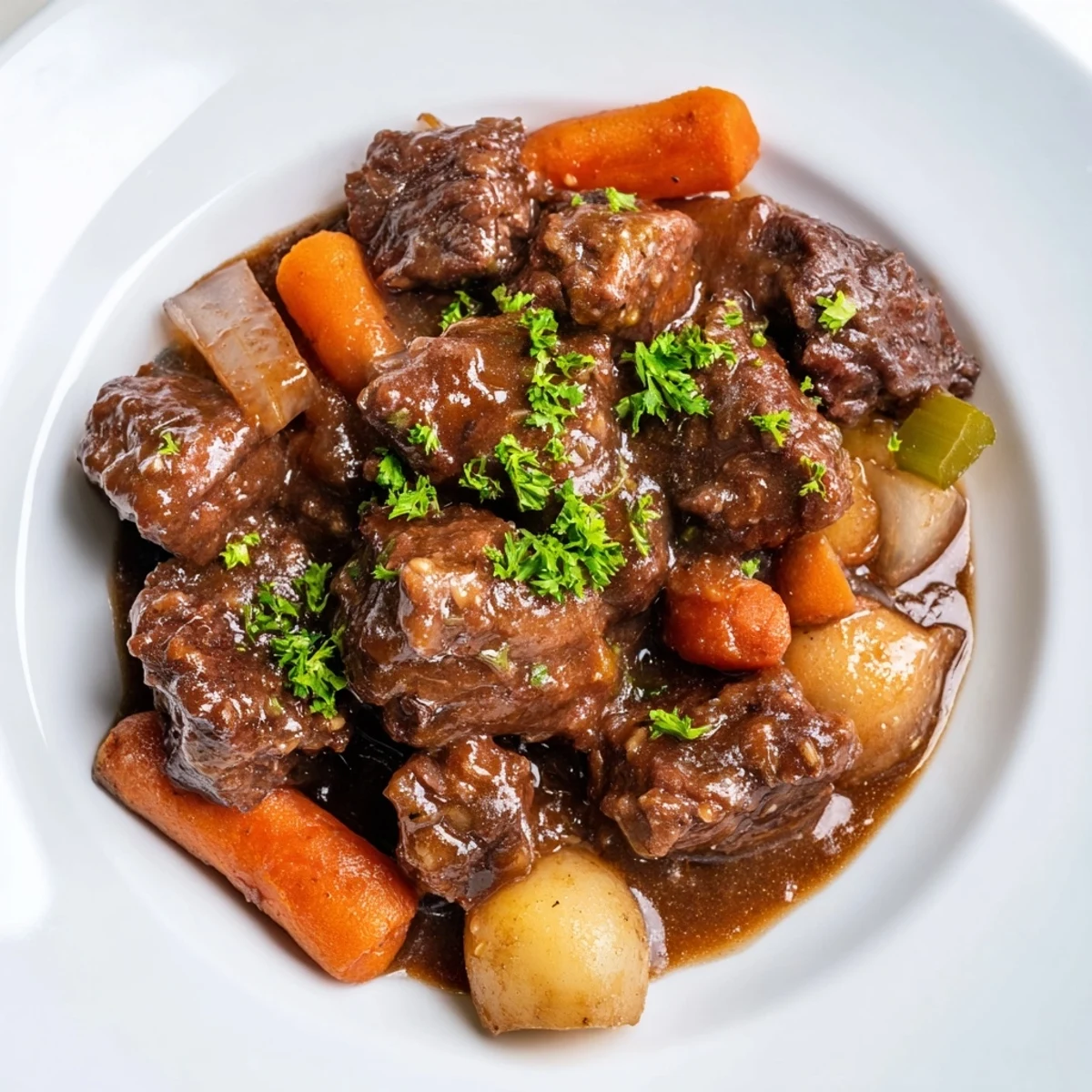
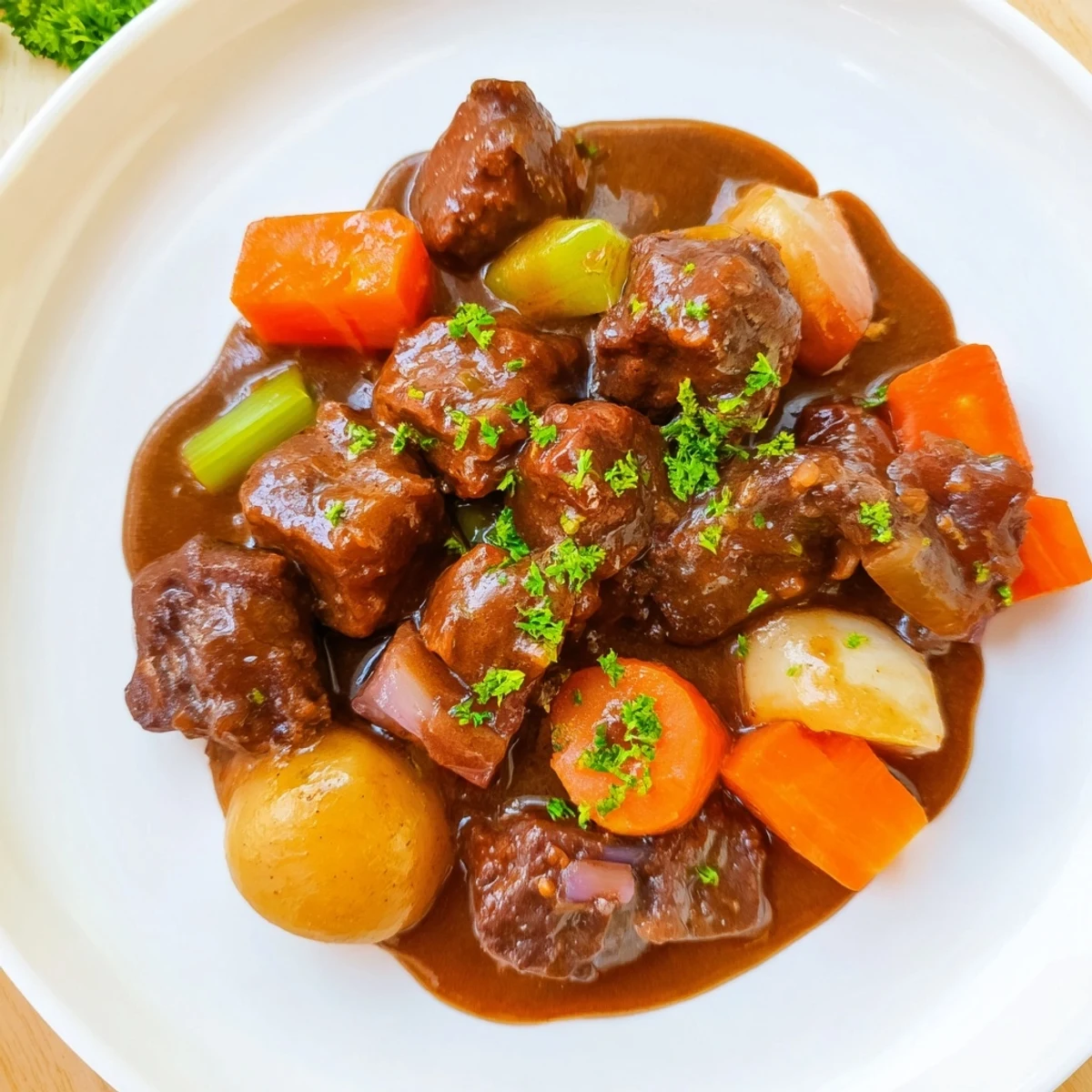
 This Irish-inspired stew features tender beef cubes simmered slowly with root vegetables and alcohol-free stout, creating a rich and comforting depth of flavor. Onions, carrots, celery, garlic, and a blend of seasonings meld together for a hearty, satisfying dish perfect for any season. The long, gentle simmer thickens the broth, resulting in a luscious texture accented by fresh parsley. Ideal for serving with crusty bread or traditional sides, it balances malty notes with savory richness.
I still remember the first time I made this stew on a cold Dublin evening, borrowed recipe in hand and no idea that alcohol-free stout would become my secret weapon in the kitchen. A friend from Cork had mentioned it casually over tea, and I was skeptical until that first spoonful—rich, malty, and impossibly deep for something without a drop of alcohol. Now it's become my go-to comfort when the weather turns gray and the world feels like it needs warming from the inside out.
I'll never forget serving this to my neighbor on the evening her daughter came home from university—the way her face lit up when she tasted it, how she asked for the recipe before finishing her bowl. That's when I knew this wasn't just dinner; it was one of those dishes that brings people together without any fuss or pretense.
Ingredients
- Beef chuck, 900g cubed: Chuck is the workhorse of stews—it has just enough fat marbling to become silky when braised low and slow, and it won't shred apart like lean cuts do
- Vegetable oil, 2 tbsp: Use something neutral that won't smoke; you need the heat high enough to get a proper brown crust on the meat
- Large onions, 2 chopped: They dissolve almost entirely into the stew, creating a natural sweetness and body that thickens everything beautifully
- Carrots, 3 medium sliced: Cut them into coins so they cook at the same pace as the beef; I learned this the hard way with unevenly cooked vegetables
- Celery stalks, 2 sliced: This is what makes it taste authentically Irish stew, though some families swear by omitting it—do what feels right to you
- Potatoes, 2 large chunked: Add them late so they don't break down into mush; I aim for chunks about the size of walnuts
- Garlic, 3 cloves minced: Fresh garlic added at the end of the vegetable sauté prevents it from burning and turning bitter
- Alcohol-free stout, 500ml: This is the magic—Guinness 0.0 or any stout without alcohol gives you that roasted, malty complexity that makes people ask what your secret ingredient is
- Beef stock, 750ml low-sodium: Low-sodium lets you taste the stew itself, not the broth; you can always add salt, but you can't take it out
- Tomato paste, 2 tbsp: A small amount adds umami and slight acidity that balances the richness; stir it in well so it doesn't clump
- Worcestershire sauce, 2 tsp alcohol-free: Check your bottle—many traditional ones have alcohol, but the alcohol-free versions give you that savory funk without compromise
- Brown sugar, 2 tsp: Just enough to round out the flavors and enhance the natural sweetness of the vegetables
- Bay leaves, 2: Don't skip this—they're subtle but essential, and always remember to fish them out before serving
- Dried thyme, 1 tsp: Irish cooking relies on thyme more than fancy herbs; it's earthy and understated, like the cuisine itself
- Salt and black pepper: Season as you go, not all at the end—it helps flavors develop throughout cooking
- All-purpose flour, 2 tbsp: This creates a light roux that thickens the stew without making it gluey; stir constantly to avoid lumps
- Fresh parsley for garnish: Optional but worth it—a bright green handful at the end wakes up the rich, dark stew
Instructions
- Dry your beef and season generously:
- Pat each cube dry with paper towels—this sounds fussy, but wet meat won't brown properly. Season with salt and pepper right before cooking, not hours ahead; you want the seasoning fresh on the surface
- Get a proper crust on the meat:
- Heat your oil until it shimmers and moves easily in the pot, then add beef in a single layer. Don't stir it around; let it sit untouched for 2-3 minutes so it develops that golden, caramelized exterior. Brown in batches rather than crowding the pot—overcrowding drops the temperature and you'll steam instead of sear
- Build your flavor base with vegetables:
- Lower the heat and add your onions, carrots, and celery. The moisture from the vegetables will deglaze the pot slightly, and you're aiming for soft and fragrant, about 5 minutes. Listen for that gentle sizzle—if it's too loud, your heat is too high and things will burn
- Add garlic without letting it scorch:
- Just 1 minute for the garlic; any longer and it turns acrid and bitter. You'll smell when it's ready—a sweet, pungent aroma that's distinctly different from the raw garlic smell
- Make a quick flour roux:
- Sprinkle the flour over everything and stir constantly for 2 minutes. This cooks out the raw flour taste and creates a thickener that will eventually give the stew body and richness
- Wake up the tomato paste:
- Stir it in thoroughly, breaking it up against the sides of the pot. Raw tomato paste can taste tinny, but cooking it for even a minute mellows and deepens its flavor
- Return the beef and deglaze:
- Put all that beautiful browned beef back in along with any juices on the plate. Pour in your stout and stock, scraping the bottom of the pot with your wooden spoon—those brown bits are pure flavor
- Add aromatics and seasonings:
- Worcestershire, brown sugar, bay leaves, and thyme all go in now. Stir to combine and let everything mingle for a moment in the raw form before heat does its magic
- Bring to a boil, then drop the heat low:
- You want just the gentlest bubbles breaking the surface—an aggressive simmer breaks down the meat too fast and makes it tough and stringy. Cover and let time and gentle heat do the work
- Stir occasionally and be patient:
- After about 1 hour and 15 minutes, check in on it. The beef should be getting tender but not yet falling apart. This is when you know the stew is talking to you
- Add potatoes at the right moment:
- When the beef is almost tender, add your potato chunks. Potatoes cook faster than beef, so timed right they'll soften at the finish line together. Simmer uncovered now for about 30 minutes so the liquid reduces and concentrates
- Test for doneness and season to taste:
- Beef should be tender enough to cut with the side of your spoon, potatoes soft but not mushy, and liquid should have thickened into a proper stew coat. Taste and add salt and pepper until it's singing—this is your moment to make it perfect
- Remove bay leaves and serve:
- Fish out those two bay leaves carefully, then ladle into bowls. A scatter of fresh parsley and crusty bread for dipping transforms it from dinner into an occasion
 Save Pin
 There's something almost sacred about the moment when a stew stops being ingredients and becomes this unified thing—when you can't taste individual vegetables anymore, just richness and comfort. That's when I know it's ready, and that's when I know whoever's about to eat it is in for something special.
Why This Stew Feels Like Home
Irish stew exists because of practicality—a single pot, humble ingredients, and time. There's no pretense here, no fancy techniques. What you get instead is honest, warming food that tastes even better the next day. The alcohol-free stout adds a malty richness that would normally come from hours of slow cooking, so you're not compromising anything by skipping the actual alcohol. If anything, you're getting to the heart of what makes the stew work—the deep, roasted flavors—without any distraction.
Making It Your Own
The beauty of this stew is that it's forgiving. Some families swear by parsnips instead of potatoes, or add turnips for extra sweetness. I've made versions with mushrooms for vegetarian friends, and honestly, they're just as satisfying. The stout carries everything, so as long as you've got good beef, good stock, and patience, you're going to end up with something delicious. Trust your instincts—if you love a vegetable, add it. If something seems wrong at any point, taste and adjust.
The Little Things That Make It Perfect
This is where the real magic lives—in the small decisions and moments of attention that separate good stew from unforgettable stew. Temperature matters: too hot and your beef gets tough and stringy; too low and it never actually tenderizes. The ratio of liquid to solid matters: you want enough stew to spoon into bowls, not so much that it's soup. And timing matters: potatoes added too early dissolve into the liquid, added too late and the beef is already cool.
- Serve it in deep bowls with crusty bread for soaking up every drop—that's where the real satisfaction lives
- Make a double batch and freeze half; it genuinely tastes better after a day or two when the flavors have settled and deepened
- If your stew seems too thin at the end, mix a tablespoon of flour with cold water and stir it in while simmering; it'll thicken in minutes
 Save Pin
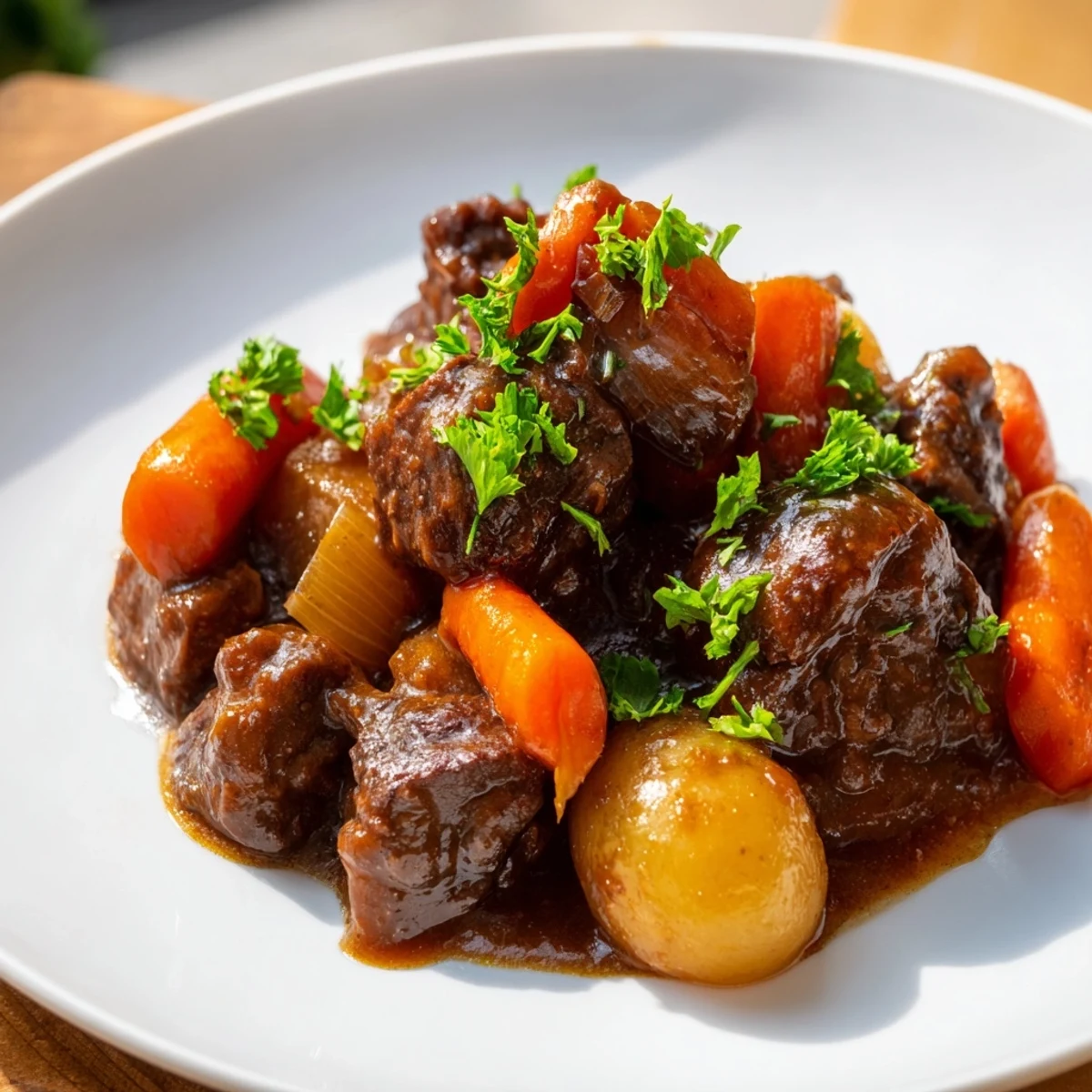
 This stew is comfort distilled into a bowl—rich without being heavy, warming without requiring alcohol to feel complete. Make it for someone you care about, and watch how food becomes a quiet way of saying I'm thinking of you.
Recipe Questions & Answers
- → Can I substitute beef with a vegetarian alternative?
-
Yes, you can replace beef with hearty mushrooms and use vegetable stock to maintain rich flavors in a vegetarian version.
- → What type of pot is best for this stew?
-
A large Dutch oven or heavy pot is ideal as it distributes heat evenly and allows for slow simmering.
- → How do I ensure the stout flavor is alcohol-free?
-
Use a labeled alcohol-free stout variety such as Guinness 0.0, and check the Worcestershire sauce to confirm it contains no alcohol.
- → Can I add other root vegetables to enhance the stew?
-
Yes, additions like parsnips or turnips add extra depth and complement the existing flavors well.
- → What is the best way to thicken the stew?
-
Stirring in all-purpose flour during cooking helps create a thick, hearty consistency.
- → How should I serve this dish for an authentic touch?
-
Serving with mashed potatoes or Irish soda bread complements the stew’s rich, hearty flavors perfectly.