
 Save Pin
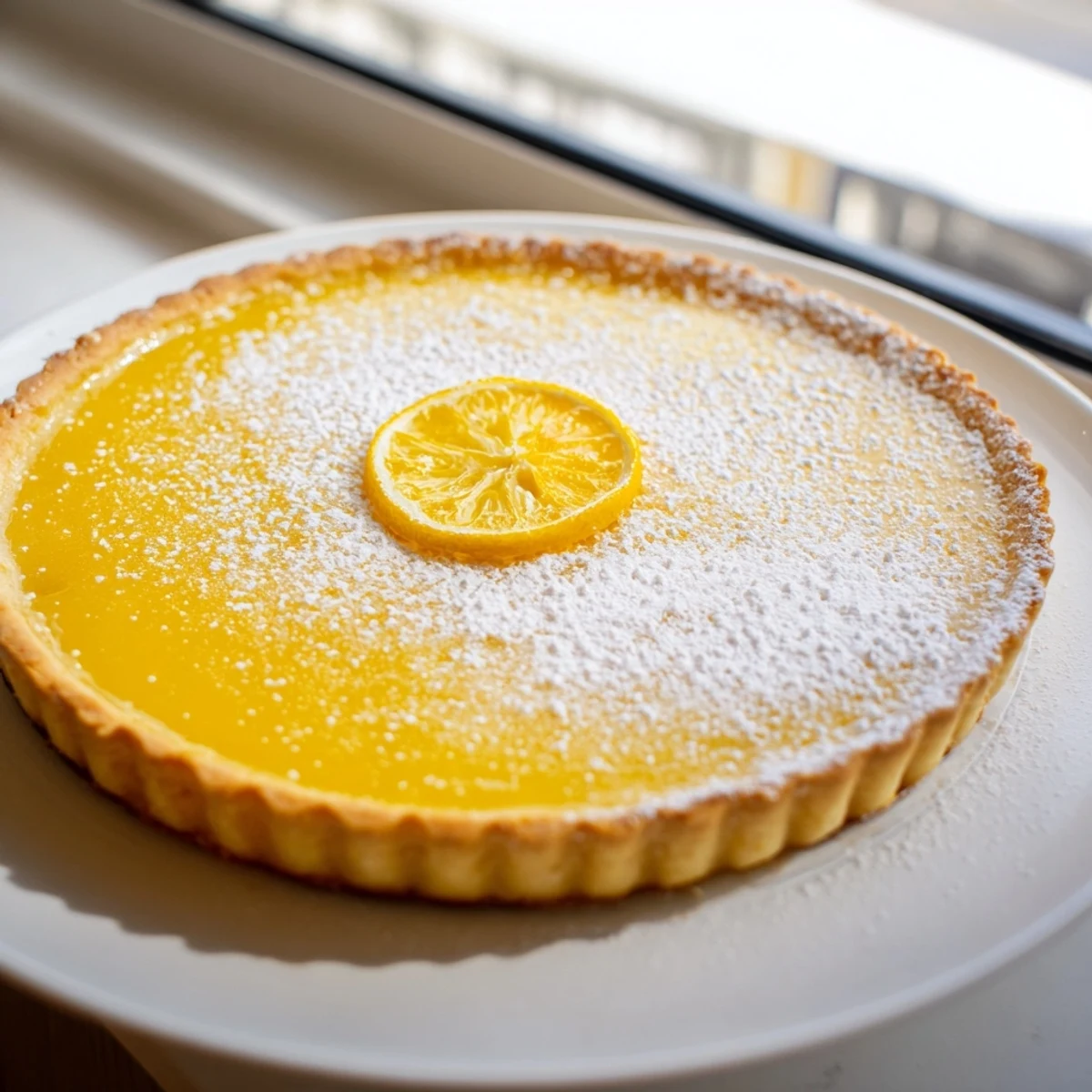
 This bright lemon tart features a luscious citrus filling nestled in a crisp, buttery pastry shell. The crust is made by blending cold butter with flour and sugar until crumbly, then baking it to golden perfection. The filling combines fresh lemon juice, zest, eggs, and sugar, gently cooked over a double boiler for a smooth texture before baking until just set. After cooling, the tart offers a refreshing balance of tartness and creamy richness, perfect for sharing.
For added flair, garnish with powdered sugar, candied lemon slices, or crushed pistachios. Serving it chilled enhances the burst of citrus flavors, making it an ideal choice for a bright, medium-difficulty dessert inspired by French cuisine.
I sliced into my first lemon tart on a warm April afternoon, and the filling wobbled just enough to make me hold my breath. The crust shattered under the knife with a satisfying crack, and suddenly the whole kitchen smelled like sunshine. That first bite—sharp, sweet, impossibly smooth—made me understand why French patisseries guard their lemon tart recipes like family heirlooms.
I made this tart for my sister's birthday last summer, and she laughed when I admitted I'd tested the filling three times that week just to get the tang exactly right. We ate it outside on the porch with iced tea, and she said it tasted like the kind of dessert you'd order at a cafe in Paris. I didn't tell her I'd burned the first crust and had to start over, but she didn't need to know that part.
Ingredients
- All-purpose flour: Forms the tender base of the crust, I learned to measure it lightly so the pastry doesn't turn tough or dense.
- Unsalted butter, cold and cubed: The secret to flaky layers is keeping it ice cold until the very last second, warm butter makes the dough greasy instead of crisp.
- Powdered sugar: Sweetens the crust gently and helps it brown to a gorgeous golden color without graininess.
- Salt: A small pinch sharpens every flavor in both the pastry and the filling, don't skip it.
- Egg yolk: Binds the dough and adds richness, giving the crust a shortbread-like texture that melts on your tongue.
- Ice water: Brings the dough together without making it sticky, add it slowly and stop the moment it clumps.
- Granulated sugar: Balances the lemon juice in the filling, I found the exact ratio after a few too-tart experiments.
- Eggs and egg yolks: Create that silky, custard-like texture, the extra yolks make it richer and more luxurious than a basic lemon curd.
- Fresh lemon juice: The star of the show, always use freshly squeezed for the brightest, most alive flavor.
- Lemon zest: Adds aromatic oils that deepen the citrus punch, I zest right over the bowl to catch every fragrant bit.
- Butter, cubed and at room temperature: Whisked into the hot filling, it turns the mixture glossy and smooth, transforming it from good to unforgettable.
Instructions
- Preheat and prep:
- Set your oven to 350°F and let it warm up while you gather your ingredients. This gives you time to work without rushing, and the oven will be perfectly ready when the dough is chilled.
- Make the pastry:
- Pulse the flour, powdered sugar, and salt in a food processor until combined, then add the cold butter and pulse until the mixture looks like wet sand. Add the egg yolk and pulse again, then drizzle in ice water one tablespoon at a time until the dough just starts to clump together.
- Chill the dough:
- Press the dough evenly into your tart pan, pushing it up the sides and smoothing the bottom with your fingers. Pop it in the fridge for 20 minutes so the butter firms up again, this prevents shrinking in the oven.
- Blind bake the crust:
- Line the chilled pastry with parchment paper and fill it with baking weights or dried beans, then bake for 15 minutes. Remove the weights and parchment, then bake another 10 minutes until the crust is golden and smells toasty.
- Cook the lemon filling:
- In a heatproof bowl, whisk together the sugar, eggs, egg yolks, lemon juice, zest, and a pinch of salt. Set the bowl over a pot of gently simmering water and whisk constantly until the mixture thickens enough to coat the back of a spoon, about 10 minutes.
- Finish the filling:
- Remove the bowl from the heat and whisk in the butter a few cubes at a time, stirring until each addition melts and the filling turns silky. The butter is what makes it truly luscious, so don't rush this step.
- Fill and bake:
- Pour the warm lemon filling into the baked tart shell and smooth the top gently. Lower the oven to 325°F and bake for 12 to 15 minutes, just until the center barely jiggles when you nudge the pan.
- Chill completely:
- Let the tart cool on the counter, then cover it loosely and refrigerate for at least 2 hours. This sets the filling to that perfect sliceable texture that holds its shape on the plate.
 Save Pin
 The first time I brought this tart to a potluck, someone asked if I'd picked it up from a bakery, and I felt a little thrill of pride. It's become my go-to whenever I want to show up with something that feels special, and every time I slice into that glossy yellow filling, I remember why I fell in love with it in the first place.
How to Store and Serve
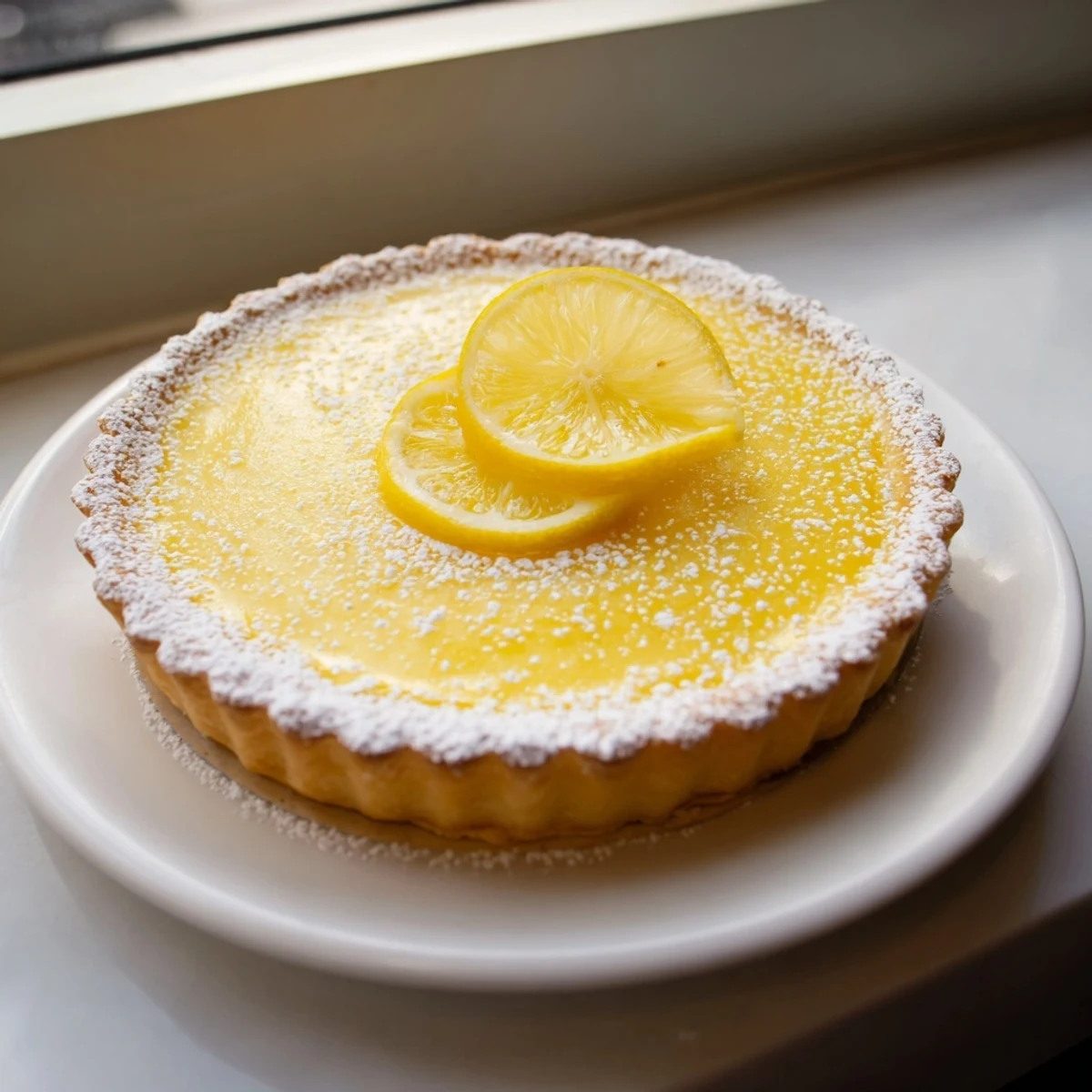
This tart keeps beautifully in the fridge for up to three days, covered loosely with plastic wrap so the crust doesn't get soggy. I like serving it cold with a light dusting of powdered sugar, though it's just as lovely at room temperature if you let it sit out for 20 minutes. A dollop of whipped cream or a handful of fresh berries makes it feel even more elegant, but honestly, it's perfect on its own.
What to Do if Things Go Wrong
If your crust cracks while you're pressing it into the pan, just patch it with extra dough and press it smooth, no one will ever know once it's baked. If the filling doesn't thicken over the double boiler, keep whisking and give it more time, it can take up to 15 minutes depending on your heat. And if the tart filling cracks on top after baking, don't worry, a sprinkle of powdered sugar or a few lemon slices will hide it completely.
Making It Your Own
You can swap half the lemon juice for lime or blood orange juice for a different citrus twist, just keep the total liquid the same. I've also added a handful of crushed pistachios on top right before serving for a little crunch and a pop of green color. If you want it extra decadent, try drizzling a thin layer of white chocolate over the cooled filling, it sounds fancy but it only takes a few minutes.
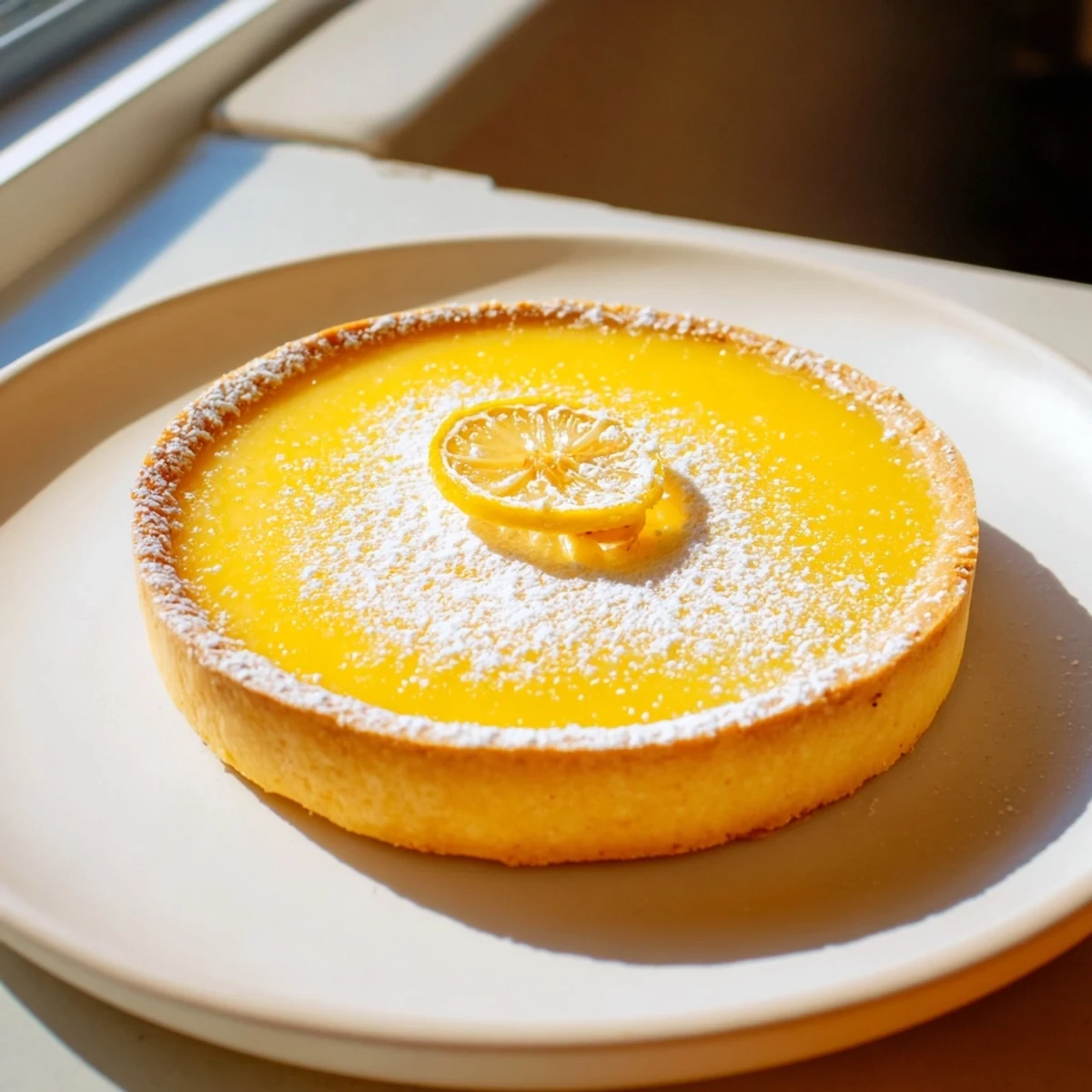
- Candied lemon slices on top turn this into a showstopper for special occasions.
- A pinch of cardamom in the crust adds a subtle warmth that plays beautifully with the citrus.
- For a gluten-free version, swap the all-purpose flour with a good quality gluten-free blend, just add an extra tablespoon of butter to keep it tender.
 Save Pin
 Every time I pull this tart from the fridge and see that bright yellow filling gleaming under the kitchen light, I'm reminded that some recipes are worth the extra steps. It's the kind of dessert that makes people lean back in their chairs and sigh, and that's exactly the feeling I hope it brings to your table too.
Recipe Questions & Answers
- → How do I achieve a crisp pastry base?
-
Use cold, cubed butter and pulse quickly with flour and sugar to create coarse crumbs. Chill the dough before baking and blind bake with weights to prevent shrinking for a crisp foundation.
- → What is the best method to thicken the lemon filling?
-
Cook the lemon mixture over a double boiler while whisking constantly until thickened, ensuring a smooth, silky texture without curdling the eggs.
- → Can I prepare the tart in advance?
-
Yes, refrigerate the cooled tart for at least two hours to let flavors meld and filling set fully before serving.
- → Are there optional toppings to enhance flavor?
-
Consider dusting powdered sugar, adding candied lemon slices, crushed pistachios, fresh berries, or whipped cream for extra texture and taste contrast.
- → What equipment is essential for this dessert?
-
A 9-inch tart pan, food processor, mixing bowls, whisk, double boiler or saucepan, and parchment with baking weights are needed to prepare and bake evenly.