
 Save Pin
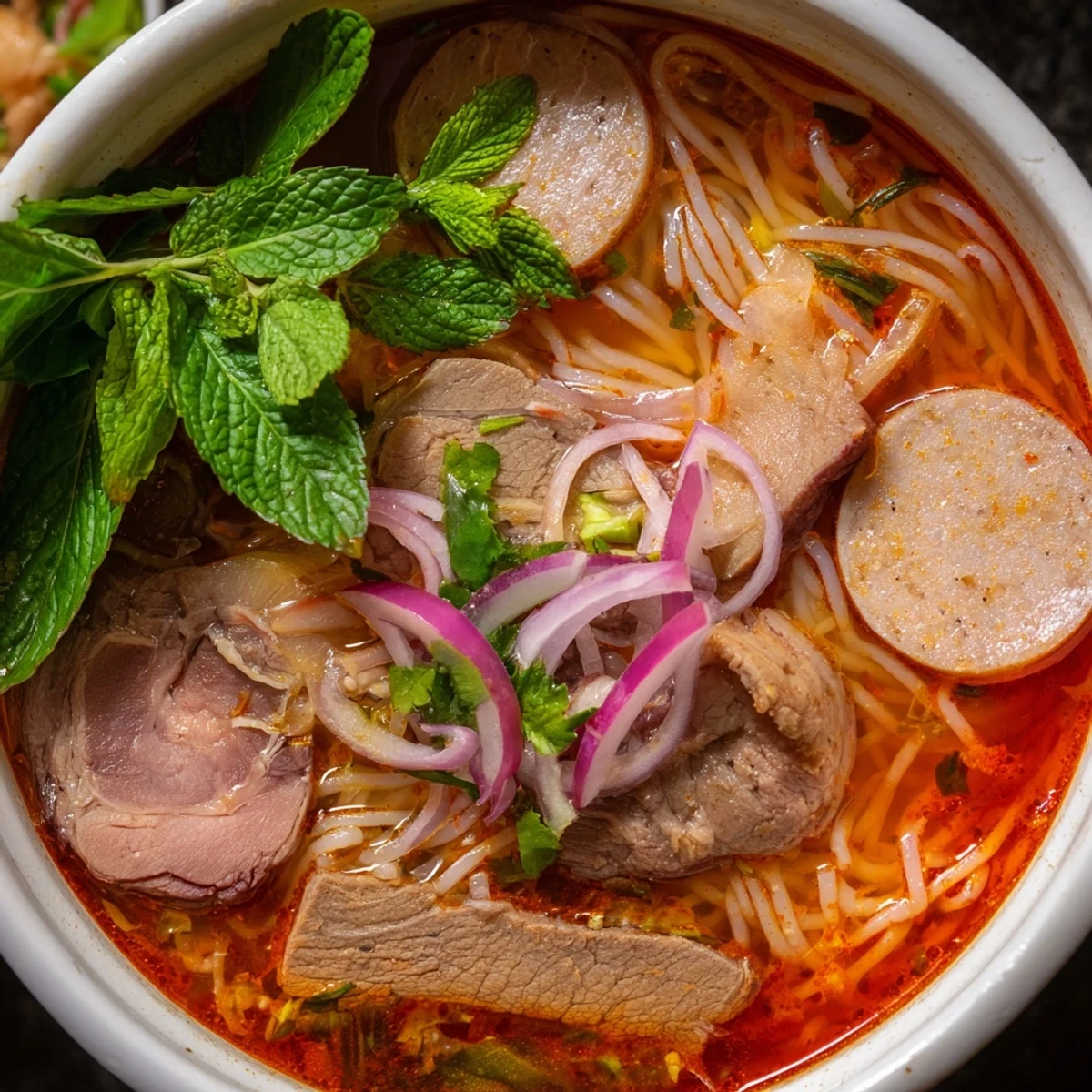
 This traditional Vietnamese soup originates from the imperial city of Hue, featuring a complex broth infused with lemongrass, ginger, and shrimp paste. The combination of beef shank, pork hock, and rice noodles creates a hearty bowl, while the aromatic chili oil adds signature color and heat. Fresh herbs and lime provide bright contrast to the deeply savory, slightly spicy broth.
The steam rising from my first bowl of Bún Bò Huế in a tiny Huế street shop stopped me mid conversation. The broth hit with this electric combination of lemongrass and chili that I had never experienced in pho. My host watched me take that first stunned sip and simply smiled, knowing exactly what was about to happen. Now my entire apartment smells like lemongrass whenever I make it, and neighbors somehow know to stop by.
My friend Lan taught me that patience with the broth matters more than any fancy technique. We spent three hours tending the pot while catching up on life, occasionally skimming scum and tasting adjustments. She insisted that the shrimp paste was non negotiable, though I admit I was skeptical until that first fragrant whiff hit the kitchen.
Ingredients
- Beef shank bone-in: The marrow and collagen create body that no amount of seasoning can fake
- Pork hock: Adds a sweetness and richness that balances the aggressive spices
- Lemongrass: Bruise it hard to release those essential oils that define this dish
- Shrimp paste: The secret depth note that makes people ask whats different
- Thick rice noodles: Thin noodles disappear into this assertive broth
- Annatto seeds: Optional but gives that signature deep red color
Instructions
- Prep your meats properly:
- Boil the beef shank and pork hock for five minutes then drain and rinse everything thoroughly. This step creates the crystal clear broth you want.
- Build the broth base:
- Return the cleaned meats to the pot with fresh water and add your aromatics. Skim religiously as it comes to a boil.
- Simmer low and slow:
- Add your seasonings and let everything bubble gently for two hours. The meat should be falling apart tender by then.
- Make the magic chili oil:
- Infuse your oil with annatto seeds if using then sauté shallots and garlic before adding chili flakes. This red gold finishes every bowl.
- Prep your components:
- Cook noodles until just done and slice all your proteins while the broth strains. Have everything ready before assembly.
- Bring it together:
- Layer noodles and meats in bowls then pour that hot spicy broth over everything. Drizzle with your chili oil immediately.
 Save Pin
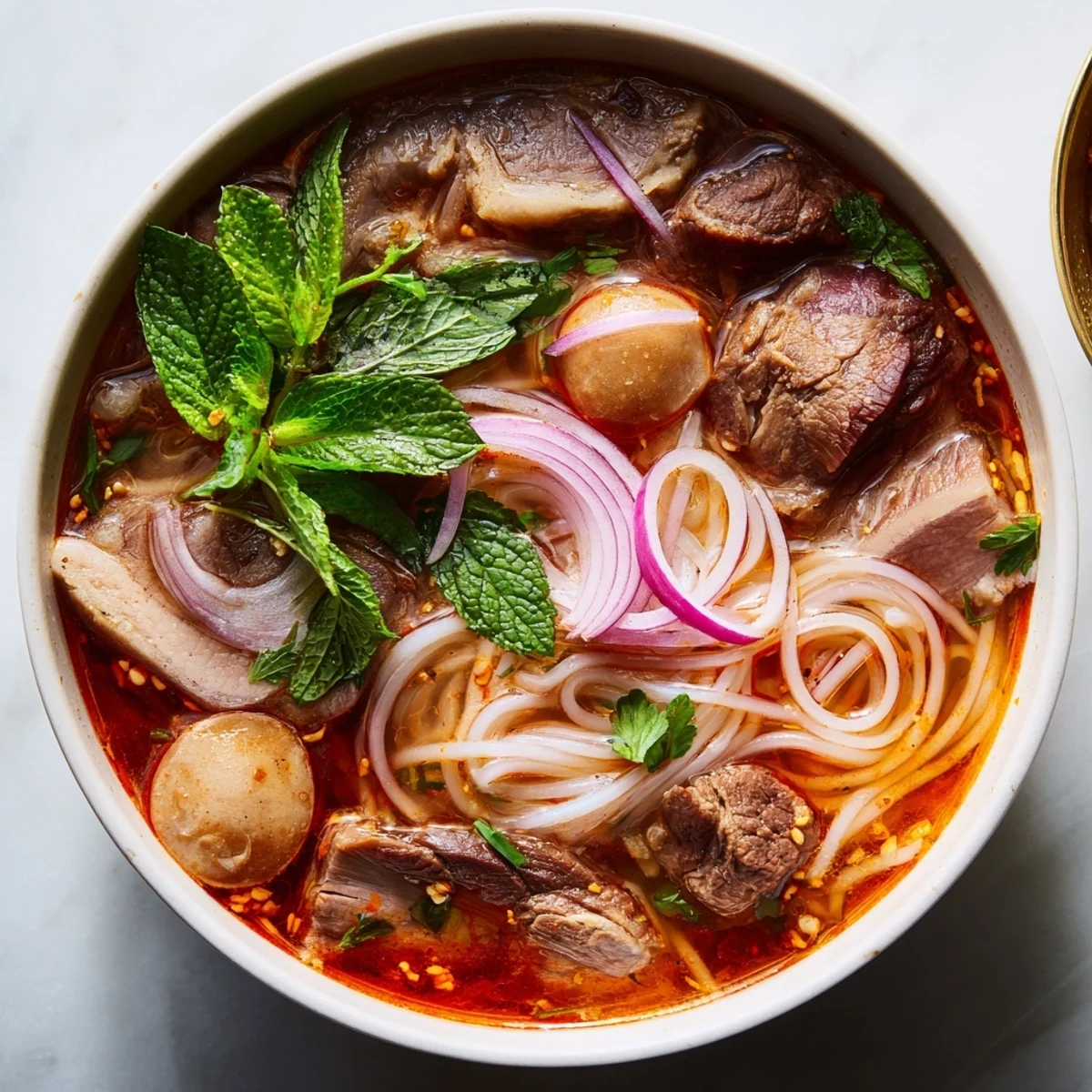
 This soup became my go to for rainy Sundays and homesick friends. Something about those complex spicy flavors just resets whatever feels off. Last winter my roommate requested it three weekends in a row.
Building Depth in the Broth
That pineapple trick mentioned in the notes works wonders. A single chunk adds brightness that cuts through the rich meat flavors. I have also tossed in a few dried shrimp when the broth feels flat, and they dissolve into an invisible umami boost.
Noodle Timing Secrets
Never cook these thick noodles in the broth itself. They soak up too much liquid and become bloated. Cook them separately even if it means an extra pot to wash. Your broth stays full flavored and every bowl has perfectly chewy noodles.
Garnish Like a Pro
The fresh elements are not optional extras they are essential contrasts to that hot spicy broth. I prep everything in small bowls and let people build their own toppings. Bean sprouts add crunch while herbs cut the heat.
- Squeeze lime into the broth not on top
- Add chili oil gradually as you eat
- Dip meat into extra fish sauce between bites
 Save Pin
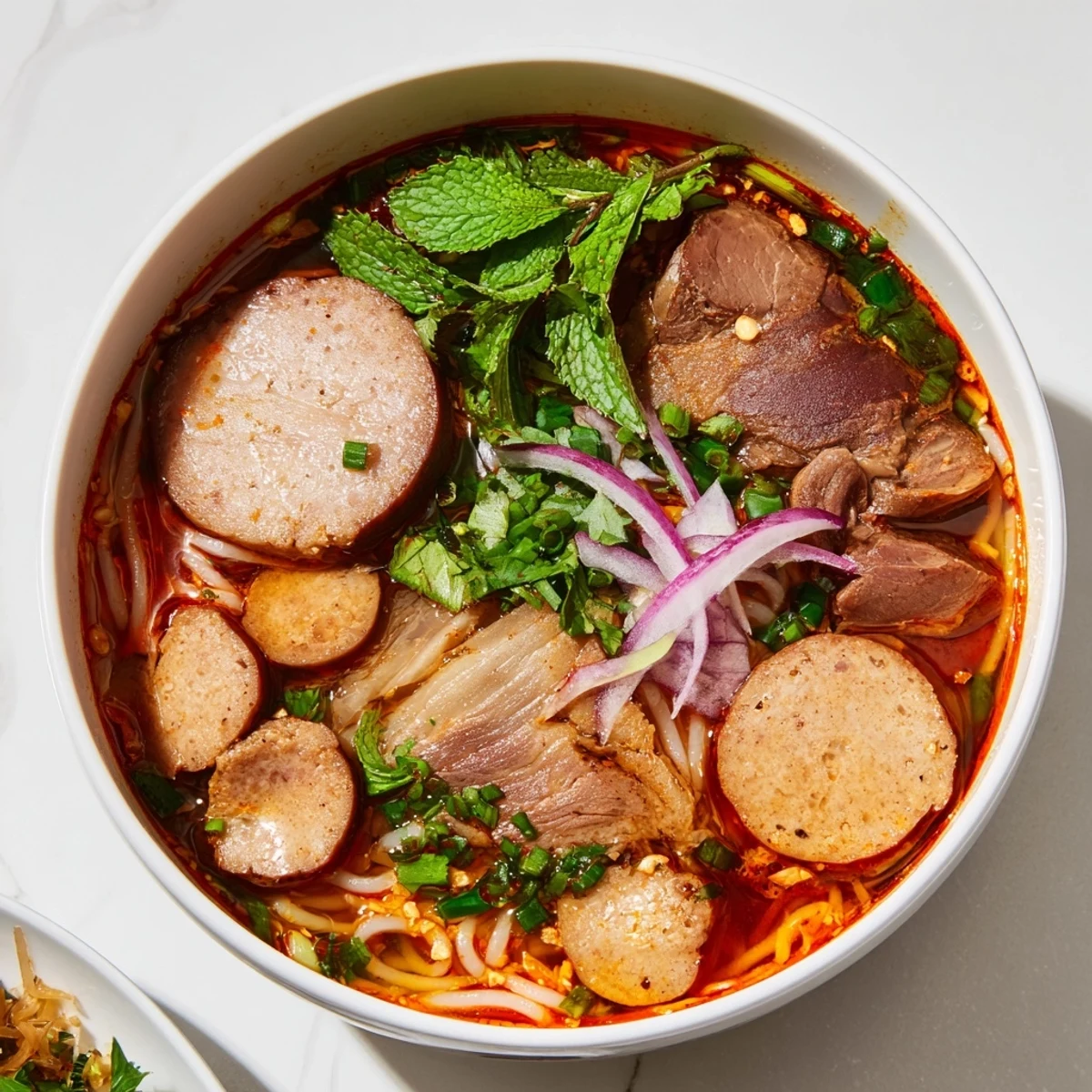
 There is something profoundly satisfying about a soup that demands this much attention and rewards you so completely.
Recipe Questions & Answers
- → What makes Bun Bo Hue different from pho?
-
Bun Bo Hue features a spicy, lemongrass-infused broth with thicker round noodles, while pho has a milder anise-cinnamon broth with flat rice noodles. The Hue specialty also includes pork and shrimp paste for deeper umami flavor.
- → Is shrimp paste essential for this dish?
-
Shrimp paste (mam ruoc) provides the distinctive savory depth that defines authentic Hue-style broth. While optional, it significantly enhances the traditional flavor profile and is worth seeking out at Asian markets.
- → Can I make the broth ahead of time?
-
Absolutely. The broth develops even deeper flavors when made 1-2 days ahead. Store it refrigerated in a sealed container, removing any solidified fat before reheating. The meats can be sliced and stored separately for easy assembly.
- → What type of noodles work best?
-
Thick round rice noodles (bun bo Hue) are traditional and hold up well in the hot, spicy broth. Medium rice vermicelli can substitute, but avoid thin noodles which may become mushy during extended cooking.
- → How spicy is this soup?
-
The base broth has mild heat from aromatics, while the chili oil adds adjustable spice. Start with a small amount and add more gradually to reach your preferred heat level. Fresh bird's eye chili garnish provides additional kick for spice enthusiasts.
- → Are pork blood cubes necessary?
-
Pork blood cubes are traditional but completely optional. They add richness and silky texture, though the soup remains delicious without them. Most Vietnamese restaurants outside Vietnam serve this version.