
 Save Pin
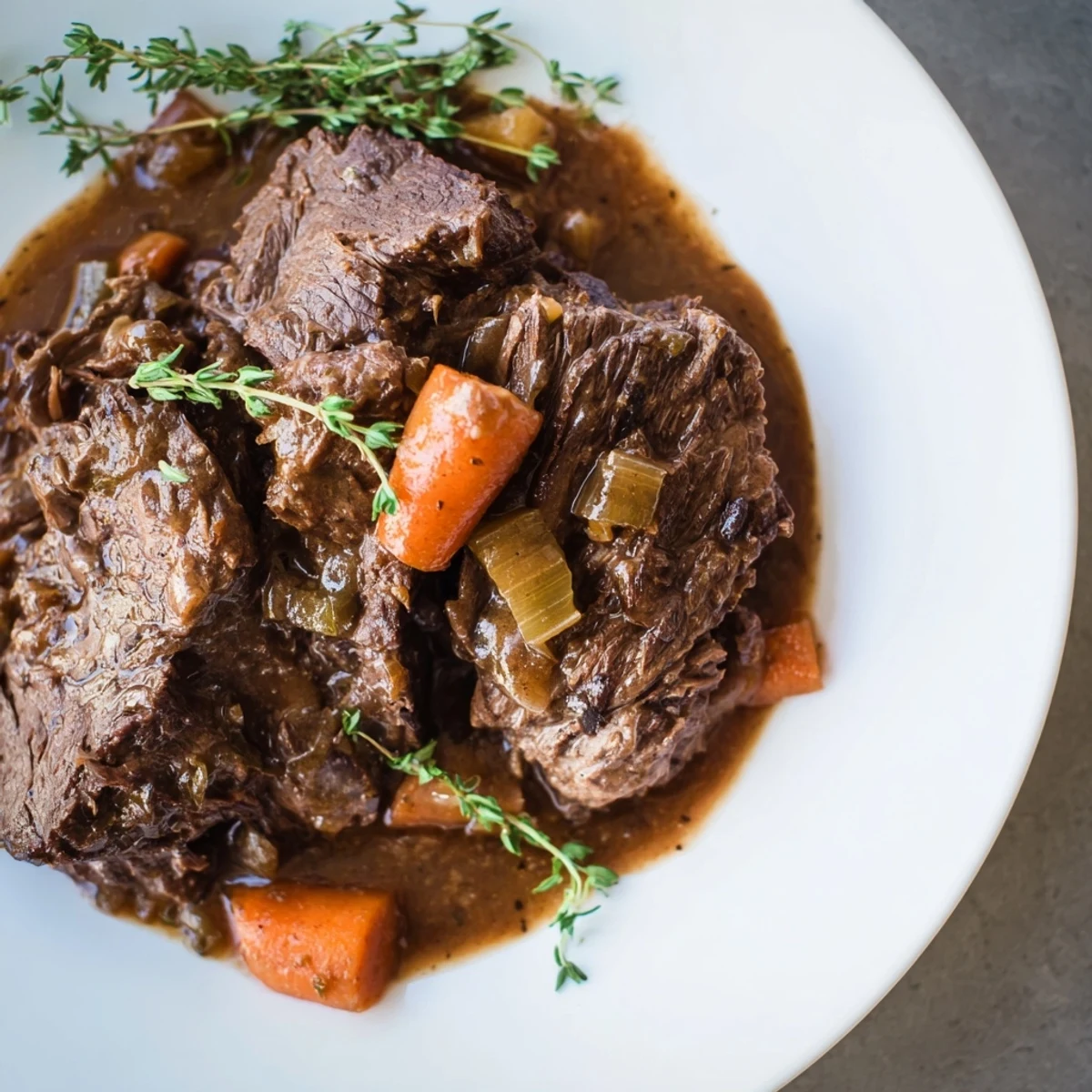
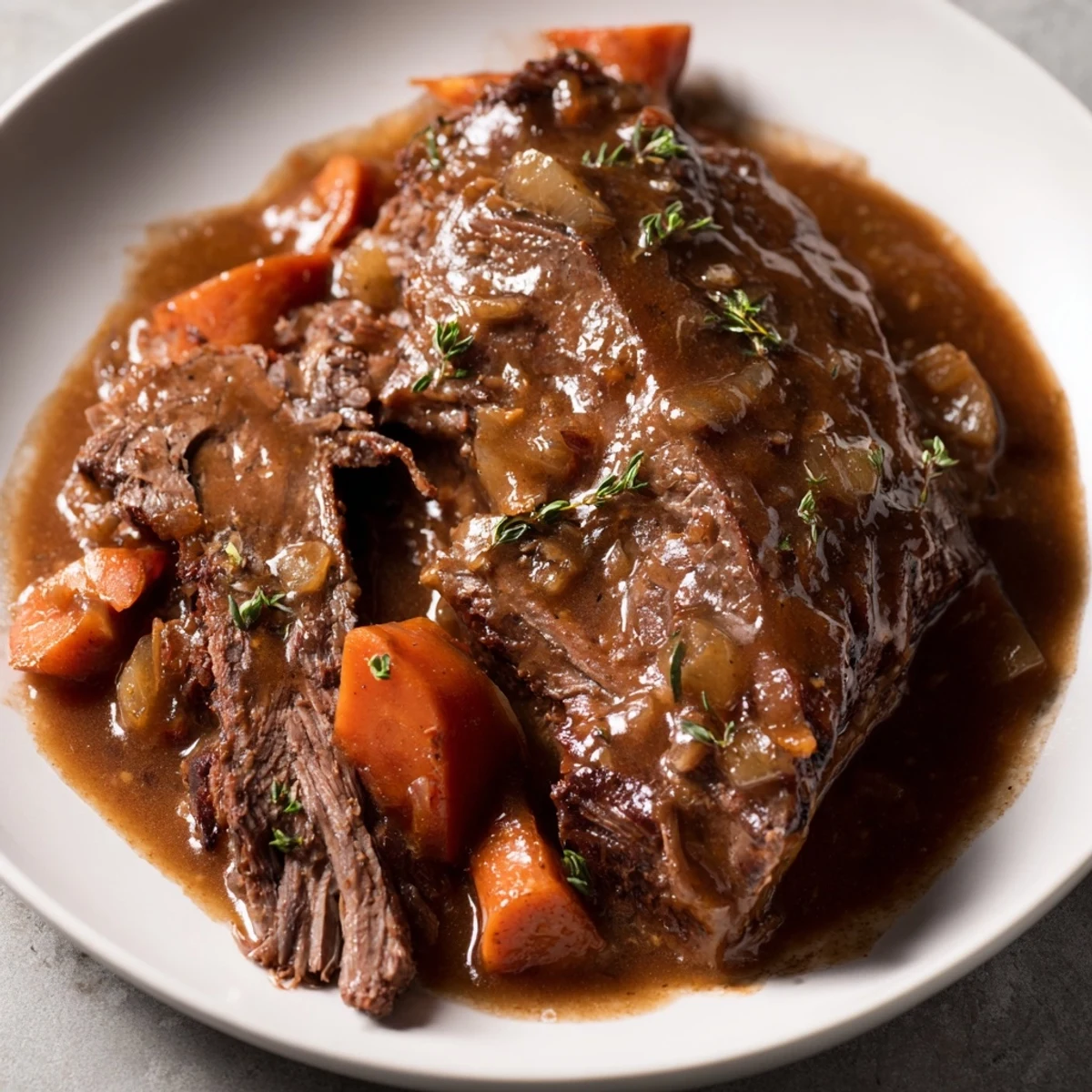
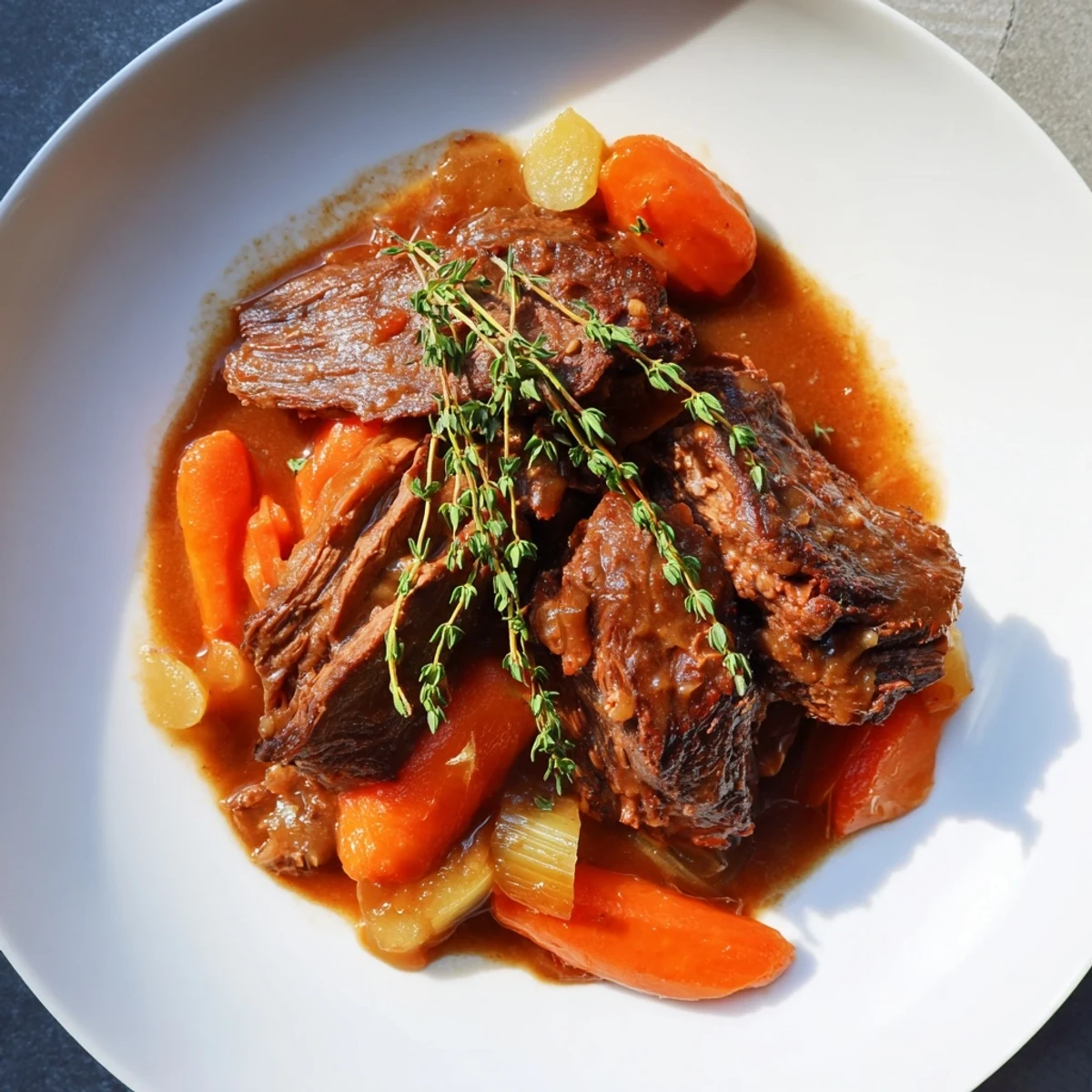
 This dish features beef chuck slow-cooked until tender in a savory broth infused with carrots, celery, onion, garlic, and fresh herbs like thyme and rosemary. The beef is seared first for deep flavor, then simmered with tomato paste and optional red wine for richness. After hours in the oven, the meat becomes melt-in-your-mouth tender, accompanied by a luscious, herb-infused sauce. Serve with mashed potatoes or crusty bread to soak up every drop.
I was standing at the stove on a gray Sunday afternoon when I realized the beef had been in the oven for nearly three hours and I'd forgotten to check it. The whole apartment smelled like thyme and red wine, and when I finally lifted the lid, the meat practically fell apart under my fork. That's when I stopped worrying about exact timing and started trusting the process.
The first time I made this for friends, I panicked because the sauce looked thin. But after resting for ten minutes, it thickened into something glossy and rich, clinging to every piece of meat. Everyone went quiet at the table, and one friend asked if I'd been hiding a culinary degree. I hadn't, I'd just learned to let the oven do the work.
Ingredients
- Beef chuck roast: This cut has enough marbling to stay juicy through long cooking, and it shreds beautifully when it's done.
- Salt and black pepper: Season generously before searing, the crust you build now becomes the foundation of flavor.
- Carrots and celery: They soften into the sauce and add a subtle sweetness that balances the richness of the beef.
- Onion: Use a large one and let it cook until it's almost translucent, it sweetens the broth in a way garlic alone can't.
- Garlic: Add it after the other vegetables so it doesn't burn, just one minute in the pan is enough.
- Beef broth: Homemade is lovely, but a good store-bought version works just as well if you check the sodium level.
- Red wine: It deepens the sauce and adds acidity, but you can skip it and use more broth without losing much.
- Tomato paste: A small amount adds body and a hint of umami that ties everything together.
- Thyme, rosemary, and bay leaves: Fresh herbs make the biggest difference here, they perfume the meat as it braises.
- Olive oil and butter: Oil for high-heat searing, butter for sautéing the vegetables with a touch of richness.
Instructions
- Preheat and prep:
- Set your oven to 160°C and pat the beef completely dry with paper towels. Moisture is the enemy of a good sear, so don't skip this step.
- Season the beef:
- Use more salt and pepper than feels right, the seasoning needs to penetrate thick chunks of meat. Press it into the surface with your hands.
- Sear in batches:
- Heat olive oil until it shimmers, then add beef without crowding the pot. Let each piece sit undisturbed for three minutes before flipping, you want a deep brown crust.
- Sauté the vegetables:
- Add butter to the same pot and toss in onion, carrots, and celery. Stir occasionally and let them pick up the browned bits from the bottom.
- Toast the tomato paste:
- Stir it into the vegetables and let it cook for a full minute. It should darken slightly and smell sweet and concentrated.
- Deglaze with wine:
- Pour in the red wine and scrape up every stuck-on bit with a wooden spoon. Let it bubble for two minutes to cook off the alcohol.
- Build the braise:
- Return the beef to the pot and pour in the broth. Tuck in the thyme, rosemary, and bay leaves, then bring everything to a gentle simmer.
- Braise in the oven:
- Cover tightly and slide it into the oven. Walk away for at least two hours, the low heat and steam will do all the work.
- Check for tenderness:
- The beef should yield completely when pressed with a fork. If it resists, give it another thirty minutes.
- Finish and serve:
- Fish out the herbs and bay leaves, then taste the sauce. Adjust with salt and pepper, and serve it over something that can soak up every drop.
 Save Pin
 I served this over creamy polenta one winter night, and my sister said it reminded her of something our grandmother used to make. She didn't, but the feeling was real. That's what a good braise does, it fills in memories you didn't know you had.
What to Serve It With
Mashed potatoes are classic, but polenta soaks up the sauce in a way that feels more elegant. Crusty bread works too, especially if you're the kind of person who likes to mop up every last bit. I've even served it over egg noodles when I wanted something lighter, and it never disappoints.
How to Store and Reheat
This keeps in the fridge for up to four days, and it actually improves as it sits. Reheat it gently on the stovetop with a splash of broth, and avoid the microwave if you can. The meat can dry out quickly under high heat, and you've worked too hard to let that happen.
Ways to Change It Up
I've swapped carrots for parsnips when I wanted something earthier, and once I added a splash of balsamic vinegar at the end for a tangy finish. You could also throw in mushrooms halfway through braising, they absorb the sauce and add a meaty depth. If you're feeling adventurous, a teaspoon of Worcestershire sauce before it goes in the oven adds a quiet complexity that's hard to name but impossible to miss.
- Add pearl onions in the last hour for a classic French touch.
- Stir in a handful of fresh parsley just before serving for brightness.
- Use lamb shoulder instead of beef for a richer, gamier version.
 Save Pin
 This is the kind of dish that makes you feel like you know what you're doing in the kitchen, even if you're still figuring it out. Serve it with confidence and let the smell do the rest.
Recipe Questions & Answers
- → What cut of beef works best?
-
Beef chuck roast is ideal due to its marbling and connective tissue that break down during slow cooking, resulting in tender meat.
- → Can I use a different cooking liquid?
-
Yes, broth alone works well if you prefer to skip the red wine. It still adds depth and moisture during cooking.
- → How do I know when the beef is done?
-
The beef is ready when it becomes fork-tender and easily pulls apart, typically after 2 to 2.5 hours in the oven.
- → What herbs complement this dish best?
-
Fresh thyme, rosemary, and bay leaves infuse aroma and earthiness throughout the slow cooking process.
- → Can I prepare this dish ahead of time?
-
Absolutely, flavors often improve after resting overnight. Reheat gently before serving to maintain tenderness.