
 Save Pin
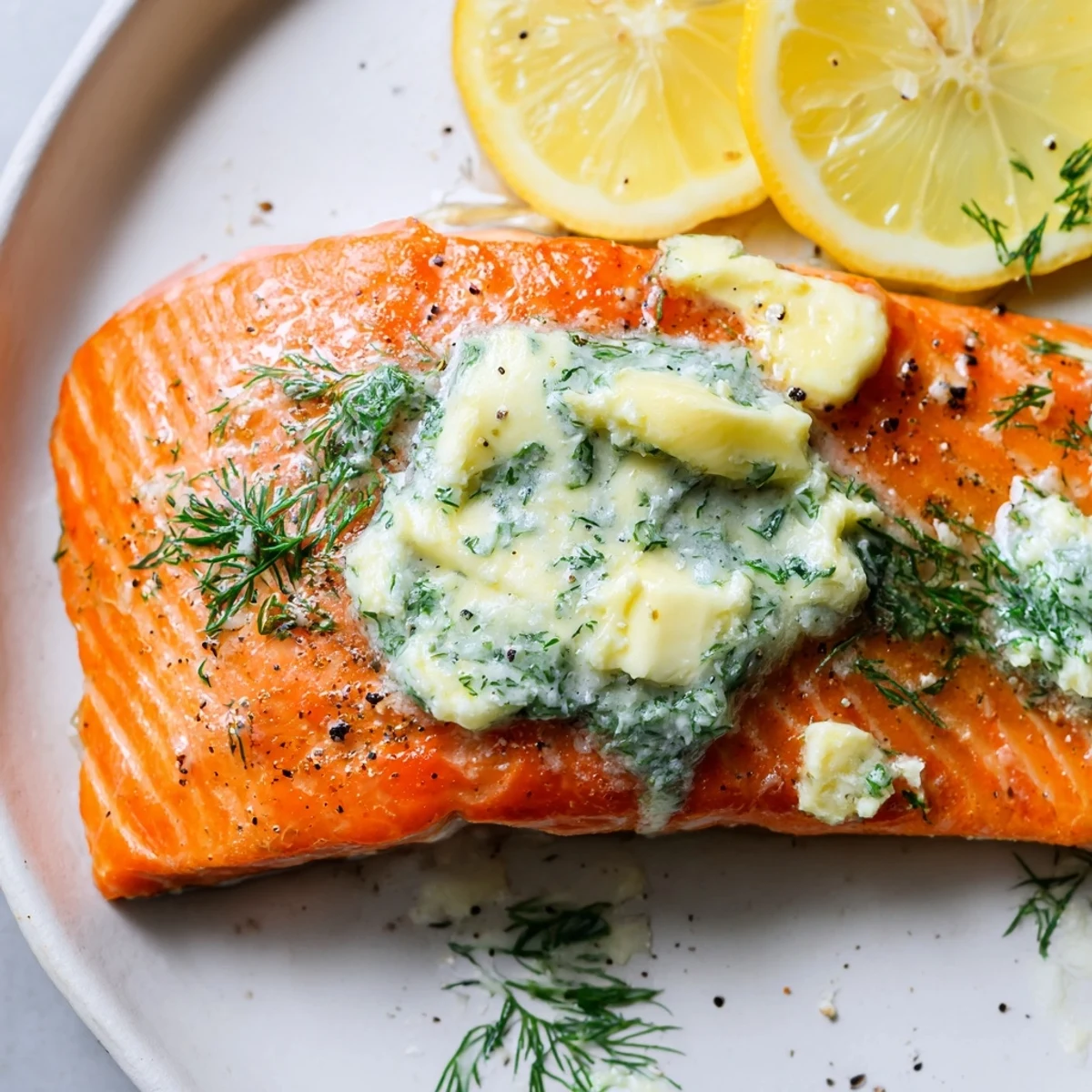
 This dish features tender salmon fillets gently baked to a flaky finish and topped with a fragrant dill butter. Combining softened butter, fresh dill, lemon zest, and garlic results in a luscious topping that melts perfectly over warm fish. Preparation is simple and fast, making it ideal for a weekday meal. The bright notes of lemon and herb elevate the natural richness of salmon, while seasoning with olive oil, salt, and pepper enhances its flavor. This elegant yet approachable main highlights the freshness and quality of ingredients.
I discovered baked salmon with dill butter on a Wednesday night when I had exactly twenty-five minutes before guests arrived and absolutely nothing prepared. My neighbor had dropped off these gorgeous salmon fillets that morning, and I remembered my mother's trick of pairing them with herb butter instead of a heavy sauce. The result was so effortlessly elegant that I've made it dozens of times since, each time wondering why I ever stress about entertaining.
The first time I made this for my partner, I was so nervous about overcooking the salmon that I checked on it every three minutes. He walked in as the dill butter was still melting into golden rivulets across each fillet, and said it smelled like a restaurant we couldn't afford. We've gone back to that moment in conversation more times than the actual recipe calls for ingredients.
Ingredients
- Salmon fillets: Look for thick, evenly sized pieces so they cook at the same rate, and don't worry if they're not perfectly uniform.
- Olive oil: A good drizzle helps them stay moist and creates those little crispy edges that everyone fights over.
- Kosher salt and black pepper: The only seasoning the fish needs before the oven, because the dill butter does the real talking.
- Fresh dill: Dried dill is a different animal entirely, so use fresh or don't bother, trust me.
- Unsalted butter: Softened matters more than you'd think because it needs to mash together smoothly with the herbs.
- Lemon zest and juice: These two brighten everything, cutting through the richness without making the dish taste sour.
- Garlic: Just one small clove, minced fine, whispers in the background instead of shouting.
Instructions
- Heat your oven and prep your stage:
- Get the oven to 400°F while you line your baking sheet, because cold ovens and salmon are not friends. Having everything ready before you touch the fish means less stress and better results.
- Dry your salmon like you mean it:
- Pat those fillets completely dry with paper towels because moisture is the enemy of cooking. Lay them skin-side down on your sheet and you'll hear a gentle sizzle when they hit the oven.
- Season simply and drizzle:
- Just olive oil, salt, and pepper at this stage, then top each fillet with a single thin lemon slice. The simplicity here is the whole point.
- Let the oven do its job:
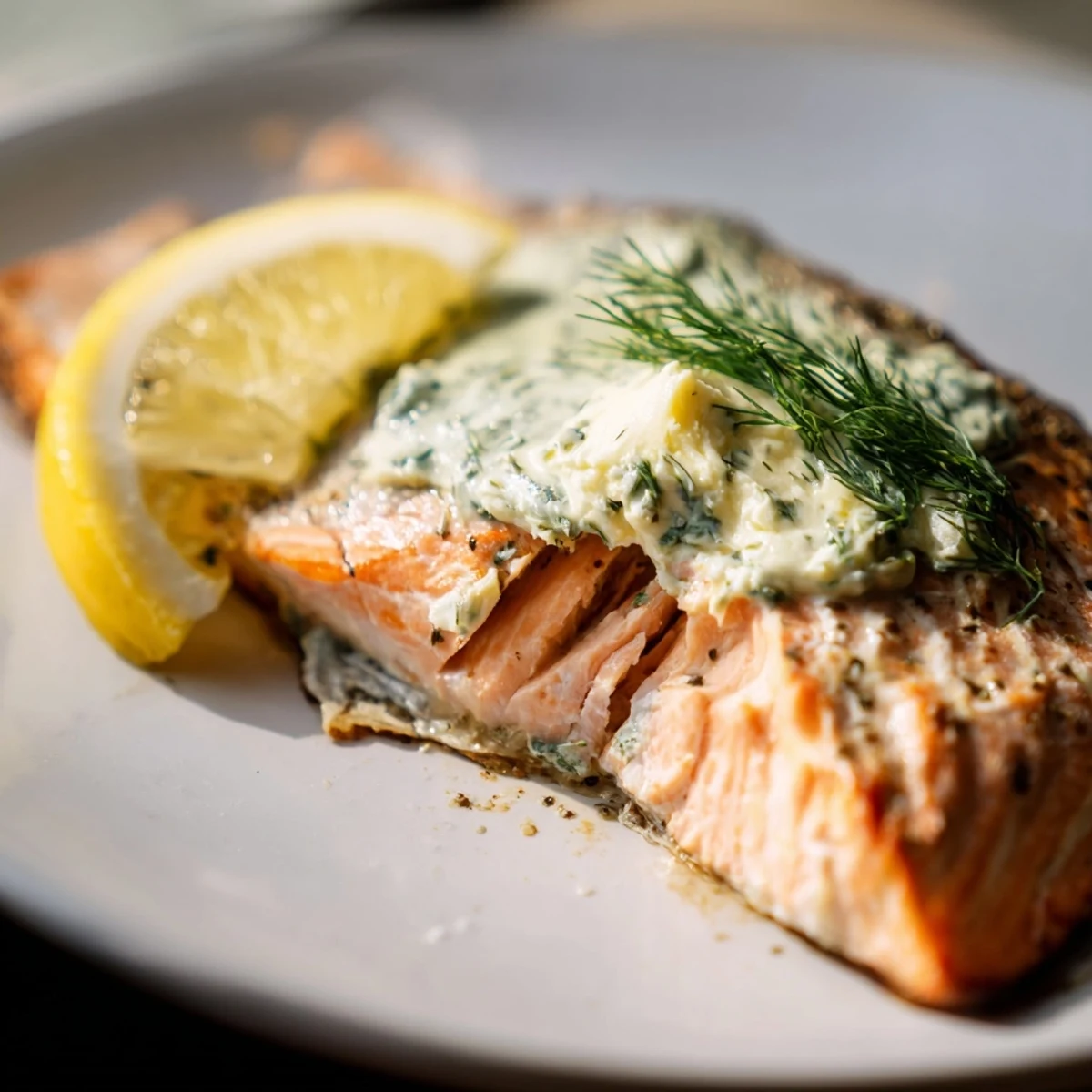
- Twelve to fifteen minutes, and you'll know it's done when the salmon flakes easily with a fork and looks opaque all the way through. Every oven is different, so start checking at twelve minutes.
- Make the dill butter while salmon bakes:
- Mash soft butter with fresh dill, lemon zest, minced garlic, and salt in a small bowl until it looks like chunky paste. It won't be perfectly smooth and that's exactly right.
- Top while everything is hot:
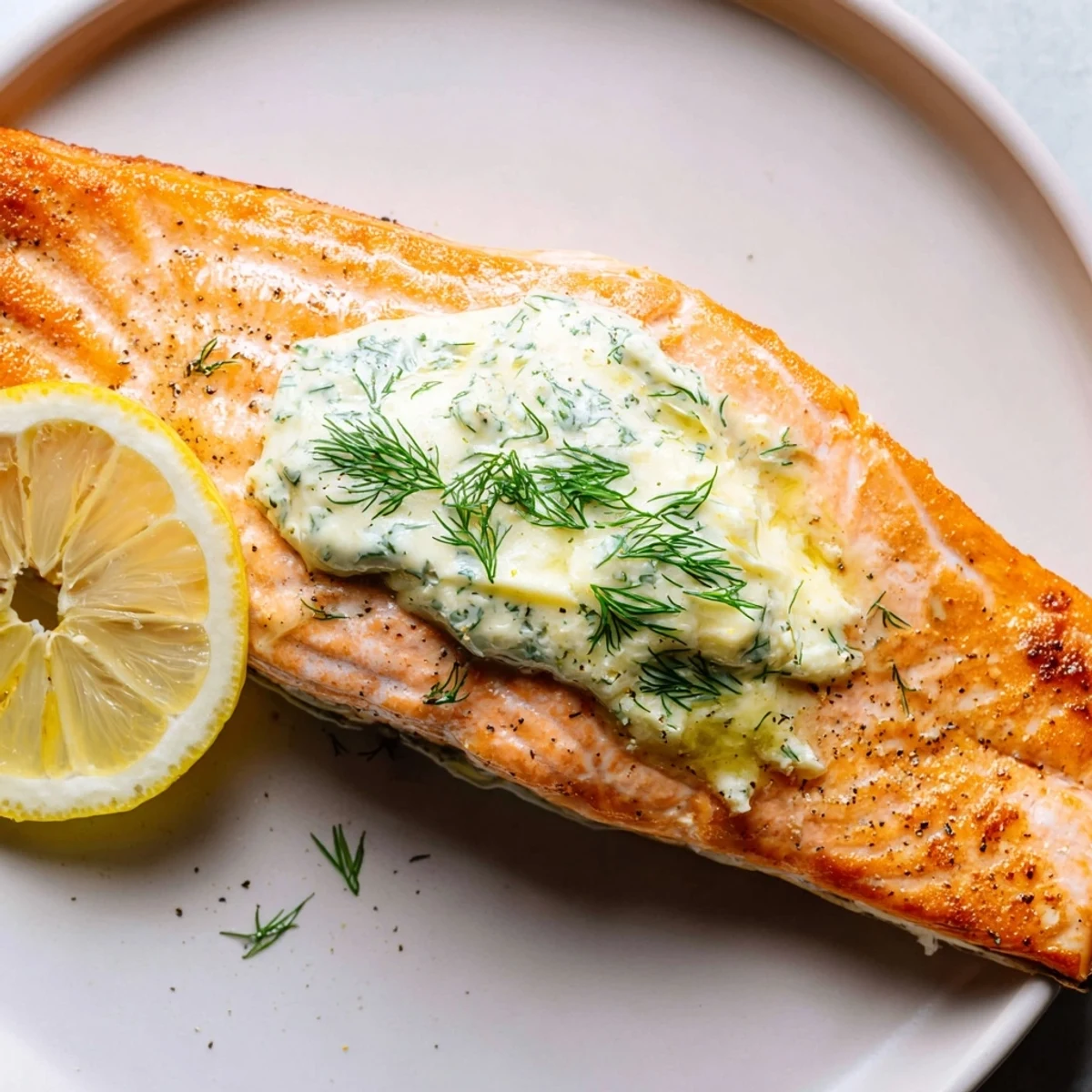
- Pull the salmon out and immediately dollop a generous spoonful of dill butter on each fillet. You'll watch it melt into pools of golden herby goodness, and that's the magic moment.
 Save Pin
 My friend Sarah came over once when I made this, and after one bite she got quiet in that way that means something just shifted for her. She'd spent years thinking she didn't like salmon because she'd only ever had it overcooked or covered in heavy sauces, and suddenly she understood why people get excited about fish.
Building Your Dill Butter Ahead
You can make the dill butter up to two days ahead and keep it wrapped in parchment in the fridge, which means you're basically just baking salmon on busy nights. I've found that taking five minutes on Sunday to prepare it makes weeknight cooking feel impossibly easy, and that's not a small thing.
Timing and Temperature Matter More Than You'd Think
Salmon is forgiving up to a point, but once it goes dry there's no bringing it back, so use a timer and trust it more than your eyes. The difference between a barely translucent center and an overcooked fillet is literally sixty seconds, which is why I always set my timer for twelve minutes and check from there.
What to Serve Alongside This
I usually keep the sides minimal because the salmon and its dill butter deserve the spotlight, though a simple roasted vegetable or a crisp salad turns it into a complete meal. The buttery fish doesn't need much else, which is part of why this recipe has lived in my regular rotation for so long.
- Roasted asparagus or green beans soak up the extra dill butter and taste incredible.
- A squeeze of fresh lemon on top just before eating brightens everything one last time.
- Crusty bread for soaking up the melted butter from your plate is not optional in my kitchen.
 Save Pin
 This recipe lives in my head as proof that the best meals are often the simplest ones, where good ingredients do most of the work. Make this when you want to feed people something that tastes like you actually tried, because honestly, you did.
Recipe Questions & Answers
- → How do I ensure the salmon stays moist?
-
Patting the fillets dry and baking just until flaky helps retain moisture. The dill butter added after baking adds richness and prevents dryness.
- → Can I use fresh or dried dill for the butter?
-
Fresh dill is preferred for its vibrant flavor, but dried dill can be used sparingly if fresh is unavailable.
- → What is the best temperature for baking salmon?
-
Baking at 400°F ensures the salmon cooks evenly while keeping a tender texture and allows the dill butter to melt nicely on top.
- → Are there good side dishes to complement the salmon?
-
Steamed asparagus and roasted potatoes complement the flavors well, as do light, crisp wines like Sauvignon Blanc.
- → Can the butter be substituted for a lighter topping?
-
Yes, substituting half the butter with Greek yogurt provides a lighter, tangy alternative without sacrificing creaminess.